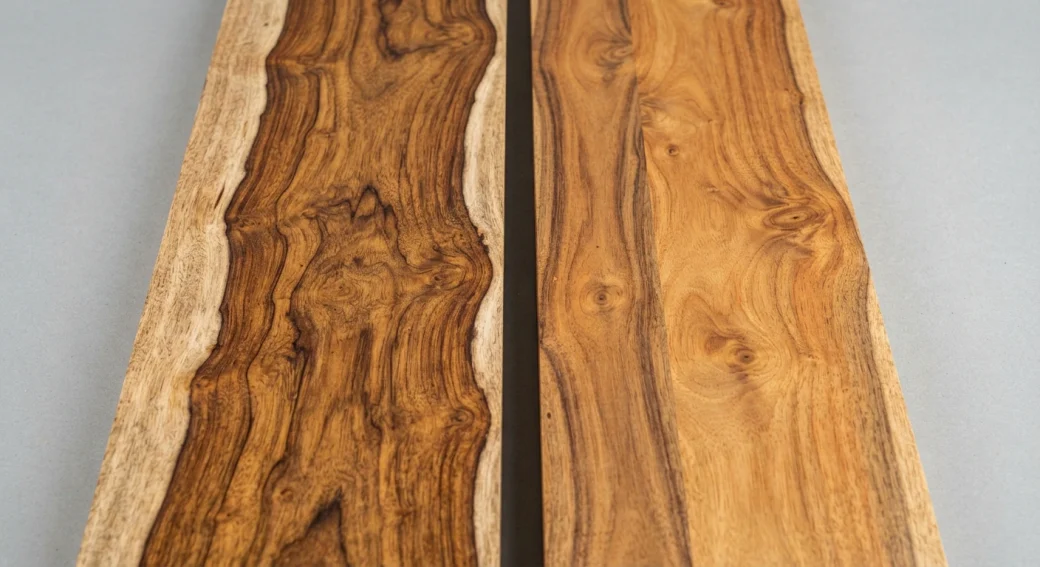
If you are comparing sheesham vs acacia wood for your kitchen, here is the honest short answer: neither one wins every time. Sheesham is a hard, traditional wood with a rich grain. Acacia is a large group of woods that shows up in many ready-made boards, bowls and trays. The better choice depends on what you are buying, how you will use it, and how much care you can give it. This guide keeps things simple and shows where the facts come from.
Sheesham vs Acacia Wood: The Quick Answer
Choose sheesham if you want a dense wood with a bold, warm grain and you can buy from a seller who names the wood clearly. Choose acacia if you want a wood that is easy to find in finished kitchen products and you are happy to check the species and the finish. Here are the main points in one place:
- Hardness: Sheesham is listed at about 1,660 lbf on the Janka scale. Australian blackwood, one type of acacia, is listed at about 1,160 lbf. Other acacias differ a lot.
- Safety: I found no head-to-head food-safety study of these two woods. The finish and your cleaning habits matter more than the wood name.
- Care: Both need hand washing, fast drying and the occasional food-grade oil.
- Buying: Always ask the seller for the exact species and the finish used.
What Is Sheesham Wood?
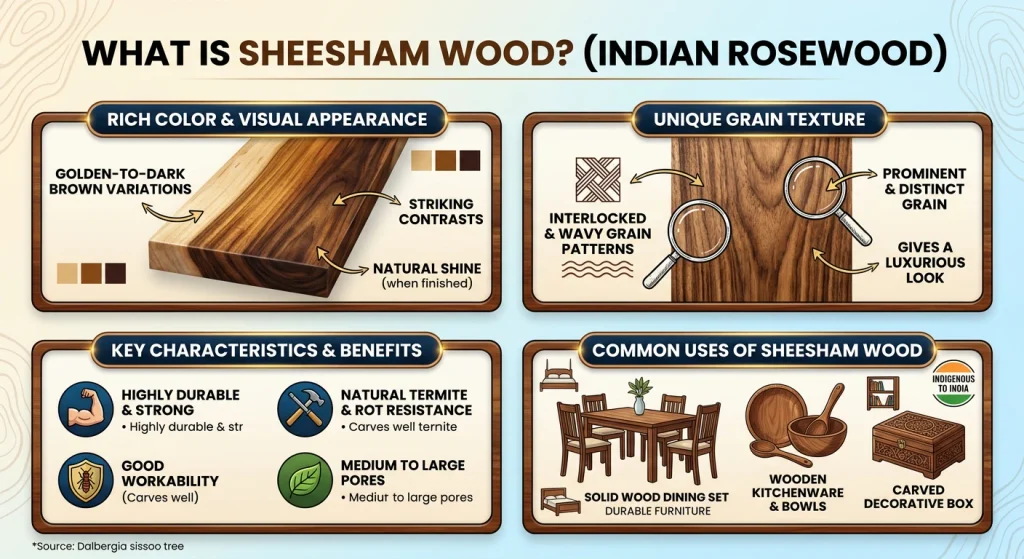
Sheesham is the common name of Dalbergia sissoo, a hardwood tree native to the Indian subcontinent, including Pakistan. In kitchens you will most often see it as spoons, boards, trays and serving bowls with a golden to dark brown color and clear grain lines.
Sheesham Wood in English: Names You Will See
Many people search for “sheesham wood in english”. The usual English names are sissoo and Indian rosewood. Sellers also write shisham or North Indian rosewood. These are naming variations of the same tree, but one of them can cause confusion, as the next part explains.
Is Sheesham the Same as Indian Rosewood?
Not always. Some sellers use “Indian rosewood” for sheesham, but the same name is also used for Dalbergia latifolia, which is a different species. One wood reference even notes that sheesham’s status as a true rosewood is disputed. If a label only says “rosewood”, ask which species it is.
Where Sheesham Does Well in the Kitchen
Sheesham is dense and strong. Lumber sellers list it at about 1,660 lbf, so it resists dents and wear better than softer woods. Its grain also gives spoons and trays a rich, warm look. A German timber supplier notes that sheesham is grown on plantations and is not available in large diameters, so very wide one-piece boards may be harder to find.
Disadvantages of Sheesham Wood
Sheesham has a few weak points, and most of them are about buying rather than cooking:
- Allergy warnings: Wood safety lists mark the rosewood group (Dalbergia) as an irritant and sensitizer. Those lists are written with woodworkers in mind. I did not find proof of harm from sealed kitchen tools, but if you react to rosewood, pick another wood.
- Uneven quality: A plant-use reference says plantation sheesham is often lower in quality and less decorative than the best natural wood. Two sheesham spoons can look and feel different.
- Trade rules: The whole Dalbergia group has been on CITES Appendix II since 2017. This mainly matters to sellers who export finished goods, who may need extra paperwork.
What Is Acacia Wood?
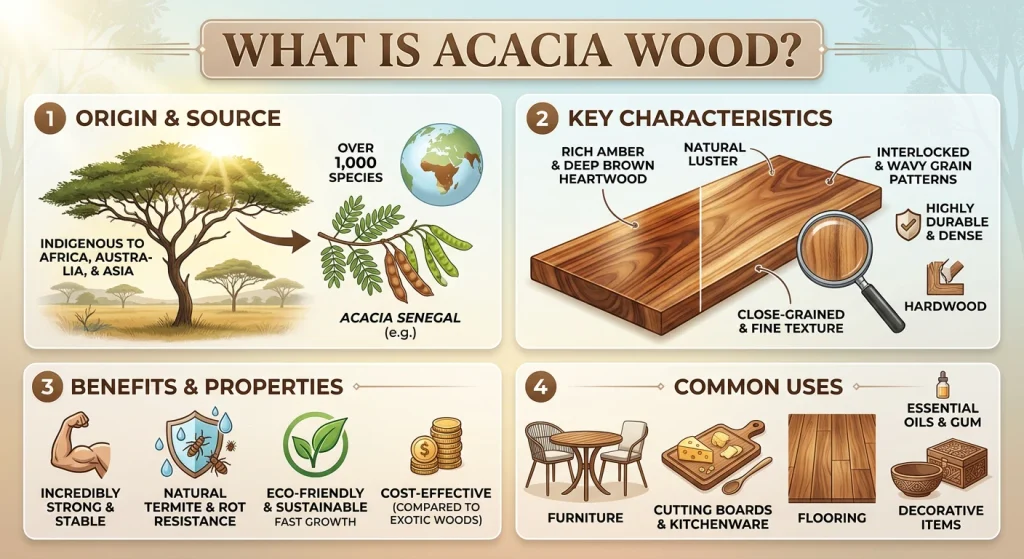
Acacia is not one single wood. It is a trade term for hardwoods from the Acacia group and close relatives called wattles, and the performance changes a lot from species to species. Australian blackwood (Acacia melanoxylon) and mangium (Acacia mangium) are two examples you may meet in furniture and kitchenware.
How Strong Is Acacia Wood?
Strength depends on the species. Australian blackwood is listed at around 1,160 lbf. At the other end, Guinness World Records names Acacia cambagei as the hardest wood in its record, at about 4,469 lbf. That wood is not used for spoons or boards, but it shows how wide the range is. So the durability of acacia wood depends on the exact species and on how well the product is made.
Where Acacia Does Well in the Kitchen
Acacia is common in finished boards, bowls and serving trays, so it is easy to shop for. Many sellers call it water resistant, but one food magazine points out that this depends on the finish. Treat “natural water resistance” as a sales claim, not a promise. One supplier also describes mangium as plantation-friendly and often used for budget boards, so some acacia products can be priced lower.
Disadvantages of Acacia Wood
Acacia has its own list of trade-offs. These are the ones that came up most often in the sources I checked:
- Unclear species: The word “acacia” alone does not tell you which wood you are getting.
- Care needs: One source says acacia needs regular oiling and is sensitive to heat and moisture.
- Sourcing: Some acacia species are treated as invasive in certain areas, so responsible sourcing is worth asking about.
Why Does the Exact Species Matter?
Different acacias can differ in hardness, color and grain. A supplier who only writes “acacia” may be selling a wood that behaves very differently from the one in a review you read. Ask for the botanical name, such as Acacia melanoxylon, and ask where the wood was grown.
Sheesham vs Acacia Wood: Side-by-Side Comparison
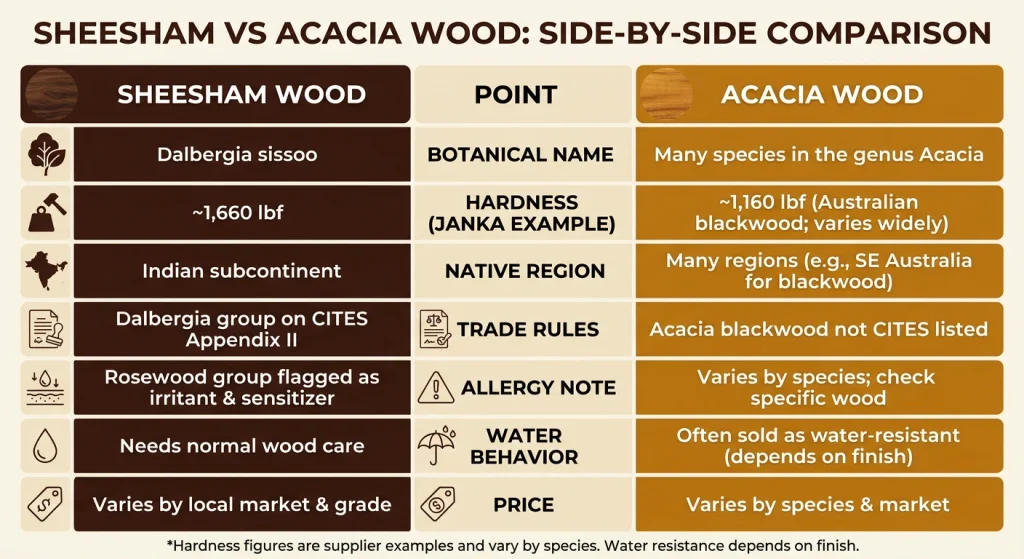
The table below puts the main facts next to each other. The hardness numbers are examples from wood suppliers, and the acacia number depends on the species, so use them as a rough guide only.
| Point | Sheesham | Acacia |
| Botanical name | Dalbergia sissoo | Many species in the genus Acacia |
| Hardness example | About 1,660 lbf | About 1,160 lbf for Australian blackwood; varies widely |
| Native region | Indian subcontinent | Many regions, such as southeastern Australia for blackwood |
| Trade rules | Whole Dalbergia group on CITES Appendix II | One supplier says Acacia blackwood is not CITES listed |
| Allergy note | Rosewood group flagged as irritant and sensitizer | Check the species; no matching warning found in my sources |
| Water behavior | Needs normal wood care | Often sold as water resistant; depends on finish |
| Price | No reliable current Pakistan data found | No reliable current Pakistan data found |
How Hardness Affects Spoons, Boards and Bowls
A harder wood resists dents and scratches better, which is useful for boards and serving trays. For spoons, a smooth, crack-free surface matters more than a high hardness number. A very hard wood is not automatically a safer or better kitchen tool.
What Does the Janka Number Really Measure?
The Janka test measures the force needed to push a small steel ball into the wood to half its width. In simple words, it tells you how well the wood resists dents and wear. It does not measure food safety, cracking or how well a finish will last.
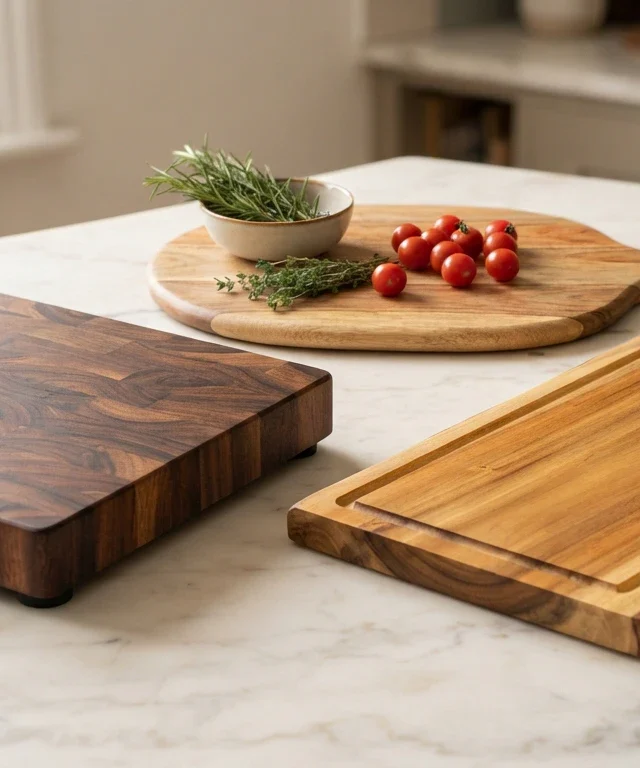
Sheesham vs Acacia Wood for Cutting Boards
The USDA says you may choose wood or a nonporous board, and that nonporous boards are easier to clean. This Michigan State University Extension guide adds that boards with deep grooves should be replaced and that raw meat needs its own board. It also says red oak is a poor choice because of its open pores. I found no study that compares sheesham and acacia boards directly, so pick a board with a smooth, tight surface and a good finish. If you shop locally, wooden boards sold in Pakistan are covered in a separate buyer’s guide.
Sheesham vs Acacia Wood for Spoons and Spatulas
Both woods are used for spoons and spatulas. The things to look for are a smooth surface, no splits and a clean finish. If you want to know how safe wooden spoons are with hot food, that topic has its own guide. Replace any spoon that cracks, because food and moisture can collect in the gap.
Sheesham vs Acacia Wood Finish: What to Ask the Seller
A good kitchen wood should accept food-safe finishes such as mineral oil or water-based sealants. Ask what finish was used on the product you are buying. If the seller cannot tell you, that is a warning sign, and a plain oiled finish is easier to trust than a mystery coating.
How to Care for Either Wood
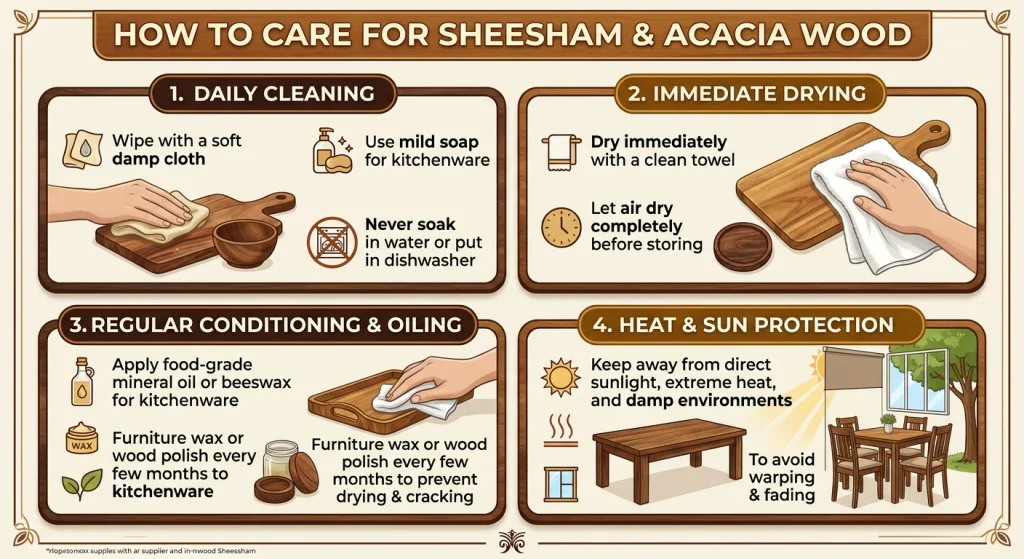
Care matters more than the wood name. The University of Maine Extension says wooden boards need regular cleaning and should be replaced when deep grooves or cracks make them hard to clean. NC State Extension guidance warns against long soaking because too much moisture can warp or crack wood. If you want a closer look at how to keep wood from splitting, there is a full guide on that.
Daily Habits That Help
These simple habits work for both sheesham and acacia:
- Wash by hand with warm water and mild soap soon after use.
- Dry the item right away and let it air out. Do not leave it in a wet sink.
- Rub on a little food-grade oil when the wood starts to look dry or pale.
- Keep raw meat on a separate board from fruit, vegetables and bread.
Price and Buying Tips
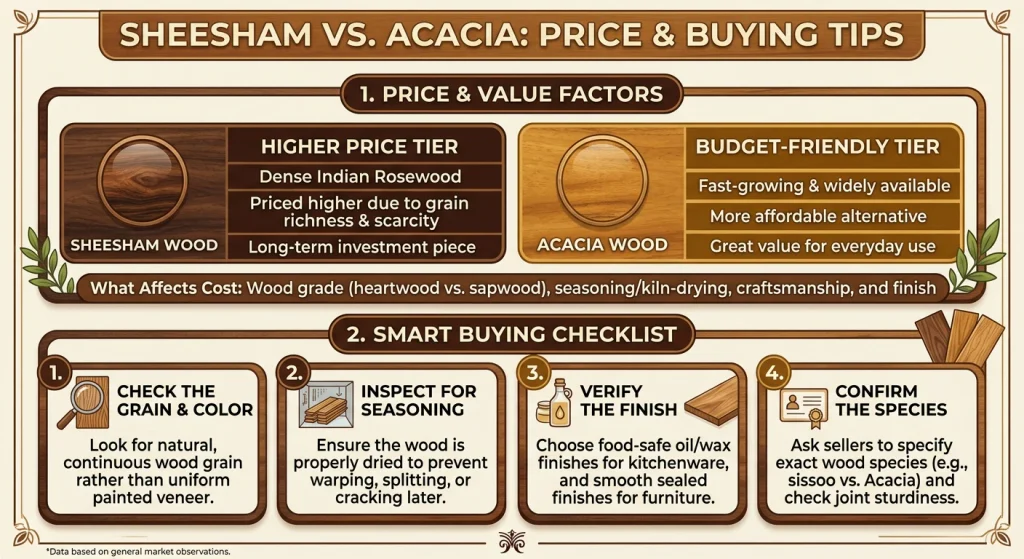
Price is one of the most searched parts of this topic, but it is also the hardest to answer honestly. Prices change with the seller, the wood grade, the size and the finish. This section explains what to compare instead of quoting numbers that may be out of date.
Sheesham Wood Price vs Acacia Wood Price
I could not find reliable, current Pakistan retail prices for either wood, so I am not quoting any. What I can say is that both woods come in a wide range of quality. To understand what changes the price of wooden items, look at size, thickness, finish and the amount of handwork.
How to Compare Two Quotes Fairly
A fair comparison needs the same details on both sides. Before you decide, check that both quotes match on these points:
- The exact species name
- The size and thickness
- The finish and whether it is food safe
- Whether the item is one solid piece or glued from strips
- The seller’s return policy
Which Wood Should You Choose?
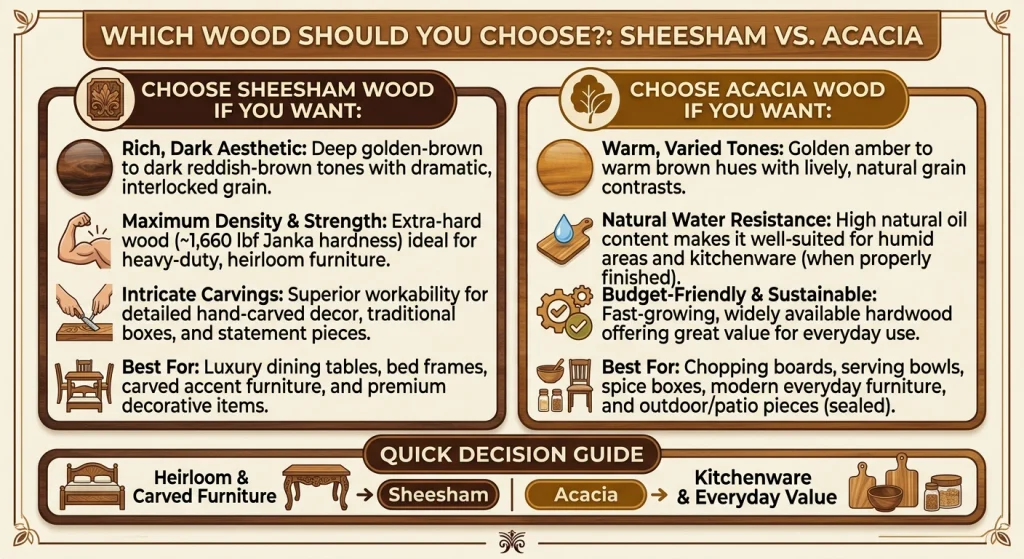
Use your own needs to decide. Here is a simple guide:
- For spoons and spatulas: either wood works if the surface is smooth and the finish is food safe.
- For cutting boards: pick the board with the tightest surface and the best finish, whatever the wood. Plan to replace it if deep grooves form.
- For serving trays and bowls: both look good. Sheesham has a darker, bolder grain, and acacia often shows lighter and darker bands side by side.
- If you react to rosewood: skip sheesham and talk to your doctor if you are unsure.
When you are ready to shop, follow a step-by-step buying checklist so you do not miss anything.
Where Does Teak Fit In?
Many people who search for sheesham vs acacia wood also look up teak. Teak is a separate wood, and the same wood allergy list that flags rosewood also flags teak as an irritant and sensitizer, so it is not a risk-free swap. To compare other woods worth considering for kitchen tools, including teak, read the wood-by-wood guide.
FAQs About Sheesham vs Acacia Wood
These are the questions people ask most often when they compare the two woods. Each answer starts with the short version first, then adds the detail you need to decide.
Which Is Better, Sheesham or Acacia?
Neither is better in every case. Sheesham is harder on paper and has a rich grain, while acacia is easier to find in finished kitchen products. If you are asking whether acacia is better than sheesham, the answer depends on the species, the finish and the product, not the name alone.
Is Acacia Wood Good Quality?
It can be. Acacia is a hardwood, and some species, such as Australian blackwood, are valued for furniture and fine joinery. But “acacia” covers many woods, so quality depends on the species and how the item is made. Ask for the species and check the finish.
What Are the Disadvantages of Sheesham Wood?
The main ones are possible allergy sensitivity in the rosewood group, uneven quality in plantation wood, and trade rules that mostly affect exporters. Sheesham also needs the same care as any wood: hand washing, quick drying and light oiling.
Is Acacia a Cheap Wood?
Not always. Some plantation acacia, such as mangium, is described as budget-friendly, but other species and well-made products can cost more. I could not find reliable current Pakistan prices, so compare quotes with the same species, size and finish.
What Is Another Name for Sheesham Wood?
Sheesham is also called shisham, sissoo, North Indian rosewood and sometimes Indian rosewood. Its botanical name is Dalbergia sissoo. Be careful with the name Indian rosewood, because it is also used for a different species.
Is Acacia Wood a Good Choice for Furniture?
Yes for many uses. Suppliers describe Australian blackwood, one acacia, as a timber for fine furniture and joinery. As with kitchenware, the species and build quality decide how well a piece lasts. This article focuses on kitchen items, so check a furniture guide before buying a big piece.
Which Wood Is the Highest Quality?
There is no single winner. For kitchen items, a good wood has a tight surface, takes a food-safe finish and is well made. Extension sources favor close-grained hardwoods such as maple for boards, and they warn against open-pored woods like red oak. Sheesham and acacia can both be good when the maker does the work well.
Final Thoughts on Sheesham vs Acacia Wood
The choice comes down to the product in front of you. Sheesham gives you a dense, traditional wood with a bold look, while acacia gives you wide choice in ready-made boards and bowls. Check the species, ask about the finish, wash gently and dry fast, and either wood can serve your kitchen well for a long time.