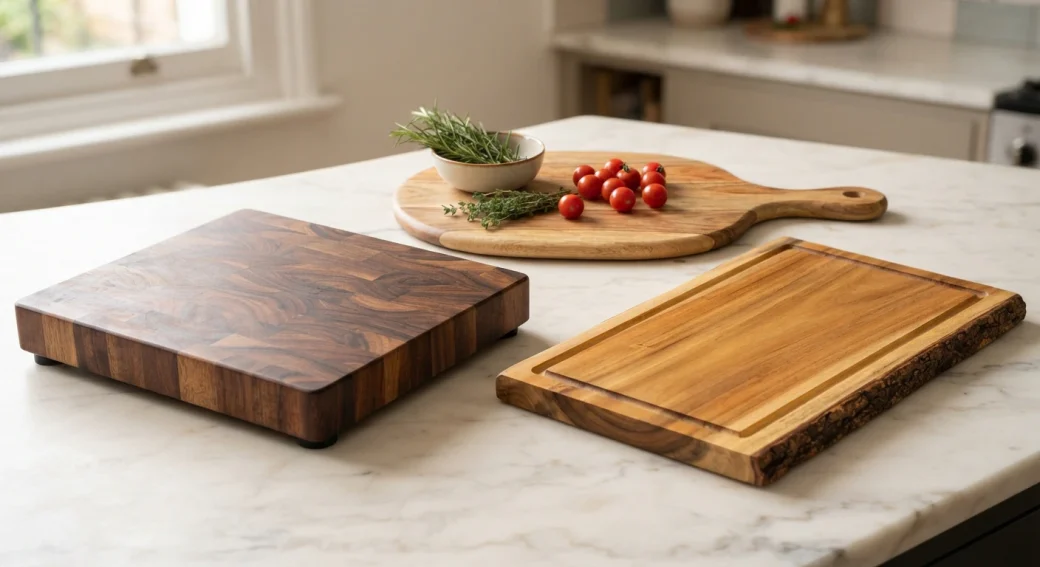
Choosing a wooden chopping board Pakistan buyers can trust is harder than it looks, and a search for the best wooden chopping boards in Pakistan only brings up more choices. Online shops list hundreds of boards, many with no brand name and almost no detail about the wood or how the board is made. This guide keeps things simple. You will learn how to judge a board, which type suits your kitchen, how to compare prices and how to keep a board safe and clean.
The short answer: choose a solid hardwood board with no deep cracks and no weak glue lines, in a size that suits your knife and your counter. Wash it by hand, oil it now and then, and it should last a long time. One more honest note. I could not find a trustworthy “number one brand” for Pakistan, so below I show you how to judge brands yourself.
Wooden Chopping Board Pakistan: What Makes a Good One?
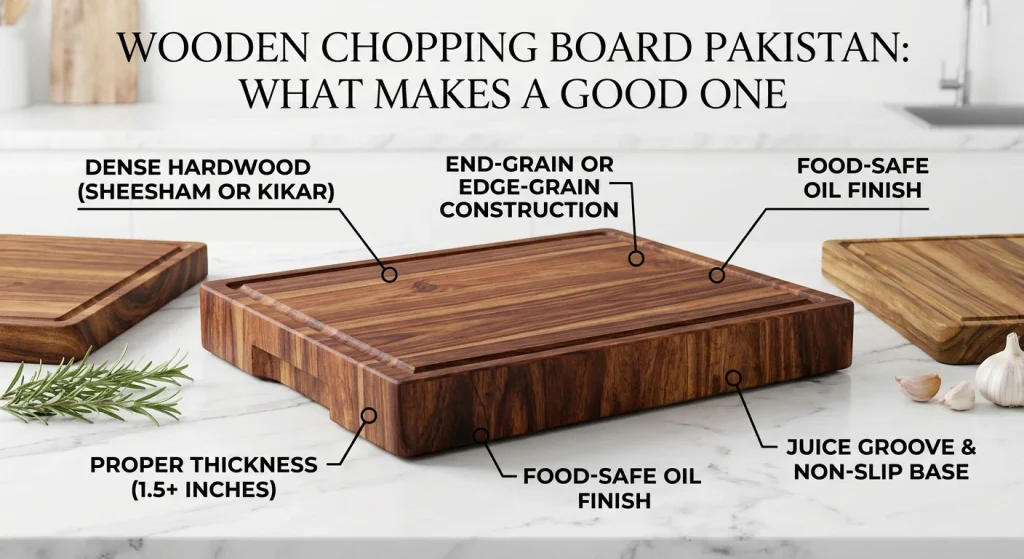
A good wooden board does four jobs well. It sits steady on the counter, it is kind to your knife, it is easy to keep clean, and it does not crack or warp after a few months of use. Looks matter too, but they come last.
In Pakistan there is one extra point to watch. Many listings online say “100% original wood” or “heavy duty” without naming the wood. A seller who names the wood, shows the thickness and explains the finish is usually easier to trust than one who does not.
Are Wooden Chopping Boards Safe?
Yes, when you choose well and clean them properly. The US Department of Agriculture says you can use either wood or a non-porous surface such as plastic, marble or glass. What matters most is how you handle the board. You can read the full advice on the USDA cutting board page.
The same agency adds that non-porous boards are easier to clean than wood. So with wood you need to be a little more careful. That means washing after every use and drying the board well.
What the Research Says About Wood and Bacteria
In the early 1990s, researchers at the University of Wisconsin-Madison reported that bacteria died off faster on wooden boards than on plastic ones. That surprised many people, because plastic had long been called the safer choice.
Not every study agreed. A food safety trade article says later FDA studies found that bacteria could get trapped in wood and were hard to rinse out. So the fair summary is this: the research is mixed, and both materials work when they are cleaned well and replaced on time.
When a Wooden Board Should Be Replaced
Every board wears out. The USDA says to replace a board once it is badly worn or has grooves that are hard to clean. A deep crack is a bad sign, because food and moisture can sit inside it.
If your board only has light knife marks, it is usually fine. If you can feel deep grooves or see black spots that do not wash away, it is time for a new one.
Which Wood Is the Healthiest Choice?
There is no proven “healthiest” wood. The Wisconsin tests used seven woods, including hard maple, beech, birch and black walnut. A food safety article also says the US Food Code allows maple or similar close-grained hardwoods. Close-grained simply means the wood has small, tight pores.
Some sellers claim their wood has “natural germ-killing” powers. Treat that as a sales line, not a fact, unless they can show a reliable source. For a deeper look at hardwoods that are known to be food safe, see our wood guide.
Types of Wooden Cutting Boards
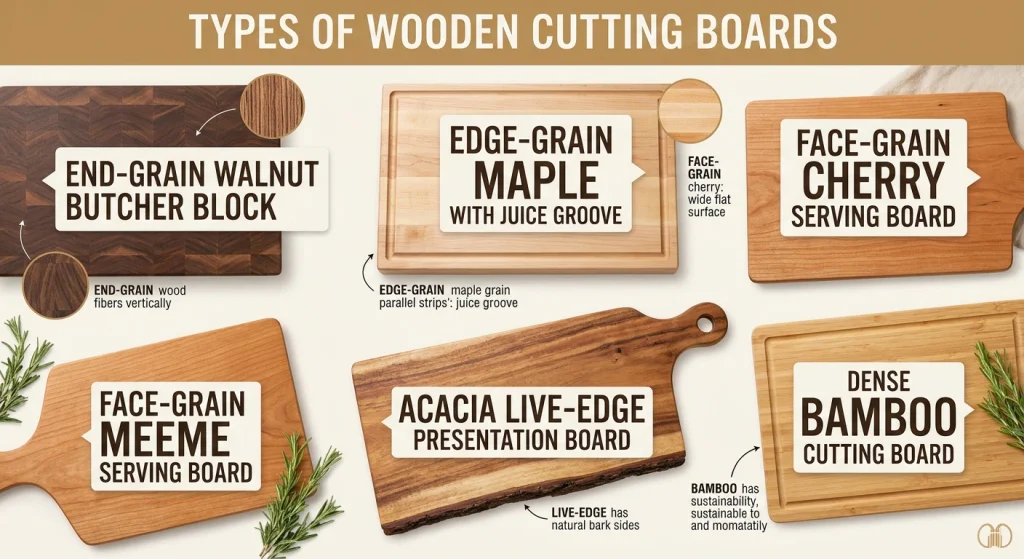
When people search for cutting board types, they often mean the material: wood, plastic, steel or bamboo. For wooden boards, the more useful split is how the wood is cut and arranged. This changes how the board treats your knife and how long it lasts.
End Grain vs Edge Grain Boards
The words refer to which part of the wood faces up. In an end grain board, small blocks are turned so the ends of the wood fibres face you. In an edge grain board, long strips are glued side by side and you cut across the long fibres.
Board makers describe both as safe and durable. The main differences are knife feel, how fast marks show, and price.
End Grain Boards
Makers say the knife slips between the fibres on an end grain board, and the fibres close up again afterwards. That is why these boards are described as gentle on knives and slow to show cut marks.
They take more work to build, so they usually cost more. I did not find a reliable price list for end grain boards in Pakistan, so check the seller’s own details before you pay extra.
Edge Grain Boards
Edge grain boards are simpler to make, so they are often cheaper. The knife cuts across the fibres, so marks show up sooner, and the board may need sanding now and then to smooth out grooves.
For most home kitchens an edge grain board is a sensible, practical pick. It is the type you will meet most often in shops.
What About Steel, Titanium and Plastic Boards?
Many shoppers in Pakistan also search for steel or titanium boards, and stainless steel and plastic boards show up often in online shops. They are not wood, so this guide does not rank them.
If you are comparing, ask the seller what the board is made of, how to clean it and whether it is food grade. One tip from the USDA applies to every material: a board that is badly scarred or hard to clean should be replaced.
How to Choose the Best Wooden Chopping Boards in Pakistan
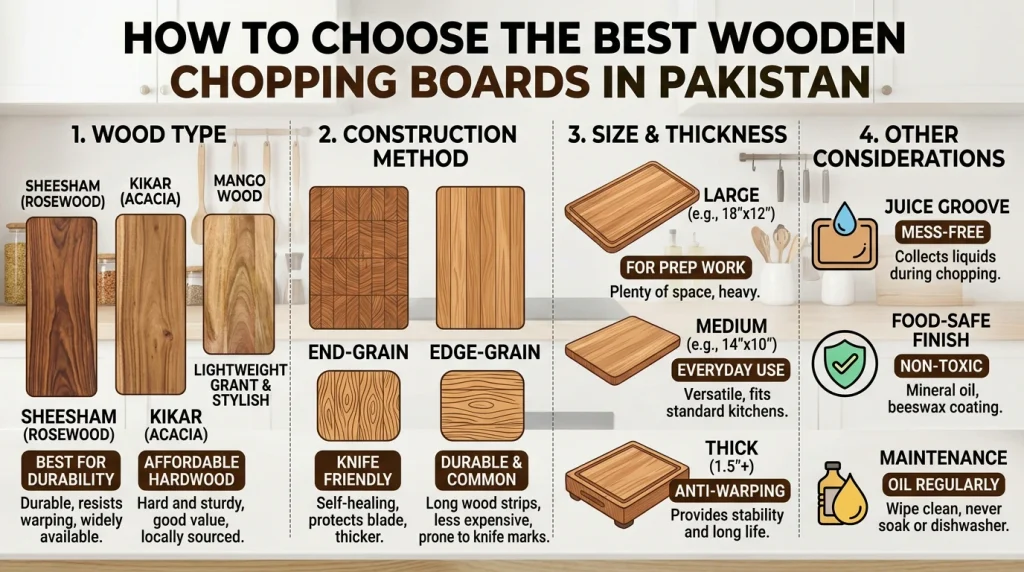
You do not need to be an expert to shop well. A few quick checks will save you from most bad buys. Go through the points below before you order, and ask the seller for clear photos of the front, back and edges.
Wooden Chopping Board Pakistan: How to Select the Right One
Think about how you cook. A person who chops onions and herbs every day needs something different from a person who only slices bread on weekends. Your answer decides the size, the thickness and the budget.
If you are also buying spoons, spatulas or bowls, our wider shopping checklist for wooden kitchen items will help you plan the whole set.
Check the Build and the Surface
Look closely at the board. A single solid piece has no glue lines to split. A glued board is fine if the joints are tight and even. Run your hand over the surface and edges and avoid anything rough, splintery or already cracked.
Ask what finish was used. Look for words like “food-safe oil” or “food-grade polish”. If the listing says nothing about the finish, ask before you buy.
Wooden Chopping Board Pakistan: A Simple Size Guide
A good rule is to pick a board longer than your main knife, with a little space at both ends. A cramped board makes chopping awkward and pushes food onto the counter.
As my own suggestion, not a tested rule, a medium board suits daily vegetable work and a larger one helps if you cook for a big family. Thicker boards usually feel steadier and bend less than thin ones. Also check that it fits in your sink for washing.
Cutting Boards for Vegetables, Meat and Bread
The USDA suggests using one board for raw meat, poultry and seafood, and a different one for vegetables, fruit, bread and other ready-to-eat food. This stops germs from raw meat reaching food you will not cook again.
You may have seen a cutting board colour chart, which uses colours for each food type. That system is common with plastic boards. Wooden boards do not come in food colours, so a simple habit works well: keep two boards and always use the same one for raw meat.
If you like buying a wooden cutting board set, a set of two or three sizes can make this easy. Just make sure each board still meets the quality checks above.
Wooden Cutting Board Price in Pakistan and Brands
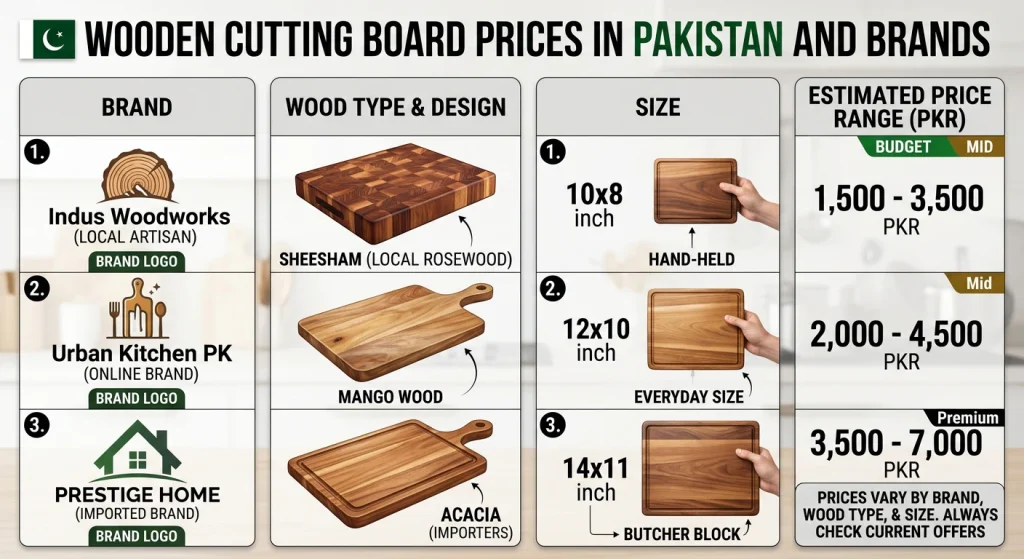
Price is the question most buyers ask first, and it is also where it is easiest to be misled. I did not find a single trustworthy price list for wooden chopping boards in Pakistan, so I will not give you a made-up range.
What to Expect on Price
Prices change by wood, size, thickness, finish and seller, and they move over time. Compare at least three listings of similar size and say which wood is used before you decide. A cheap price with no wood named is a warning sign.
To understand the reasons behind the numbers, read about what pushes wooden kitchen items up or down in price.
One Real Example: Food Fusion WeCut
Food Fusion is a Pakistani brand. When I checked its store page in November 2026, the WeCut cutting board, listed as solid mahogany wood, was priced at Rs 3,750. The page says the board comes treated with the brand’s own oil and wood butter, and it suggests re-applying wood butter every 5 to 10 uses.
Please treat this as one data point, not an average. Prices and stock can change, and those care claims come from the brand itself.
Which Brand Is Best?
Many readers ask for the best brand for wooden chopping boards. I could not find independent tests or enough verified reviews to name a winner, and I will not invent one. Many listings on marketplaces such as Daraz show “No Brand” and no ratings.
A better method is to judge the seller. Look for a named wood, clear photos, a return policy and honest care instructions. You can also look through other local wooden kitchen brands before you decide.
How to Care for a Wooden Chopping Board
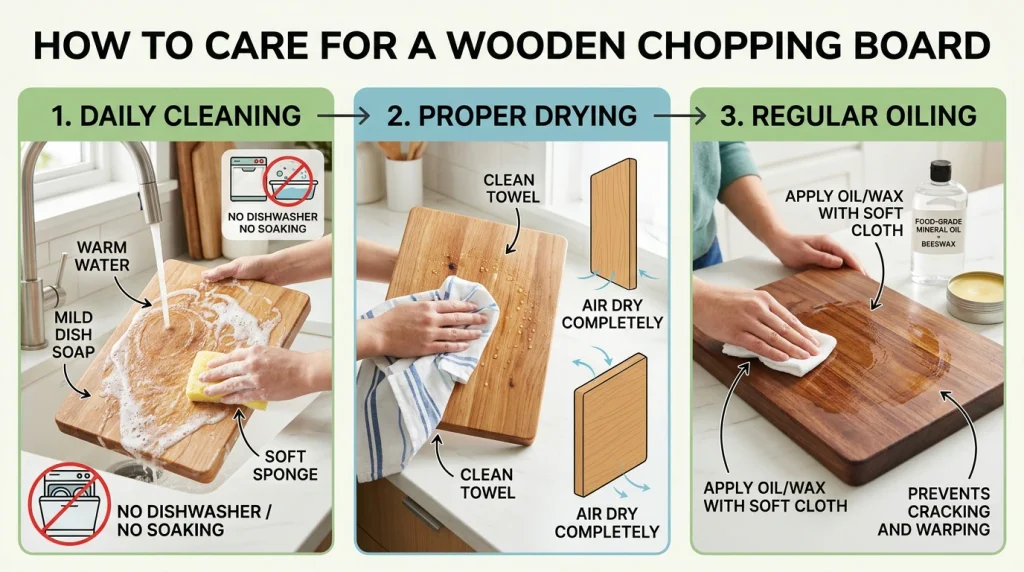
A little care keeps a board safe and stops it from cracking. The routine is short and takes only a few minutes after cooking. Two habits matter most: wash it properly after each use, and keep the wood from drying out or sitting wet.
Daily Cleaning
Wash the board with hot soapy water after each use, rinse it, and dry it with a clean towel or let it air dry standing up. After raw meat, take extra care. The USDA says solid wood can go in a dishwasher while laminated boards may split, but hand washing is the gentler choice for glued boards.
For deeper cleaning, see these home sanitising methods for wood.
Oiling and Drying
Wood dries out and can crack. Rub a thin coat of food-safe oil into a clean, dry board when it starts to look pale or rough, and wipe off the extra. Never leave the board soaking in water.
Dry it standing on its edge so air reaches both sides. For more detail, read about oiling and drying habits that stop cracks.
Frequently Asked Questions
These are the questions buyers ask most often when they search for a wooden chopping board in Pakistan. Each answer is short, so you can find what you need quickly and then go back to the sections above for the full details.
What is the best wooden chopping board to buy?
The best board for most homes is a solid hardwood board with a smooth surface, no deep cracks, a named wood and a food-safe finish. Pick a size longer than your main knife. Your budget and how often you cook decide the rest.
What is the healthiest type of wood cutting board?
No single wood has been proven healthiest. Close-grained hardwoods such as maple are the type named in US food rules, and research found that several hardwoods performed well. What keeps a board healthy is clean use, good drying and timely replacement.
What is the best brand for wooden chopping boards?
There is no verified ranking for Pakistan. Food Fusion is one local brand with a listed wooden board, but this guide does not claim it is the best. Compare sellers on wood type, build, finish, clear photos and return policy.
Is a wooden board better than plastic?
Neither is always better. The USDA accepts both. Plastic is easier to clean, and wood can be gentler on knives. Many careful cooks keep one of each: wood for vegetables and bread, and a separate board for raw meat.
Final Thoughts
The right wooden chopping board Pakistan kitchens need is not always the most expensive or the most popular. It is the one made from a named hardwood, built well, sized for your kitchen and looked after with simple habits.
Use the checklist above, compare a few listings, and buy from a seller who answers your questions clearly. Keep one board for raw meat, wash after every use, oil when it looks dry, and replace it when it gets deeply worn.