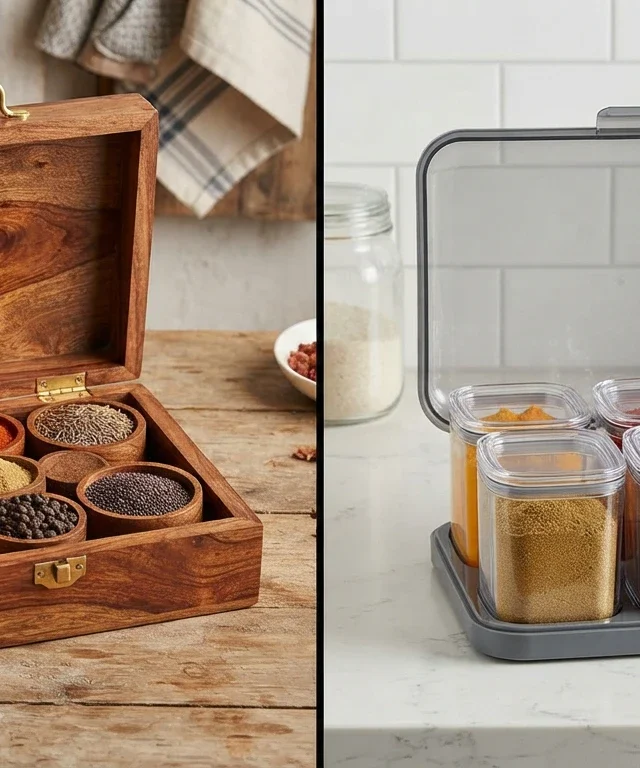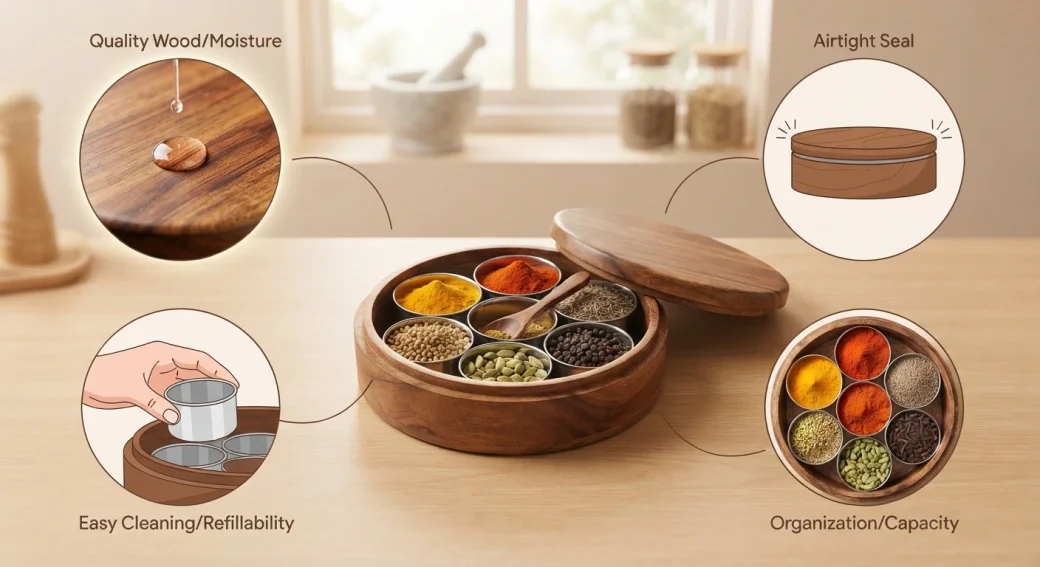
If you want to know how to choose a wooden spice box, start with three simple checks: the wood, the lid and the size. A good box keeps your masalas dry, closes snugly and fits the way you cook every day. This guide walks you through each check in plain words, so you can buy with confidence.
You do not need to know anything about woodworking. You only need to know what to look at, what to ask the seller and what to avoid before you pay.
How to Choose a Wooden Spice Box
Pick a box made from solid, tight-grain hardwood. Check that the lid fits well, that the cups or jars inside are easy to lift out, and that the finish is safe for food. Choose a size that matches the spices you really use, and keep the box away from the stove.
Here is the short version in five points:
- Solid hardwood with a smooth, tight grain
- A lid that closes flat with no gaps
- Removable cups or small jars for easy filling and washing
- A finish the seller can name and call food safe
- A size that fits your counter and your cooking habits
Why the Box Matters for Your Spices
Spices lose their smell, taste and colour when they meet air, light, moisture and heat. Penn State Extension advises keeping spices in airtight containers, in a dry place away from sunlight and heat, and says whole spices hold their quality longer than ground ones.
So a spice box is more than a pretty piece of kitchen decor. It is the heart of your kitchen spice storage, because it is where your spices spend most of their time. If the box lets in damp air or sits next to a hot stove, even the best masala will fade faster.
What a Wooden Box Can and Cannot Do
A wooden box gives you a sturdy, neat home for many spices. It is easy to carry to the stove, and it looks good on the counter. But wood alone does not make a box airtight. The seal depends on how well the lid fits and on the small containers inside.
Check the Wood Type First
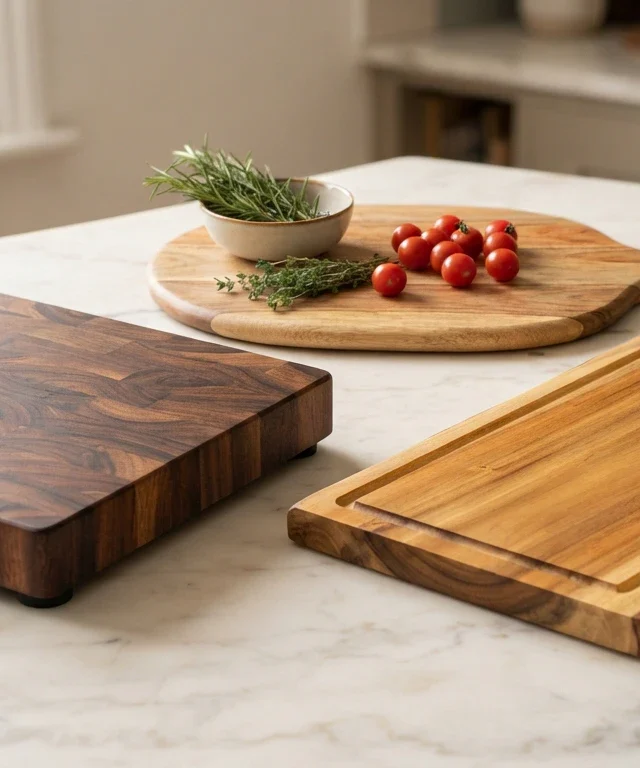
Hardwoods such as beech, maple and birch are often preferred for food-contact items because they have a tighter grain. If a seller offers teak, acacia, sheesham or another local hardwood, ask which wood it is and how the box was finished. This page on which hardwoods work best in the kitchen explains more about common choices.
Why a Tight Grain Helps
Tight-grain wood is less porous. That means it takes in less moisture, and it is less likely to warp over time. A box that warps will not close properly, and a loose lid lets in air. So grain is not only about looks. It affects how long the box stays useful.
Ask About Glue and Joints
Many boxes are made from several pieces joined together. Ask what glue was used and whether the seller can say it is safe for food. A clear answer is a good sign. If the seller cannot answer at all, you may want to choose another box.
Pick the Right Size and Compartments
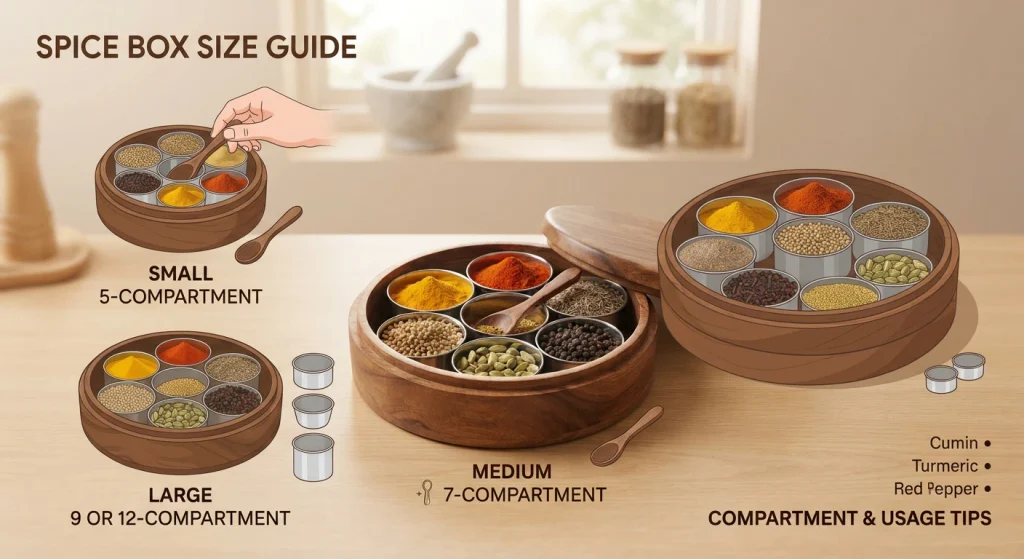
Size is where most buyers go wrong. A box that is too small makes you keep extra jars on the counter. A box that is too big takes up space and holds spices that sit unused for months. Think about how you cook before you look at designs.
How to Choose a Wooden Spice Box Size That Fits Your Cooking
Start by writing down the spices you reach for every week. Then add one or two spare spots for spices you use now and then. That number tells you how many cups or compartments you need. Measure your counter or drawer too, so your wooden spice organizer fits where you plan to keep it.
How to Choose a Wooden Spice Box for Chicken and Daily Curry Masalas
If you cook chicken curry often, you may use chilli powder, turmeric, coriander, cumin and garam masala again and again. Give each of those its own cup, and put them where your hand can reach them easily while you cook. Keep the spices you use rarely in the spare cups.
Cups, Jars and Small Spoons
Removable cups or jars are easier to fill and wash than fixed compartments. A small spoon that stays with the box is also useful. Use it dry every time, because wet spoons add moisture, and moisture makes spices clump together and lose their freshness.
Test the Lid and the Seal
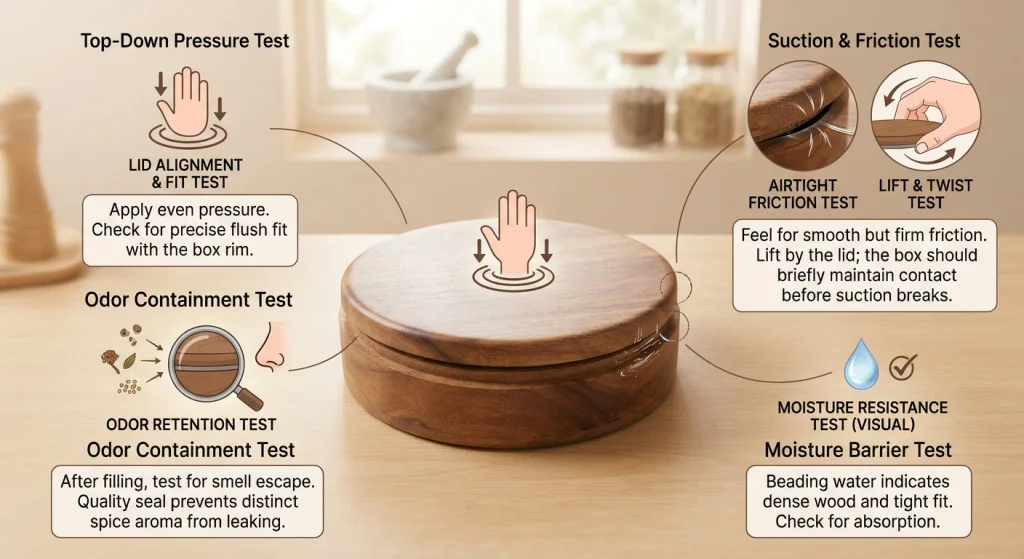
Take the lid in your hands and close it slowly. It should sit flat, with no big gaps and no rocking. Many masala boxes have lids that do not seal properly, so it is worth checking this before you buy. If the inner cups have their own lids, even better.
Clear Lids and Light
Some boxes have a see-through lid, so you can see your spices at a glance. It looks nice, but light is one of the things that speeds up colour and flavour loss, according to extension guidance. If you like a clear lid, keep the box in a shaded spot, away from windows.
Check the Finish and Food Safety
The finish is the oil, wax or coating on the wood. It should be safe for contact with food. In many countries, coatings used on food-contact items are expected to follow food-contact rules, but the rules differ by place, so ask the maker or seller to tell you exactly what was used.
Smooth Edges and No Splinters
Run your hand along the edges, the corners and the inside of every cup. Everything should feel smooth. Rough spots can catch spices and can also splinter. If you see cracks, rough joints or loose pieces, leave that box on the shelf.
Design, Cleaning and Everyday Use
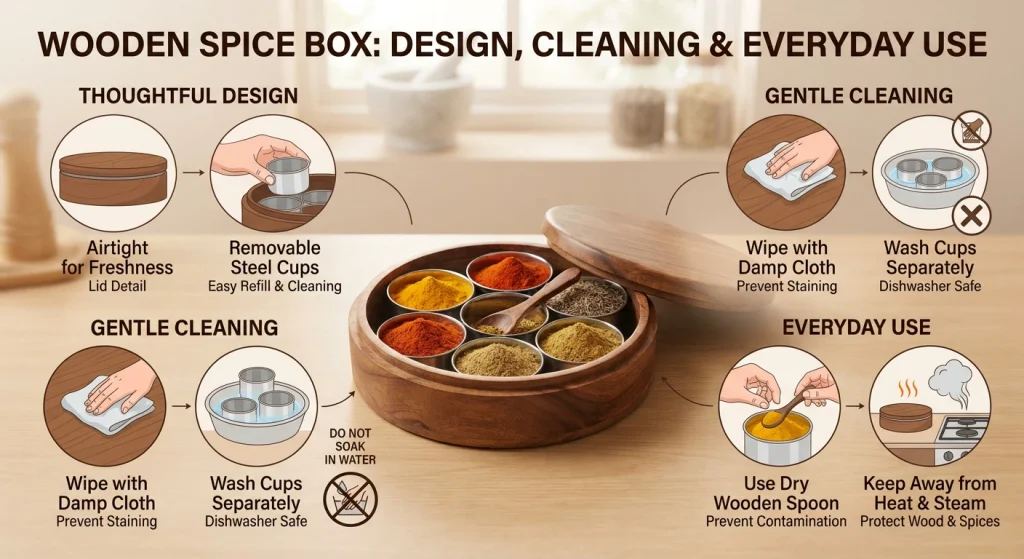
A box you enjoy using is a box you keep using. Think about how it will look in your kitchen and how easy it will be to clean. Smooth inner surfaces and removable cups make life much easier on busy days, especially when you cook every day.
Traditional Shape or Modern Style
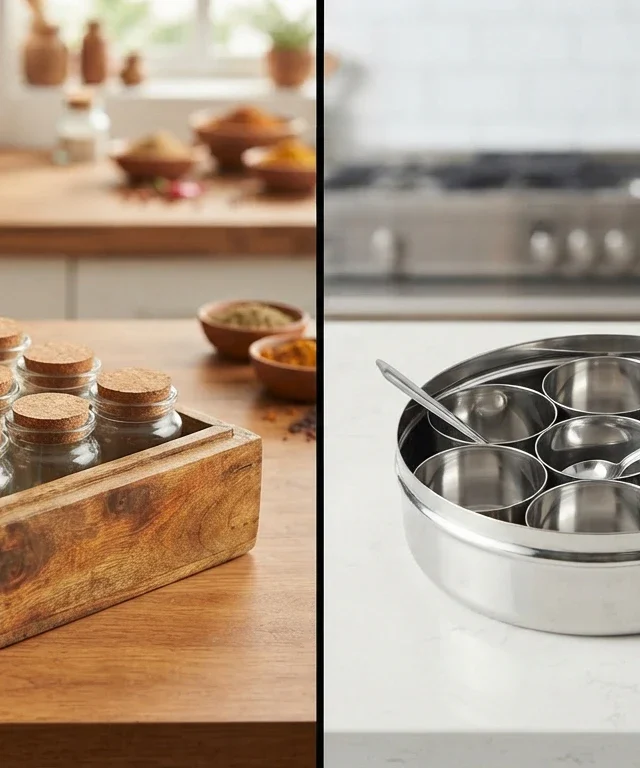
A traditional round masala dabba, with a deep lid and small cups in a circle, suits many South Asian kitchens. A rectangular box with a flat lid can save space in a drawer. Neither shape is better than the other. Pick the one that fits your space and the way you cook.
Keep It Clean and Fresh
Wipe the box with a dry or lightly damp cloth, and let it dry fully before you refill it. Avoid soaking the wood. These simple wood cleaning habits show how to keep wooden kitchen tools tidy. If a strong smell stays in the wood, tips on getting strong smells out of wood can help.
Wood, Steel, Brass or Plastic: A Quick Look
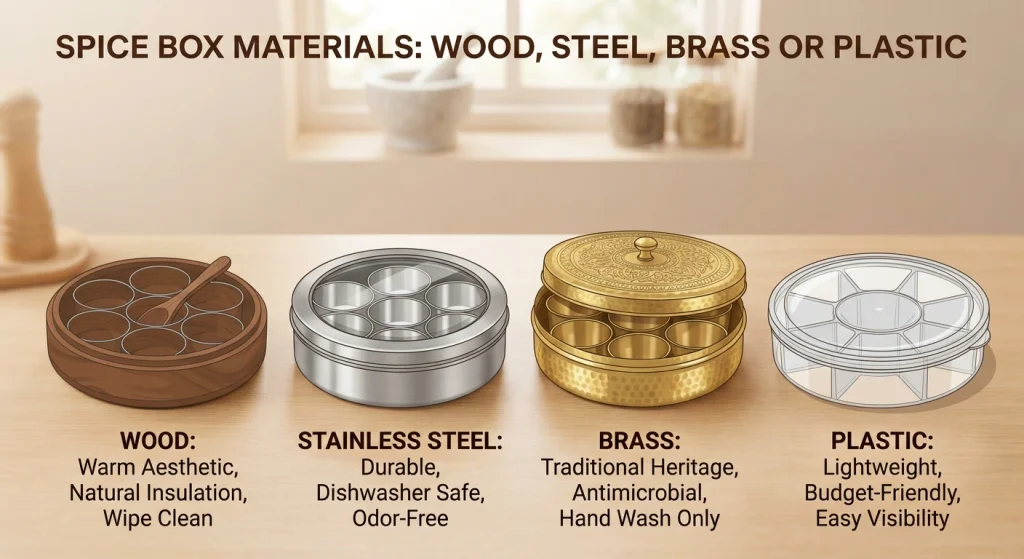
Wood is not your only choice. Many people also look at a brass masala box or a stainless steel masala dabba, and each material suits a different kitchen. Wood feels warm and looks natural, while other materials have their own strengths and trade-offs.
If you are still deciding, read how wooden boxes compare with plastic ones and how a steel masala container compares before you buy. Those two pages go into the details, so you do not have to guess.
Where to Keep Your Wooden Spice Box
Even a well-made box needs a good spot. Keep it in a cool, dry cupboard or drawer, away from the stove, oven and dishwasher, because heat and steam shorten the life of spices. Do not place it right above the cooker, however handy that looks.
If your kitchen is small, look at these wood storage ideas for a small kitchen to find a spot that keeps the box close but safe from heat.
Common Mistakes When Buying a Wooden Spice Box
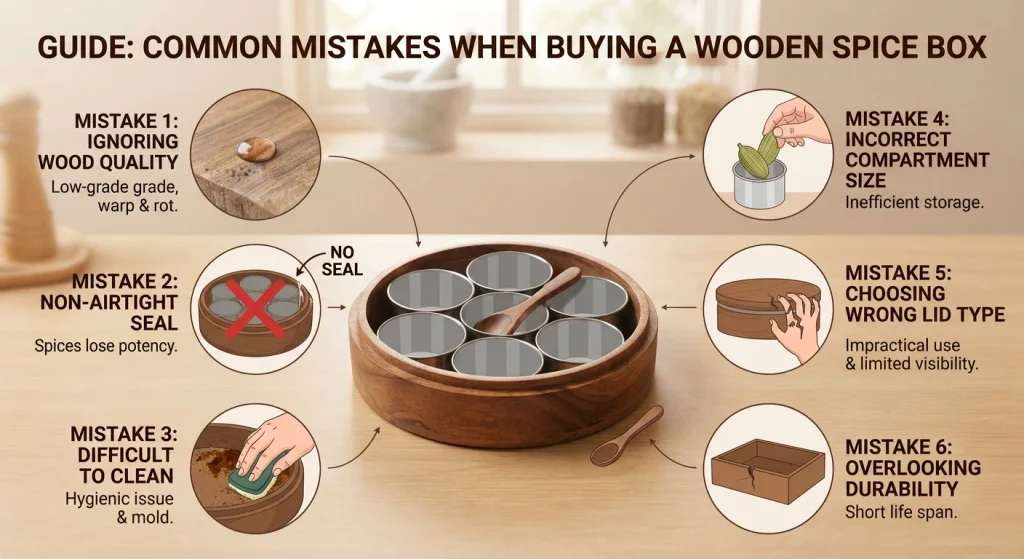
Most buying mistakes are easy to avoid once you know them. Here are the ones to watch for before you pay, so your new box stays useful for a long time:
- Buying for looks only and skipping the lid test
- Choosing a box that is too big for the spices you use
- Not asking what finish or glue was used
- Ignoring rough edges, cracks or loose joints
- Placing the box next to the stove or above the cooker
Quick Buying Checklist
Take this list with you when you shop, or keep it open on your phone while you compare boxes online. If a box passes most of these checks, it is likely a good fit for your kitchen:
- The wood is solid hardwood, and the seller can name it.
- The grain looks tight and smooth.
- The lid closes flat with no gaps or rocking.
- The cups or jars lift out easily.
- The finish is food safe, and the seller can explain it.
- The edges and inside corners are smooth.
- The size fits your counter and your weekly spices.
- You have a cool, dry spot away from the stove.
Frequently Asked Questions
Here are quick answers to questions buyers often ask before choosing a wooden spice box. Each answer is short, so you can find what you need and get back to cooking.
What is the best wood for a spice box?
A tight-grain hardwood is a good choice because it absorbs less moisture and is less likely to warp. Beech, maple and birch are common examples. Whatever wood you choose, ask the seller to name it and explain the finish.
Is a wooden spice box safe for food?
It can be, if the wood and the finish are suitable for food contact. Ask what finish was used, and avoid any box with a strong chemical smell, rough edges or cracks. If the seller cannot answer your questions, pick another box.
Can I wash a wooden spice box?
It is best not to soak it. Wipe it with a dry or lightly damp cloth, take out the cups and wash those separately, and let everything dry fully before you refill. Water left on wood can cause cracks and warping over time.
Do wooden spice boxes keep spices fresh?
Only if the lid and the inner cups close well. Wood alone does not make a box airtight. Check the lid fit, keep the box in a cool, dry, dark place and fill the cups with dry spices.
Final Thoughts
Now you know how to choose a wooden spice box without stress. Check the wood, test the lid, pick a size that suits your cooking and ask about the finish. Then keep the box dry, clean and away from the stove, and your spices will stay easy to reach and pleasant to use.