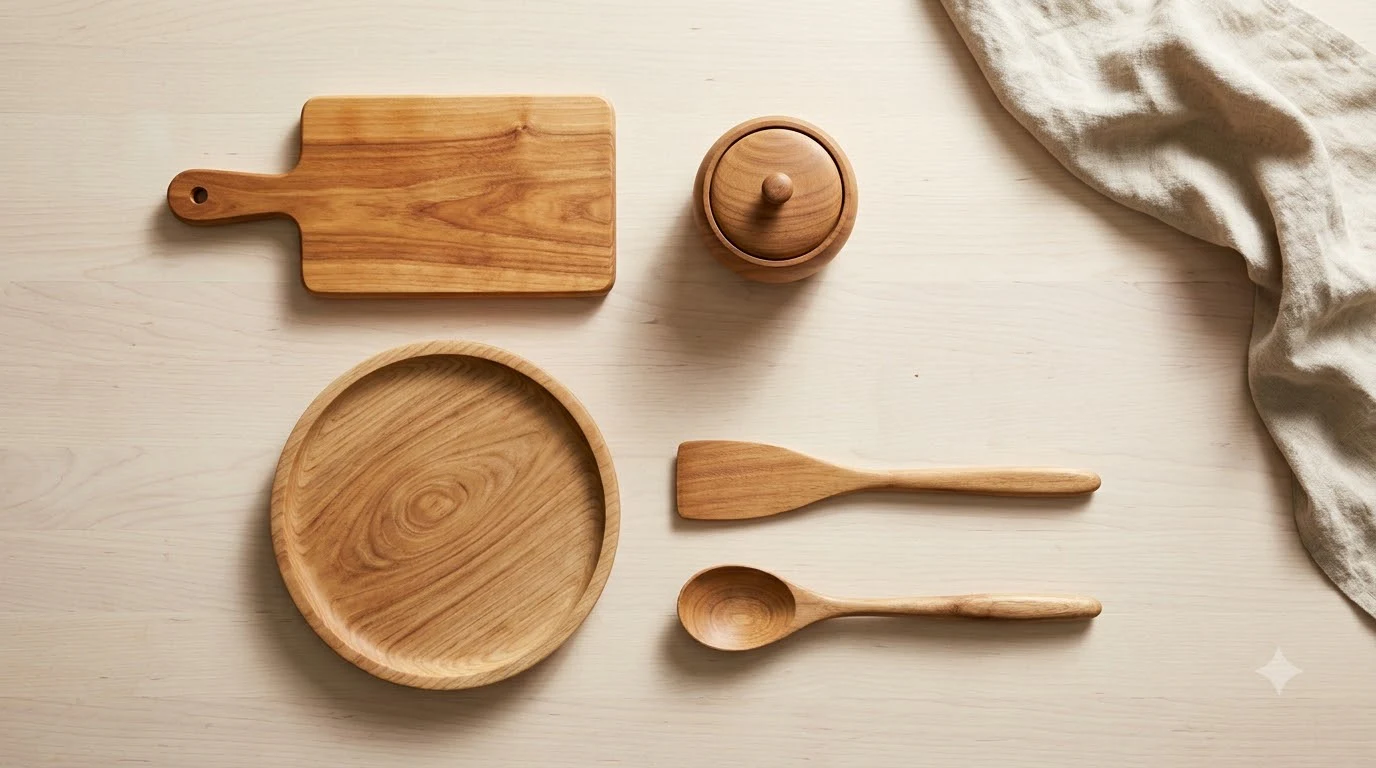
| Wooden kitchenware is any cooking, food-prep, serving or storage item made mainly from wood, such as spoons, spatulas, chopping boards, trays, bowls and spice boxes. Food-safety agencies accept wood as a material for food preparation when items are kept clean, dry and in good condition, and replaced once they develop deep grooves or cracks. Species, glue and finish differ from one product to another, so check the maker’s care and food-contact information before relying on any piece. |
This guide is the starting point for the wooden kitchenware section of this site. It explains what the category covers, how wood compares with other materials, what food-safety guidance says, and how to judge and look after what you own. Each topic links to a deeper article.
What counts as wooden kitchenware?
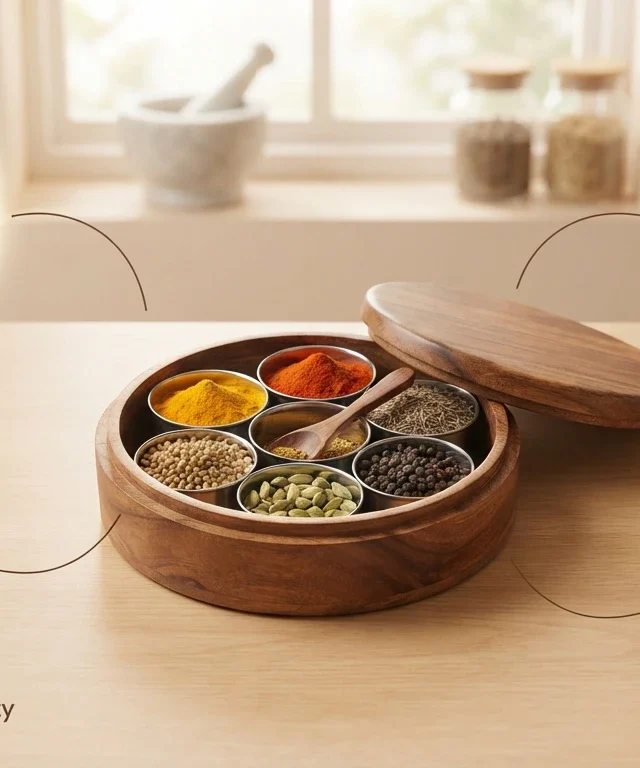
Wooden kitchenware means kitchen items that are made mainly from wood and are meant to touch or hold food, or to organise food-related items. That includes a wooden spoon used in a pot, a chopping board used for vegetables, a tray used to carry tea, and a masala dani (spice box) used for storing dry spices.
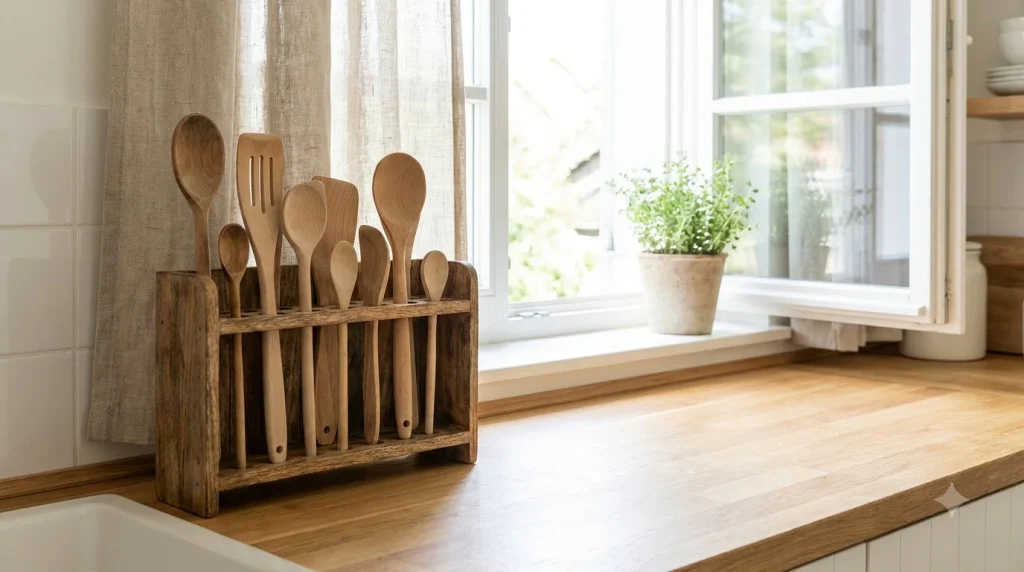
The category is wide, and the risks differ by item. A spoon stirring hot oil, a board that meets raw chicken and a spice box that holds dry masalas face very different conditions. That is why this guide treats each group separately instead of giving one set of rules for everything.
Types of wooden kitchenware
| Group | Common items | What to watch |
|---|---|---|
| Cooking utensils | Spoons, spatulas, forks, ladles | Heat, oil and strongly flavoured food; cracking at the handle or edge |
| Food-prep tools | Chopping boards, chakla-belan (rolling board and pin), mortar and pestle | Knife marks, moisture, raw and ready-to-eat foods sharing a surface |
| Serving items | Trays, bowls, platters, serving boards | Finish suitability for direct food contact; staining |
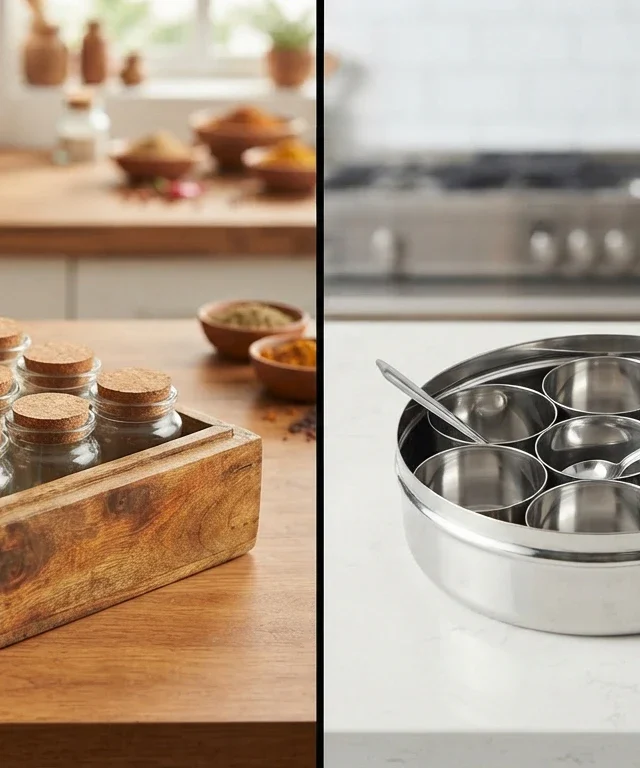
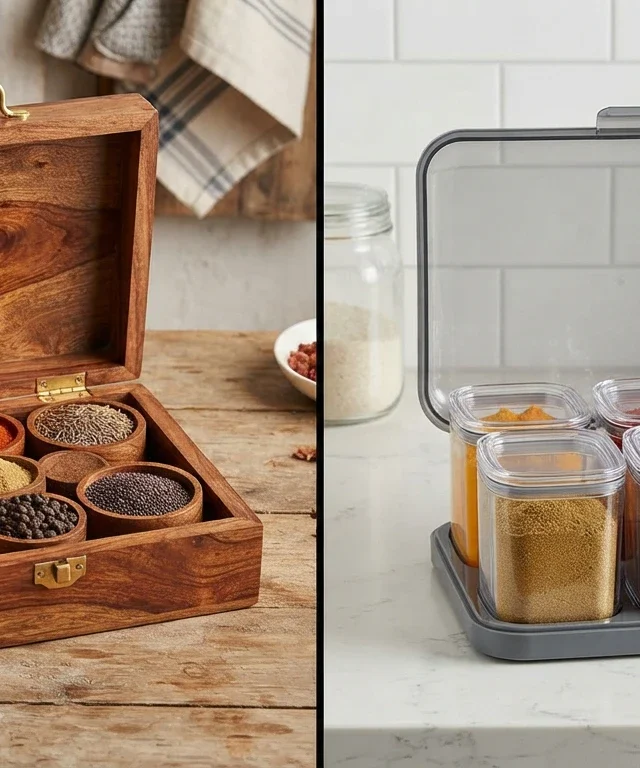
| Storage and organisers | Spice boxes, canisters, racks, drawer organisers | Humidity, ventilation, and whether the inside is raw wood or coated |
For a fuller breakdown of utensils, see types of wooden kitchen utensils. For boards, trays and bowls, see the wooden kitchen accessories guide.
How wood compares with other kitchen materials
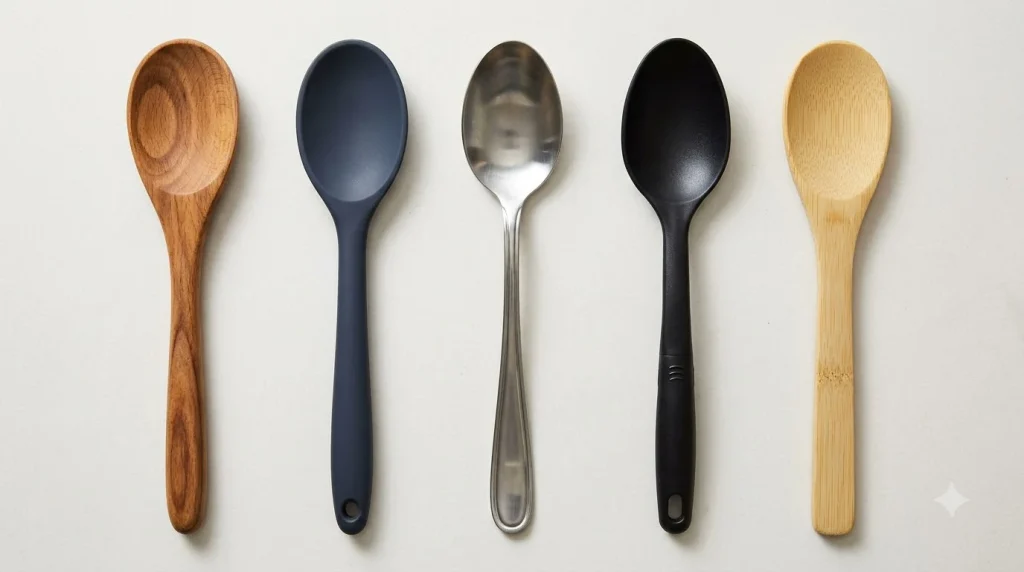
There is no universal winner. The better material depends on the task, the heat involved and how much care you will realistically give it.
| Material | Where it tends to work well | Common limits |
|---|---|---|
| Wood | Stirring and serving; handles that stay comfortable to hold; gentle contact with pan surfaces | Needs hand care; can crack, stain or absorb moisture; needs replacing when worn |
| Stainless steel | Durable, non-porous items | Metal conducts heat; can scratch coated pans |
| Silicone | Heat tolerance and flexibility, though limits vary by product | Quality and heat ratings vary; check the maker’s label |
| Plastic | Light, inexpensive boards and tools | Scarred plastic boards are hard to clean; heat limits vary |
| Bamboo | Boards and utensils; USDA-linked extension guidance describes bamboo as harder and less porous than hardwoods | Often glued from strips, so check care instructions |
The comparison above is general guidance, not test results. If you want a head-to-head look, start with wooden spoons vs silicone spoons or wooden vs stainless steel utensils.
Is wooden kitchenware safe to use?
Short answer: Yes, wood can be used for food preparation when it is kept clean and in good condition. The condition of the item matters more than the material label.
Here is what the food-safety agencies say, mostly about boards:
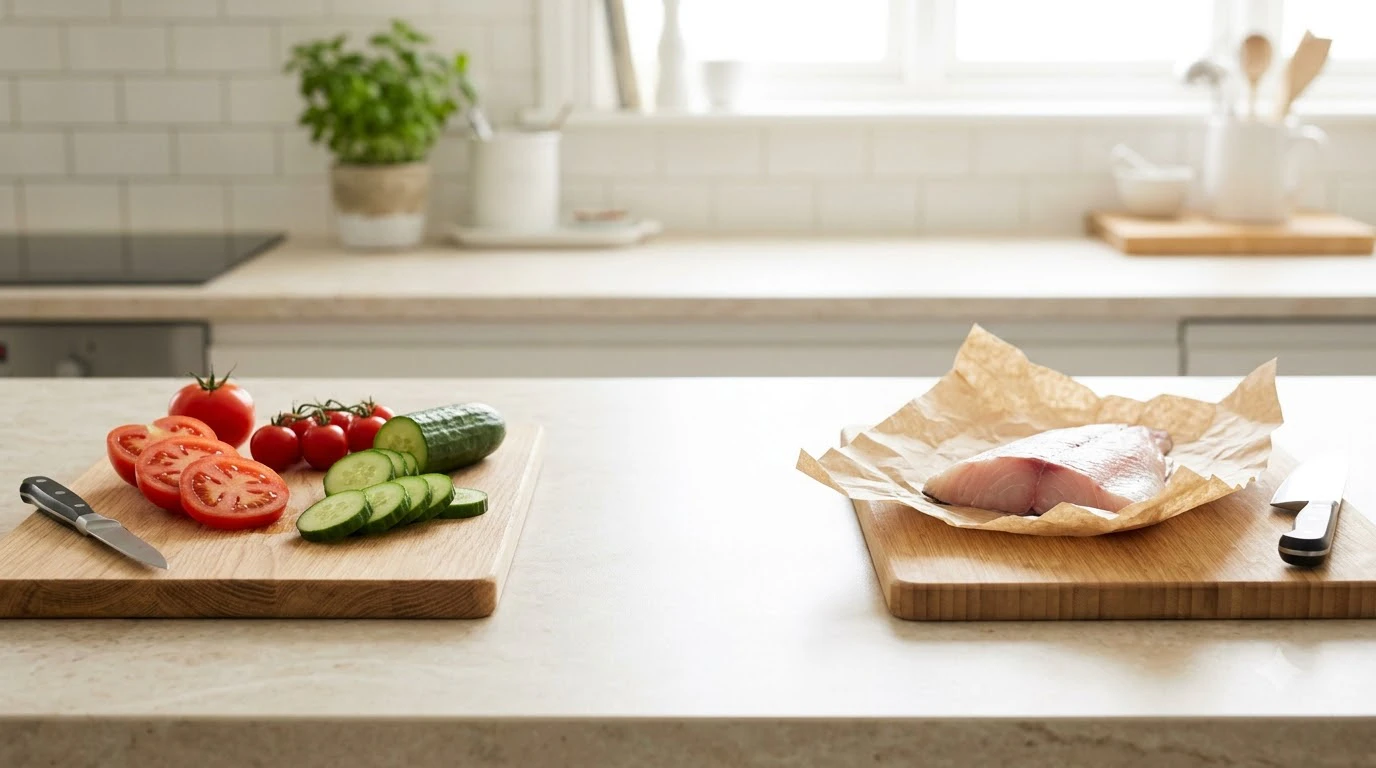
- USDA Food Safety and Inspection Service: consumers may use wood or a non-porous surface to cut raw meat and poultry. It suggests keeping one board for produce and bread and another for raw meat, poultry and seafood, and says worn boards with hard-to-clean grooves should be discarded.
- Food Safety Authority of Ireland (FSAI): wooden chopping boards can be used when kept in a clean and hygienic condition. It says wooden boards should be hardwood, preferably end-grain, and that deeply scored boards are harder to clean.
- NSW Food Authority (Australia): food should not be prepared or served on boards with deep gouges and cuts, and boards that cannot be cleaned effectively because of damage should be replaced.
What this does not tell us. These sources focus on cutting and serving boards. They do not certify any particular species, finish or product, and they do not mean every wooden item sold anywhere is suitable for food. This site does not claim that wood is naturally antibacterial or inherently safer or riskier than plastic or steel. Cleaning, drying, damage and intended use decide the outcome.
Choosing wood: what to know before you compare species
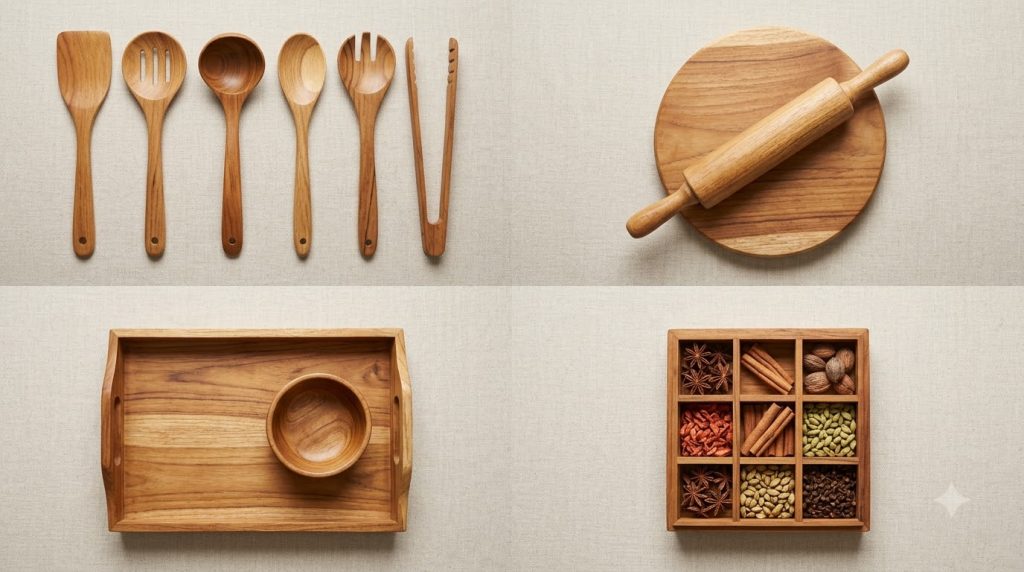
Wooden kitchenware is usually described by species, with names such as sheesham, acacia, mango wood, teak, maple, olive or cherry. Properties differ by species and also by the individual piece, including grain, how well the wood was dried and how it was finished.
Three practical points:
- Hardwood is the usual recommendation for boards. The FSAI guidance above specifies hardwood. Softer or very open-grained woods can mark more easily, although the exact behaviour depends on the piece.
- Species names on listings can be loose. Ask the seller which species was used and whether it is solid wood or a composite.
- Allergy is uncommon but possible. Sheesham is Dalbergia sissoo, a member of the Dalbergia genus. Dermatology references describe contact sensitisation to Dalbergia woods, mainly from wood dust in workshops and more rarely from intensive skin contact. If you have a known wood allergy, speak to a clinician before choosing a species.
When you are ready to compare, see best wood for kitchen utensils and the wood types for kitchenware guide.
Finishes, glue and food contact
The finish is as important as the wood. Some items are left raw or treated with oil or wax. Others are coated with a film such as varnish or lacquer.
- Oils and waxes. Food-grade mineral oil is widely recommended for boards, and the NSW Food Authority notes that an oil or wax treatment may help reduce water absorption. Which oil or wax suits a given item depends on the maker’s instructions.
- Film finishes. Dry to the touch is not the same as cured, and neither is the same as food-contact approved. Suitability depends on the specific product, full curing and the intended use. A coating that forms a surface film can also chip or be cut through, which is one reason cutting and cooking items are often left oil-finished.
- Glue. Boards and utensils made from several pieces depend on the adhesive as well as the wood. USDA notes that laminated boards may crack and split in a dishwasher.
Do not treat the words “food safe” on a listing as proof. Ask what finish was used, whether the maker states it is intended for food contact, and how the item should be cleaned. For more detail, read food safe finishes for wooden kitchenware and is varnished wood safe for food contact.
How to judge the quality of wooden kitchenware
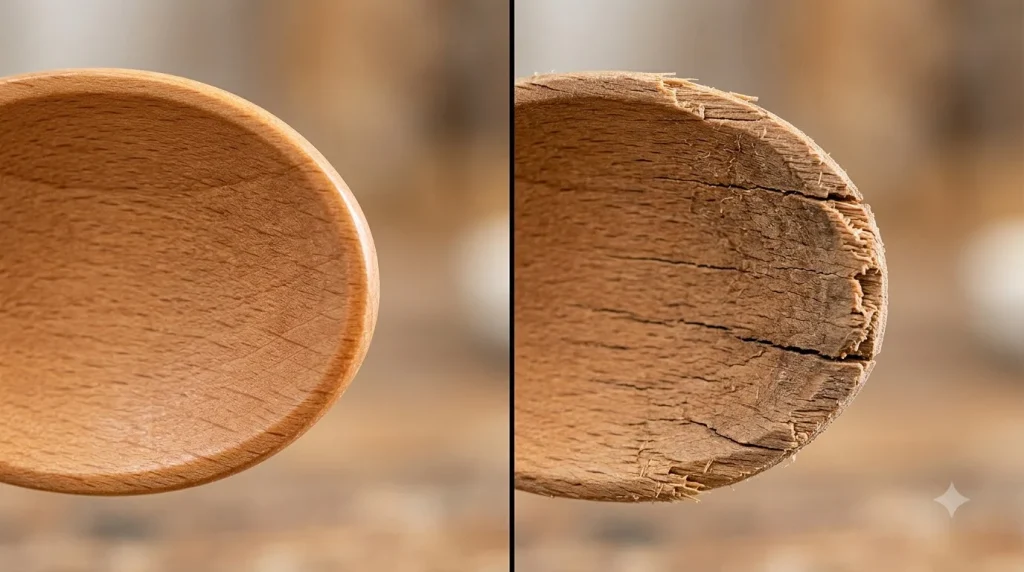
You cannot test food safety by looking, but you can spot obvious problems before you buy or use an item:
- Smooth surface with no splinters or rough edges, especially on spoon edges and board corners
- No cracks or splits, particularly at joins and where a handle meets the bowl of a spoon
- No strong chemical smell
- Solid wood or clearly described construction, rather than an unexplained mix of pieces
- Thickness and weight suited to the job: a board that rocks or flexes is awkward to use
- Care instructions and finish details from the seller
More detail is in how to identify quality wooden kitchenware and how to identify low-quality wooden products.
Everyday care basics
Follow the maker’s instructions first. Where none are given, this is a sensible baseline:
- Wash soon after use with hot, soapy water and rinse with clean water. The USDA Hotline recommends this for cutting boards.
- Do not leave wood soaking. Standing water and repeated wetting are a common cause of cracking and warping.
- Dry properly. Air dry or pat dry, then store so air can reach every side.
- Use hand washing as the default unless the maker says the item is dishwasher-safe.
- Disinfect with care. USDA lists a dilute bleach solution for wooden and plastic boards, but suitability for spoons, bowls and finished items depends on the product. See how to disinfect wooden spoons.
- Oil occasionally if the maker recommends it, using a product intended for food-contact wood.
- Store somewhere dry. In humid months, ventilation matters more. See maintaining wooden kitchenware in humid weather.
Detailed routines are in how to clean wooden cooking utensils and how to clean a wooden chopping board.
When to replace wooden kitchenware
Replace an item when it has deep grooves or cuts that you cannot clean, cracks or splits, rough splinters, or a persistent odour or mould that washing does not remove. The USDA and the NSW Food Authority both advise discarding boards that are too worn or damaged to clean effectively. If you are unsure about an item’s condition, replacing it is the cautious choice. For expected service life, see how long wooden cooking utensils last.
Common mistakes to avoid
- Using one board for raw meat and for food that needs no further cooking
- Soaking wooden items or leaving them wet in a drawer or sink
- Assuming “food safe” on a listing has been verified
- Keeping a deeply scored or cracked board because it still looks usable
- Applying any coating or disinfectant without checking it suits food-contact wood
See common wooden kitchenware mistakes for the longer list.
Buying wooden kitchenware in Pakistan
This guide does not list prices or shops, because prices change and this site has not verified current market figures. What you can compare reliably is what you are paying for: the species and whether it is solid, the size and thickness, the finish and its food-contact information, how the item is joined, and how much of it is hand-finished. Use wooden kitchenware price factors in Pakistan and the wooden kitchenware buying guide for Pakistan to compare listings on those points.
Frequently asked questions
Is wooden kitchenware safe for cooking and serving?
It can be, provided it is clean, dry and undamaged, and the finish is suitable for food contact. Check the maker’s instructions for the exact item.
Can I cut raw meat on a wooden board?
USDA guidance says consumers may use wood or a non-porous board for raw meat and poultry. It suggests keeping separate boards for raw meat, poultry and seafood and for ready-to-eat food, and cleaning the board after each use.
Can wooden utensils go in the dishwasher?
Only if the maker says so. Heat and prolonged wetting can damage some items, and USDA notes that laminated boards may crack and split. Hand washing is the lower-risk default.
Which wood is best for kitchen utensils?
It depends on the item, the finish and the care you can give it. Compare species using the same criteria, such as grain, how the piece was dried, finish and your allergy considerations, rather than relying on one species name.
How long does wooden kitchenware last?
There is no fixed lifespan. Condition is the better guide: replace items that are cracked, deeply scored, splintered or impossible to clean.

[…] Wooden Kitchenware Guide: Types, Wood Choice, Safety and Care […]
[…] Wooden Kitchenware Guide: Types, Wood Choice, Safety and Care […]
[…] Wooden kitchenware things asks a little more of you than steel or silicone does. That’s fine if you know it up front. If you’d rather not hand-wash anything, silicone might suit you better, and there’s no shame in mixing materials. […]