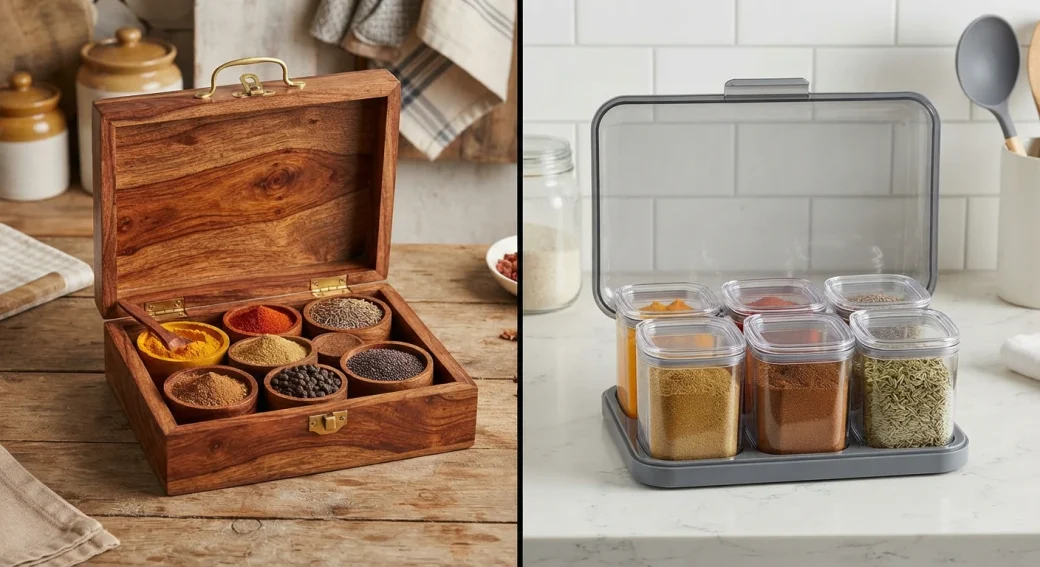
Choosing between a wooden spice box vs plastic spice box looks like a small decision. But it changes how long your spices stay fresh, how your counter looks, and how often you need to buy a new box. In this guide I compare the two in simple words. I also look at stainless steel and brass, because many kitchens use those too.
Wooden Spice Box vs Plastic Spice Box
Neither material wins every round. A spice box has one main job: to keep air, light, moisture and heat away from your spices. The Texas A&M AgriLife Extension guide says to keep dried herbs and spices in tightly covered containers, in a dark place away from sunlight. It also says to avoid shelves above the dishwasher, microwave, stove or fridge, and spots near a sink or heating vent.
So the lid and the inner container matter more than the outer material. A wooden box can do the job well if the lid fits snugly and your spices sit in small sealed containers inside it. A plastic box can do it too, if the plastic is food-grade and the lid shuts tight. If the lid is loose, either one will let your spices go stale.
Which material is best for spice box?
There is no single best material. Wood, plastic, stainless steel, brass and glass can all work. What matters is how well the box handles the things that fade spices. Here is what to look for, in order of importance:
- A tight lid that keeps out air and steam.
- A way to block light, either an opaque body or a dark cupboard.
- An inside that stays dry.
- A surface that is easy to clean and dry fully.
- A material that is safe for food contact.
A University of California extension sheet lists air, light, moisture and heat as the four things that speed up the loss of flavor and color in spices. So when someone asks me which material is best for spice box use, my answer is always the same: pick the one that handles those four things best in your kitchen.
What is the best container for storing spices?
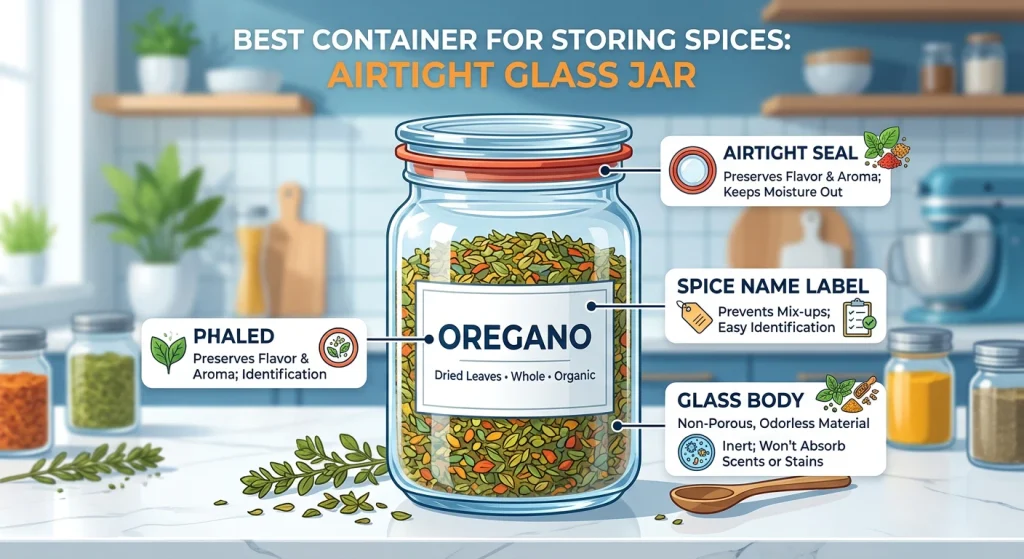
For most kitchens, the best container for storing spices is a small, airtight container that blocks light, kept in a cool, dry cupboard or drawer. Small is smart because a big container gets opened again and again, and fresh air gets in every time. Clear glass jars work too, as long as they live inside a dark cupboard and not on an open shelf in the sun.
What is the best type of container for storing spices?
Ask three questions before you think about style. Does the lid seal well? Does the container block light? Can you wash it and dry it fully? A good spice box storage set says yes to all three, whether it is made of wood, steel or plastic. Pick a size that you can finish in a reasonable time, so your spices are used up while they still smell strong.
Wooden spice box vs plastic spice box: why the lid matters most
Air carries moisture, and moisture makes ground spices clump. Extension guides also say to use a dry spoon, and not to shake spices straight into a steaming pot, because steam can get into the container. A box that lets steam in will spoil spices faster than any material choice can fix. So test the lid first. Close it, press it, and check that it sits flat with no gaps.
Is a wooden masala box good?
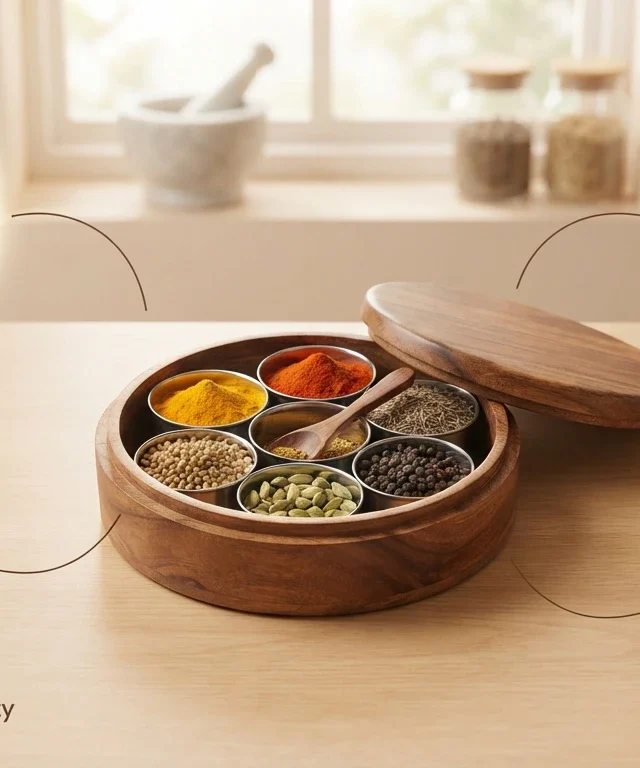
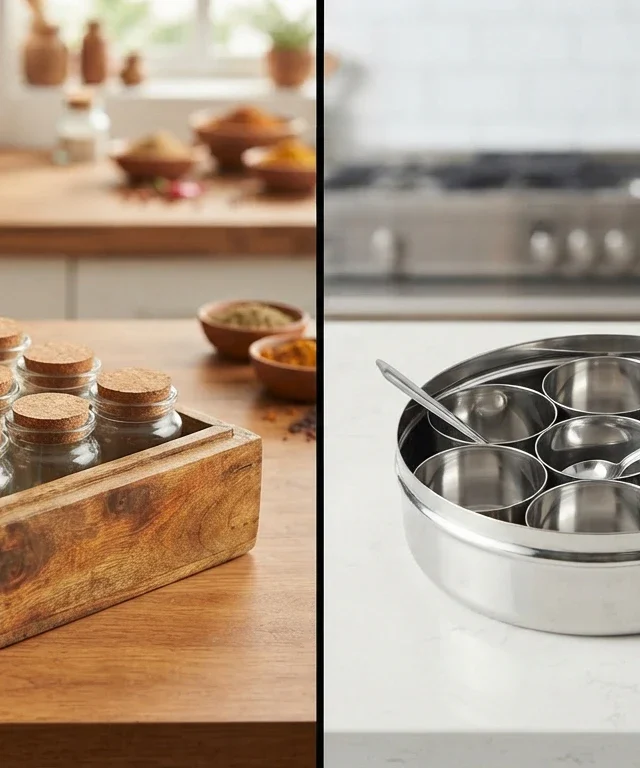
Yes, a wooden masala box can be a very good choice when it is well made and cared for. Wood feels solid, looks warm, and fits nicely on a counter or a dining table. A wooden spice box also works as a serving piece, so you can bring your masalas to the table in one neat set.
Pros of a wooden spice box
Wood is a natural material with a long history in food use. A 2016 review in Comprehensive Reviews in Food Science and Food Safety looked at about 20 years of studies on wood in contact with food. It found that wood’s porous surface is not the hygiene problem many people think it is, and that wood can even help limit the growth of germs. That review looked at wood in general, not at spice boxes, so treat it as a good sign and not a promise.
Wood is also opaque, so it keeps light away from the spices inside. If you are not sure which type to pick, this guide on which woods are safest for food will help you choose.
Cons of a wooden spice box
Wood is porous and takes in moisture. A damp kitchen can be hard on a wooden box, and food residue can stay in the surface. Strong spices and oils may also leave a smell behind. If that happens, read about lifting strong spice smells out of wood before you try anything harsh.
A plain wooden lid may also not seal as tightly as a plastic lid with a rim. That is why spices in a wooden box do best inside small lidded containers, and not poured straight into the wood.
How to keep a wooden spice box dry and fresh
Keep the box away from the stove, the sink and steam. Wipe it with a slightly damp cloth, then dry it right away. Do not soak it, because too much water can warp or crack wood. Scoop spices with a dry spoon. If you see tiny cracks starting, this short guide on how to stop wood from drying out and splitting shows simple care steps.
Is a plastic spice box a good choice?
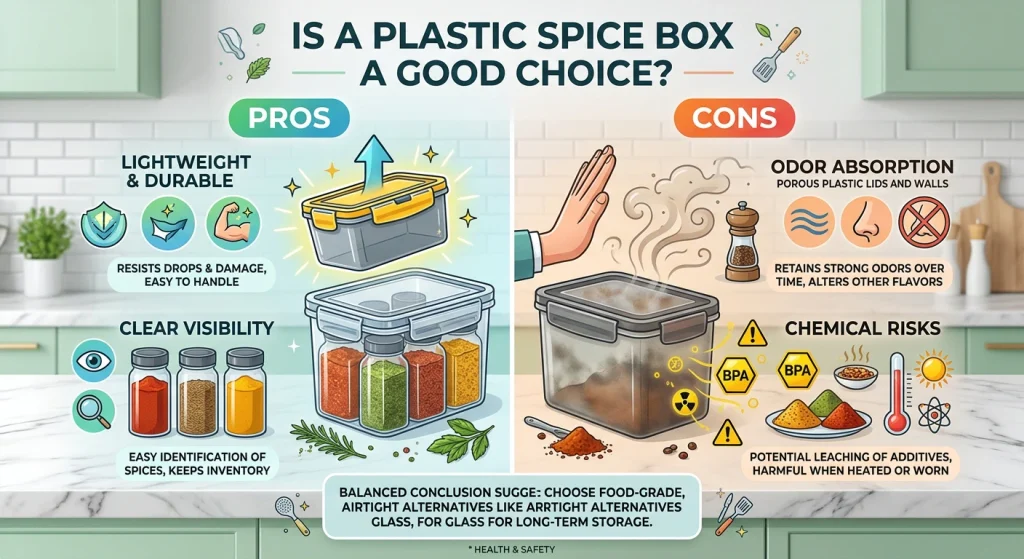
It can be, if you choose a good one. Plastic boxes are light, they do not soak up water the way wood does, and many have clear lids so you can see what is inside. The catch is that plastic quality varies a lot, so the label and the seller matter.
Plastic spice box pros and cons
On the good side, plastic is easy to carry, simple to wipe, and a clear lid helps you spot an empty compartment fast. On the weaker side, clear plastic lets light in unless the box lives in a dark cupboard. Plastic and heat also do not mix well. A news report on plastic food containers quoted researchers who said it is hard to know exactly which chemicals are in everyday plastics, and that even “microwave-safe” plastic needs care around heat. For spices, the easy rule is to keep plastic away from the stove. If you like comparing materials, see how wood compares with silicone and plastic tools.
How to check that a plastic masala container is food-safe
Look for a “food-grade” or food-contact label, and check the recycling number on the bottom. Polypropylene, marked with the number 5, is a common plastic for reusable food containers, and the US FDA approves it for food contact. Some guides suggest avoiding number 7, because that group is mixed and can include plastics made with BPA. If the seller cannot tell you what the plastic is, choose a different box.
Wooden spice box vs plastic spice box which is better
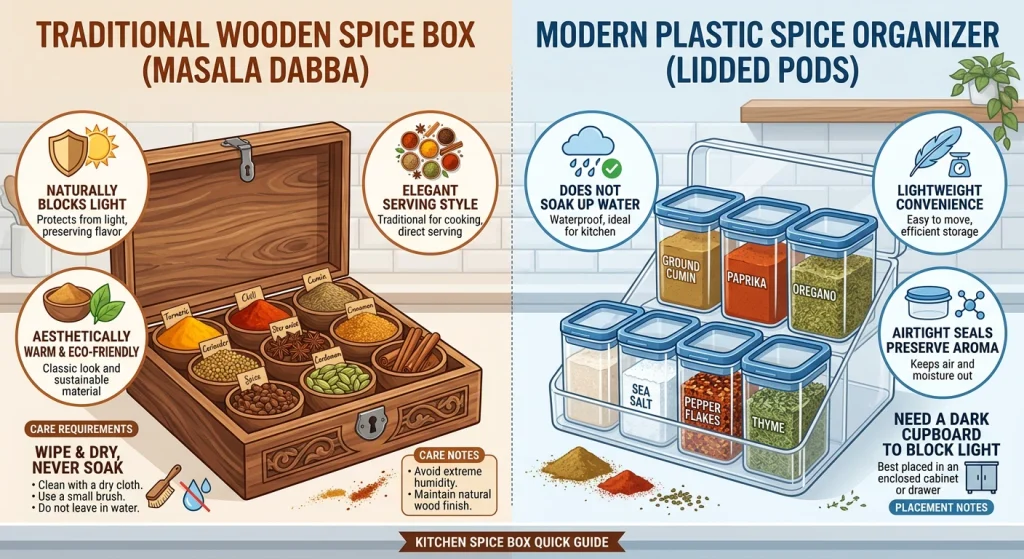
Here is the side-by-side view. It assumes both boxes have a lid and the spices are kept dry. Use it as a quick guide and not as a score sheet, because the right pick depends on your kitchen.
| What you care about | Wooden spice box | Plastic spice box |
| Blocks light | Yes, wood is opaque | Only if the plastic is opaque, or the box sits in a dark cupboard |
| Airtight seal | Depends on the lid; best with small lidded containers inside | Depends on the lid; check the fit before you buy |
| Moisture | Takes in and gives off moisture | Does not soak up water like wood |
| Smell | Porous wood can hold strong smells | Depends on the plastic |
| Looks | Warm and natural; good for serving | Plain; many styles |
| Weight | Heavier | Lighter |
| Care | Wipe, dry, never soak | Wipe; keep away from heat |
| Safety check | Choose food-safe wood and finish | Choose food-grade plastic from a seller who can say what it is |
Wooden spice box vs plastic spice box reddit: how to use online opinions
If you type “wooden spice box vs plastic spice box reddit” or “wooden spice box vs plastic spice box a reddit” into a search box, you will find home cooks sharing their own views. Their stories can help you spot problems, like a loose lid or a box that smells. But one person’s kitchen is not yours. Test each claim against the basics: air, light, moisture and heat.
Which one is better for daily cooking?
If you reach for your masalas many times a day, pick the box with the best seal and the easiest lid, whatever it is made of. Choose wood if you love the look, want to serve at the table, and are happy to give it light care. Choose plastic if you want something light and simple to wipe. Many cooks also keep extra stock in sealed jars and fill the box from them.
Stainless Steel Spice Box and Brass Masala Box: Other Choices
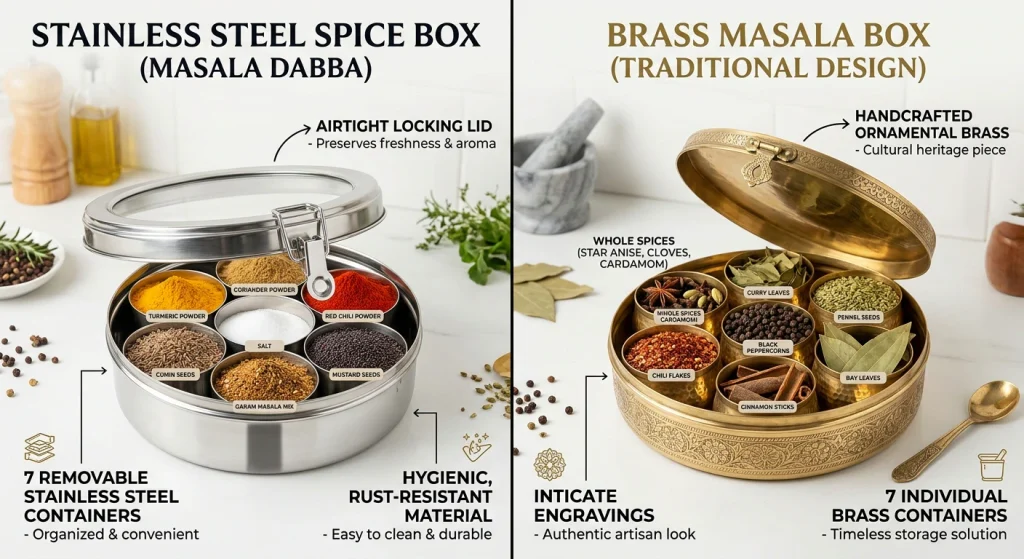
Wood and plastic are not your only options. Many South Asian kitchens also use steel or brass, and you will see these sold under names like stainless steel masala dabba, masala dabba steel and masala box steel. Here is how they compare.
Stainless steel spice box
A stainless steel spice box is opaque, so light cannot reach the spices. A masala box stainless steel set, or a masala dabba stainless steel set, often has small bowls under one lid, which keeps everything in one place. You may also see it listed as a steel spice box, spice box steel, spice box stainless steel, steel masala box, stainless steel masala box, indian spice box stainless steel or indian spice containers stainless steel. As with any box, check how well the lid fits. For a wider look at how wood and metal compare in the kitchen, read about how wood and metal compare in everyday kitchen use.
Brass masala box
A brass masala box has a classic look, and you will also see it called a brass masala dabba, brass masala dani, brass spice box, masala box brass, masala dabba brass, masala dani brass or brass dabba. Brass is a mix of copper and zinc. Food-safety guidance in the US warns that copper and brass can leach into acidic foods. Dry spices are different from wet food, but it is wise to keep wet or sour mixes, like tamarind pulp or lemon pickle masala, out of untinned brass. Many traditional brass pots are lined with tin, a process called kalai, so ask the seller whether the inside is lined and whether the piece is meant for food.
One Product, Many Names: Spice Box, Masala Dabba and Masala Dani
The same product goes by many names. Some people say spice box or spices boxes. Others say masala box, masala dabba, masala dani, spice dabba or spice dabba box. Shops may write kitchen spice box, kitchen spices box, spices box for kitchen, masala box for kitchen, masala spice box or masala spices box. You may also see dabba spice box, masala dabba spice box, masala container, masala storage box or masala box spices. All of them mean a container, or a set of small containers, that keeps your masalas in one place.
Region and style add more labels. An indian masala dabba, indian spice dabba or the plural indian masala dabbas often has small bowls inside one lid. In listings you may find masala box india, masala box indian or masala dabba india. Some sellers advertise a masala dabba with spices, so check what is actually included. On the wood side, shops use wood masala box, wooden masala box, masala box wooden, masala dabba wooden, spice box wooden, spices box wooden, wooden spice box india, wooden spice box indian and indian wooden spice box.
What is the best container for storing spices? A Simple Buying Checklist
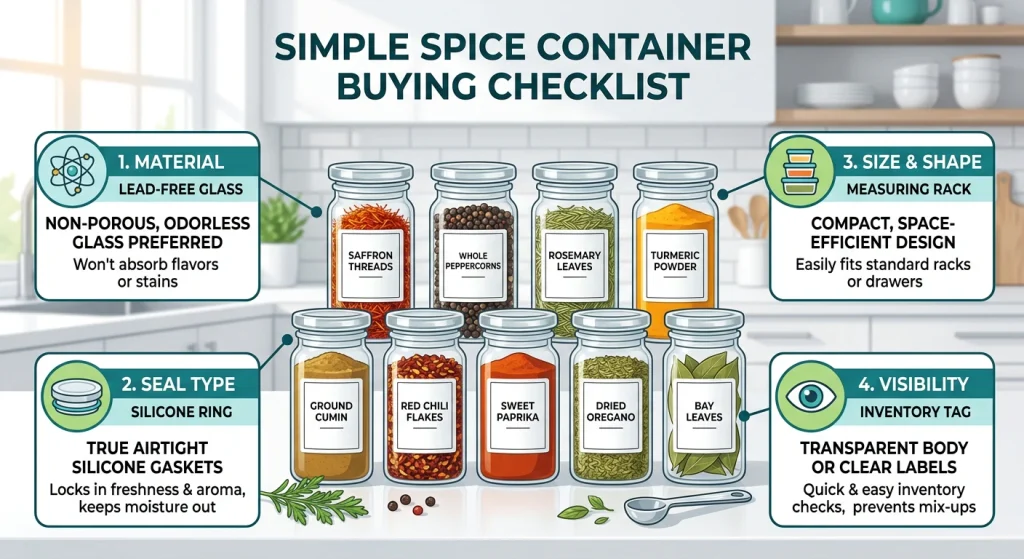
Whatever the name on the label, use the same checklist. The best container for storing spices is the one that passes every point below in your own kitchen. Think about where the box will sit, too, because heat and steam can undo a good box. For ideas on wooden shelves and organizers for a tidy kitchen, you can plan the space first and pick the box second.
Six checks before you buy
- Does the lid close tightly and sit flat?
- Is the body opaque, or will the box live in a dark cupboard?
- Is the inside dry, smooth and easy to clean?
- Are the inner bowls or jars lidded?
- Is the material food-safe, and can the seller tell you what it is?
- Is the size right for how fast you use your spices?
If you can answer yes to most of these, the material is a matter of taste.
Buying a masala box on Amazon or other online shops
Many people search for a masala box amazon, amazon masala box, masala dabba amazon, spicebox amazon, spice boxes amazon or spice box amazon before they buy. Online shopping is handy, but you cannot touch the lid. So read the material line, look closely at the photos of the lid and inner bowls, ask whether the material is food-grade, and check the return rules. A listing that says best masala dabba is just a label. Judge the box by the six checks above.
FAQs
These are the questions people ask most often when they compare materials for a spice box for kitchen use. Each answer is short, so you can scan them quickly and then go back to the checklist above.
Is a wooden spice box safe for storing spices?
Generally yes, when the wood is food-safe, the box is clean, and it stays dry. Research reviews on wood in contact with food have not found that wood’s porous surface is the hygiene problem many people expect. Still, keep spices in small lidded containers inside the box and avoid putting wet or oily masala straight into the wood.
Can I keep wet masala in a wooden or brass box?
It is best not to. Wet masala adds moisture, which wood takes in, and sour or acidic mixes can react with untinned brass. Keep dry spices in the box and store wet pastes in a clean, sealed container made for food, like a glass or food-grade container, in the fridge as the pack directs.
Where should I place my spice box in the kitchen?
Pick a cool, dry, dark spot such as a cupboard or drawer. Extension guidance says to avoid spaces above the dishwasher, microwave, stove or fridge, and spots near a sink or heating vent, because heat and moisture shorten the life of spices.
Can I use a wooden spice box and small jars together?
Yes, and it is a smart setup. Use the wooden box for looks and serving, and keep the spices in small airtight jars or lidded bowls inside it. You get the warm look of wood with a tighter seal around the spices.
Final Thoughts
The wooden spice box vs plastic spice box question has no one-size answer. Wood wins on looks and serving. Plastic wins on weight and easy wiping. Steel blocks light and is simple to wipe, and brass brings a classic look if you handle it with care. What matters most is the same for all of them: an airtight lid, protection from light, a dry inside, and a safe material. Pick the box that does those four things well in your kitchen, and your spices will taste better for longer.


[…] how wood compares with plastic instead? See how wood stacks up against plastic spice containers for that side of the […]