The main types of wooden kitchen utensils are spoons, spatulas (also called turners), ladles and serving spoons, rolling pins and boards (belan and chakla), and traditional tools such as churners and dal mashers. Each suits a different job, and all of them need the same basic care: hand washing, thorough drying, and regular checks for cracks.
This guide explains what each type is for, where it falls short, and what to look at before you choose or use one. It does not rank products or recommend a brand.
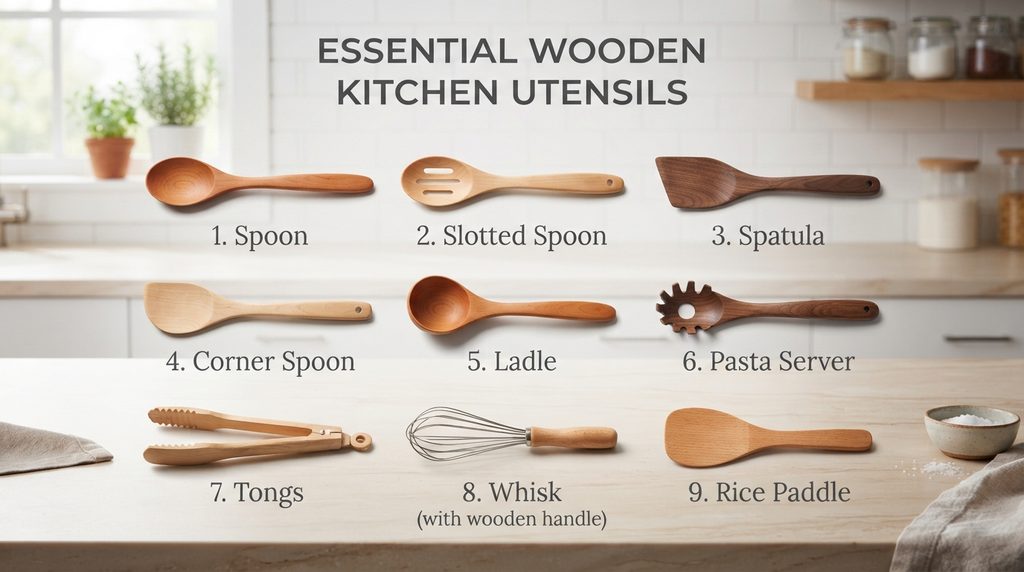
The main types of wooden kitchen utensils at a glance
| Type | Typical job | Worth checking |
| Wooden spoon | Stirring curries, sauces, dal, halwa | Smooth bowl and handle, no cracks |
| Corner or flat-edged spoon | Scraping the corners and base of a pan | Edge is smooth, not splintered |
| Spatula / turner | Flipping, lifting, sliding under food | Thin edge that has not chipped or split |
| Ladle / serving spoon | Serving soups, gravies, rice | Whether it is all wood or has a joined handle |
| Belan (rolling pin) | Rolling roti, paratha, pastry | Even surface, no rough patches |
| Chakla (rolling board) | Flat surface for rolling dough | Flat, stable, no deep grooves |
| Churner (madani / mathani) and dal masher (ghotni) | Churning, mashing, blending by hand | Joins and handle condition |
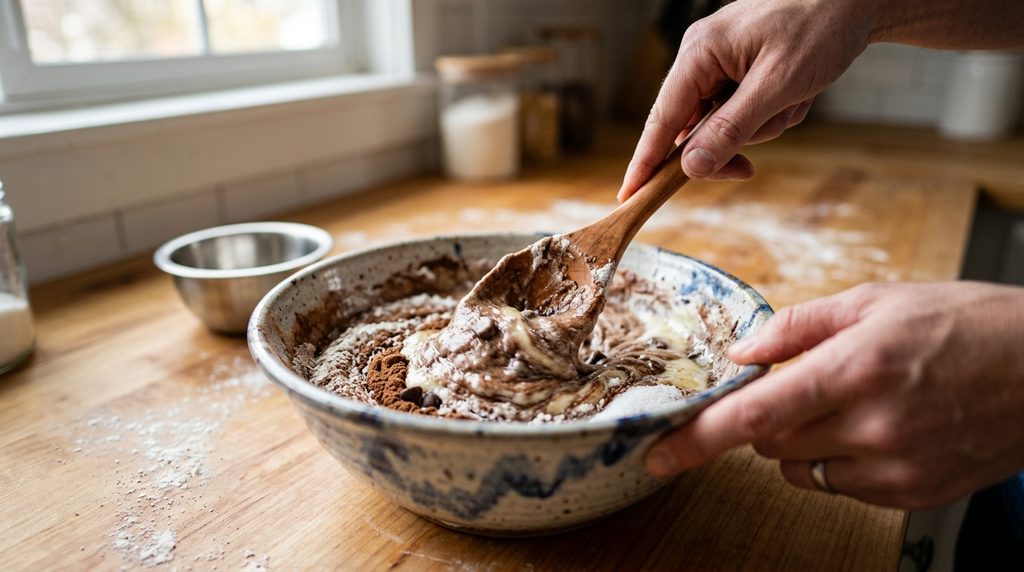
Stirring and mixing
Wooden spoons
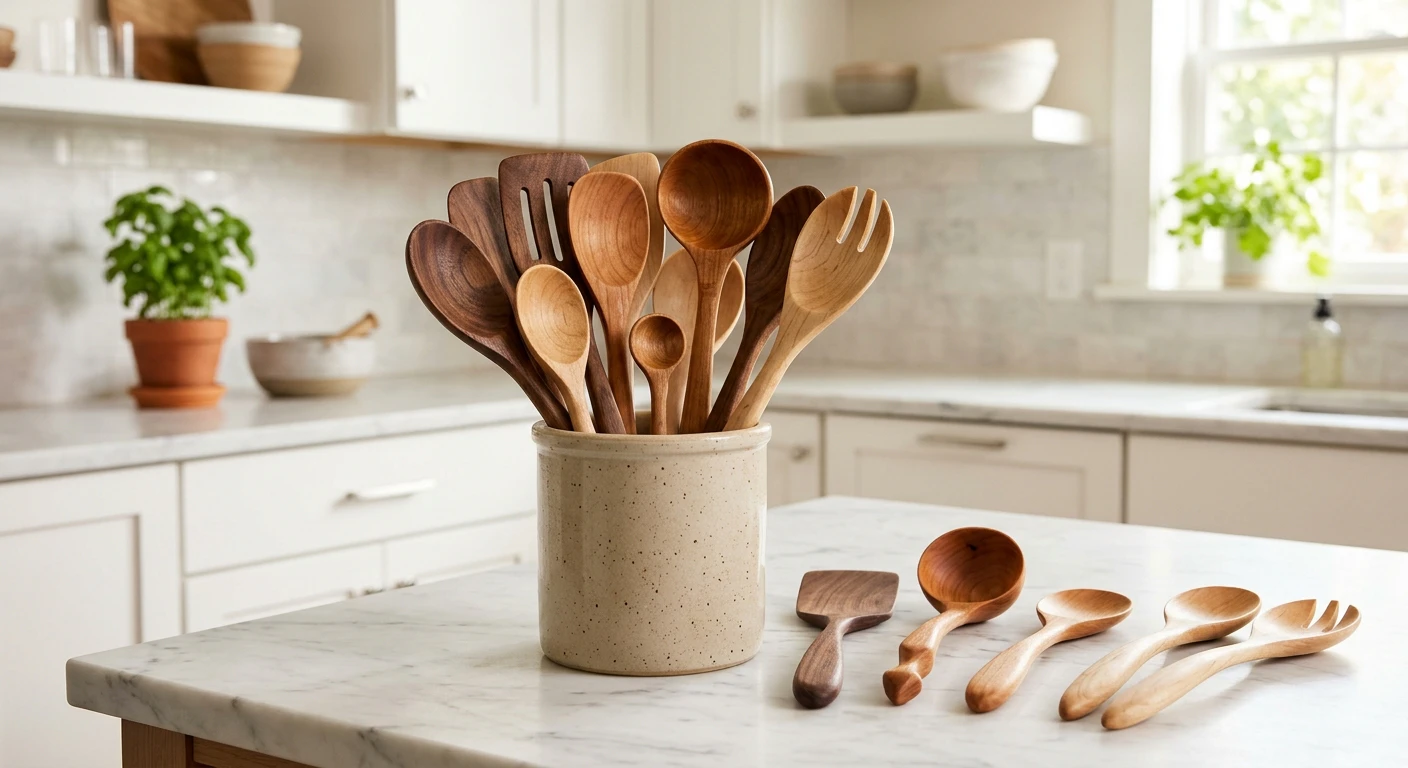
The wooden spoon is the utensil most people mean when they say “wooden utensil”. It is a general-purpose stirrer for everyday cooking. Food writers commonly describe wooden spoons as suitable for use with cast-iron and non-stick pans, which is one reason they stay popular. If your cookware maker gives guidance on utensils, follow that first.
Spoons differ in bowl depth, handle length and thickness. A longer handle keeps your hand further from a hot pot; a shallower bowl is easier for tasting and a deeper one carries more. Which is “better” depends on the pan and the dish, so choose by how you cook rather than by a single ideal shape.
Corner and flat-edged spoons
Some spoons have a squared or angled edge made for scraping into the corners of a pan. They are useful when you are building a sauce from a browned base or stirring something that sticks. The edge is also the first place a wooden spoon tends to wear, so look at it when you inspect the utensil.
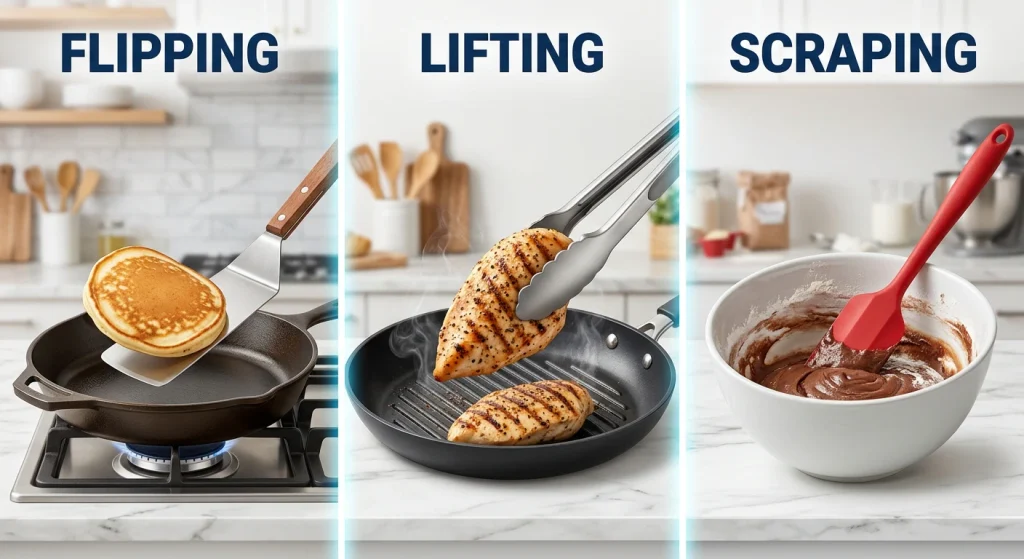
Flipping, lifting and scraping
Spatulas and turners
A turner, also called a spatula, is a flat-bladed utensil for flipping, lifting and sliding under food, from omelettes to cutlets to cookies. Wooden versions are thin-edged, so they can wear down or chip along the edge. A rounded corner is gentler on pans, while a squared edge scrapes better; neither is universally right.
Serving
Ladles and serving spoons
Ladles move liquid from pot to bowl. Wooden ladles and large serving spoons are made for soups, gravies and rice dishes. Because they spend longer in contact with hot, wet food, they are worth drying carefully.
Hybrid utensils with wooden handles
Many utensils combine a wooden handle with a stainless-steel or other head, such as spatulas and ladles from major home-goods brands. These can suit people who want a wooden grip with a metal working end. Care is different: a joined handle can trap moisture at the join, and some makers give specific washing instructions. Check the maker’s guidance rather than assuming all-wood rules apply.
Shaping dough and mashing
Belan and chakla
In South Asian kitchens the belan (rolling pin) is used with the chakla, a flat round board, to roll chapati and roti dough. The belan is typically thinner and lighter than the heavier roller-style pins common in Western baking, and is usually made of wood. The set also works for puri and other flat doughs.
Churners and dal mashers
The madani (also called a mathani or churner) is a traditional wooden tool used with a pot for churning. Museum-style documentation from Punjab describes versions with a turned wooden stand, a rope and a pot, and notes that the parts have their own regional names.
A smaller hand-held wooden masher, often sold as a dal ghotni, is used to mash lentils and blend dishes like saag or lassi by hand. Names and shapes vary by region and household, so use the term your readers use.
Other wooden items that belong with other guides
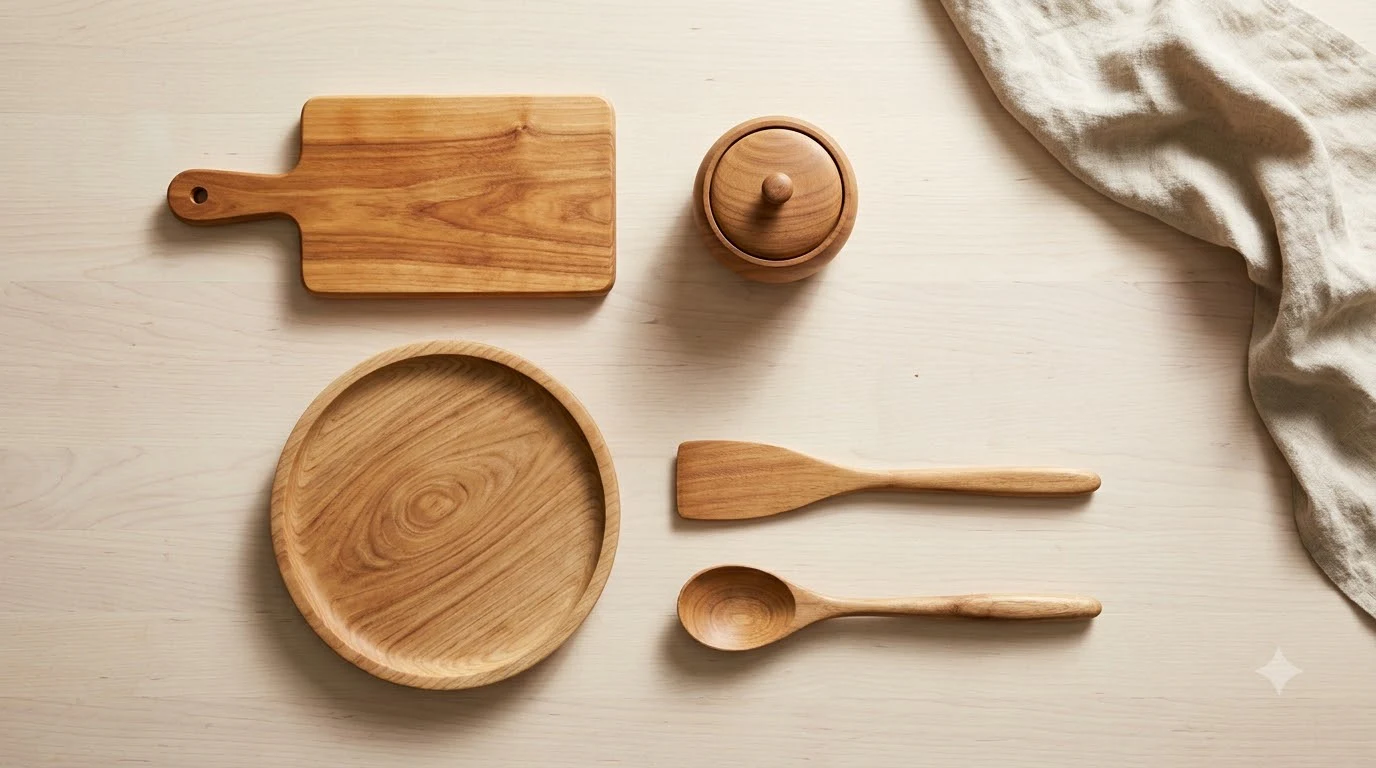
Chopping boards, serving trays and bowls are wooden kitchenware too, but they have their own hygiene and material questions. Chopsticks, salad servers and similar small tools follow the same care rules as spoons. Boards are covered in our serving items guide.
Are wooden utensils safe to cook with?
Used and cared for properly, wooden utensils are generally regarded as safe by the food-safety experts quoted below, but the picture has some limits worth knowing.
- Hygiene research is mostly about cutting boards. Research led by Dean Cliver and colleagues, reported in the Journal of Food Protection in January 1994, found it easier to recover live bacteria from plastic boards than from wooden ones. Because that work studied boards, it is indirect evidence for spoons and spatulas, not proof for them.
- An expert view on utensils. NC State food safety researcher Ben Chapman has said he knows of no documented cases of foodborne illness traced to wooden utensils or boards, and that the main concern is not drying them properly. That is one expert’s statement, not a guarantee.
- Wood is not automatically safer or riskier than other materials. Which? says wooden spoons and boards are hygienic if washed thoroughly between uses, and that a well-cleaned plastic board is also very hygienic. Condition, cleaning and drying matter more than the material label.
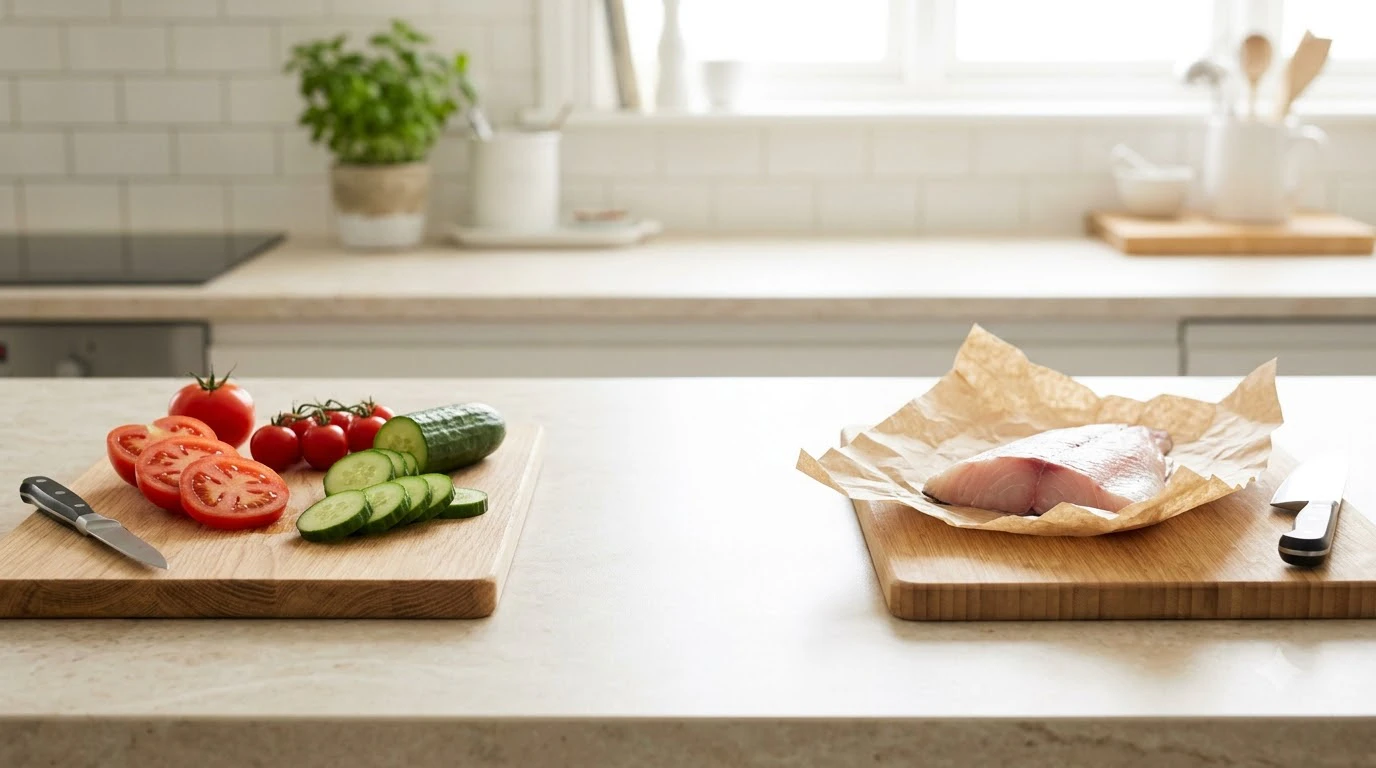
- Raw meat needs separate handling. NC State Extension suggests plastic boards for raw meat and wood for produce and ready-to-eat foods. Which? also advises against using one board for raw meat and vegetables.
What to check before you choose wooden utensils
- Look for cracks, rough patches and splinters. Run a finger along the bowl, edge and handle. Damaged wood is harder to clean and can shed fragments.
- Ask what finish, if any, has been used. Mineral oil and beeswax are commonly used on wooden kitchenware, but “food safe” for a finish depends on the product and on proper curing. Industry sources note that curing takes longer than drying, and woodworkers disagree about how to judge many finishes. If a seller cannot say what was used, treat that as a gap.
- Check whether it is one piece or glued. Joined and hybrid utensils may have different care instructions.
- Read the care instructions. Makers often specify washing and oiling. Follow them over general advice.
- Consider the wood species only as a question to ask. Species and grain differ, and the effect on hygiene and durability is covered in our wood types guide rather than assumed here.
- Match shape to use. A spoon, a turner and a ladle are not interchangeable in practice.
Quick care summary
Most guidance converges on a few points. Wash by hand with hot water and washing-up liquid soon after use, avoid soaking, dry thoroughly with good airflow, and keep wooden utensils out of the dishwasher and boiling water. Which? advises food-grade mineral oil rather than cooking oils such as olive oil, which can leave a sticky feel, and suggests oiling when the wood looks dry or water soaks in rather than beads. Always defer to the maker’s instructions. A full cleaning guide is covered separately.
When to retire a wooden utensil
Which? advises replacing wooden spoons, boards and rolling pins once they show deep cracks, splintering or persistent smells. You may see a fixed replacement interval such as “every five years” repeated online. That figure comes from individual chefs and brands, not from a food-safety standard, so go by the condition of the utensil.
FAQs
Which wooden utensil is the most versatile? A wooden spoon covers the most everyday tasks, from stirring to tasting. A turner adds flipping and lifting, and most kitchens end up using both.
Can wooden utensils go in the dishwasher? Which? strongly advises against it, because high heat can cause splintering and splitting. Wash by hand and dry well.
Are glued or hybrid wooden utensils treated the same way? Not necessarily. Check the maker’s instructions, since joins and non-wood parts can change how a utensil should be washed.
Do I need to oil wooden utensils? It is commonly recommended when the wood looks dry or dull. Use a food-grade product and follow the utensil maker’s guidance.
Related reading
- Wooden cooking utensils guide (parent pillar)
- How to clean wooden cooking utensils
- Wooden chopping boards and serving items
- Wood types, quality and food-contact safety

[…] Types of Wooden Kitchen Utensils: What Each One Does and What to Check Before Buying […]
[…] How to Choose Wooden Kitchenware: A Buyer's Checklist on Types of Wooden Kitchen Utensils: What Each One Does and What to Check Before Buying […]