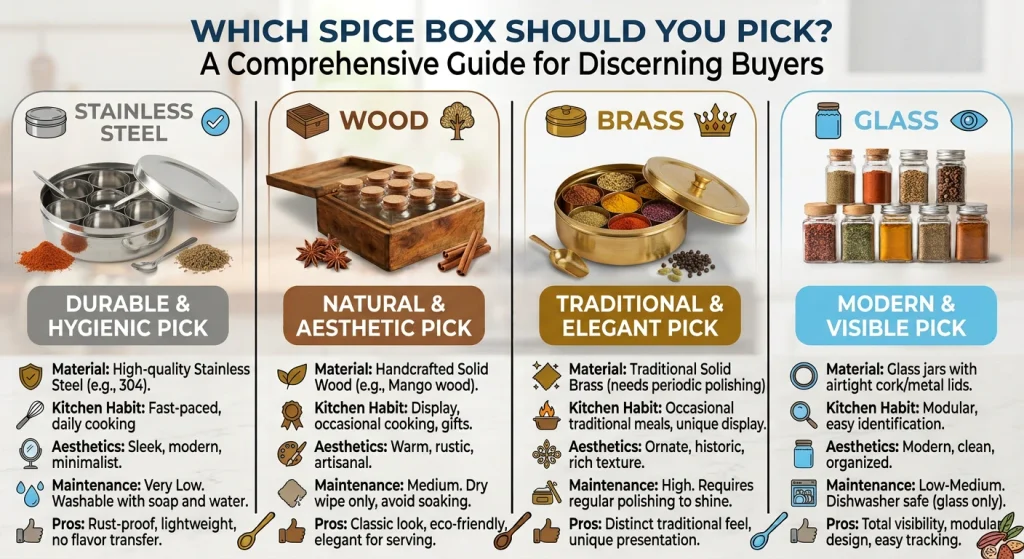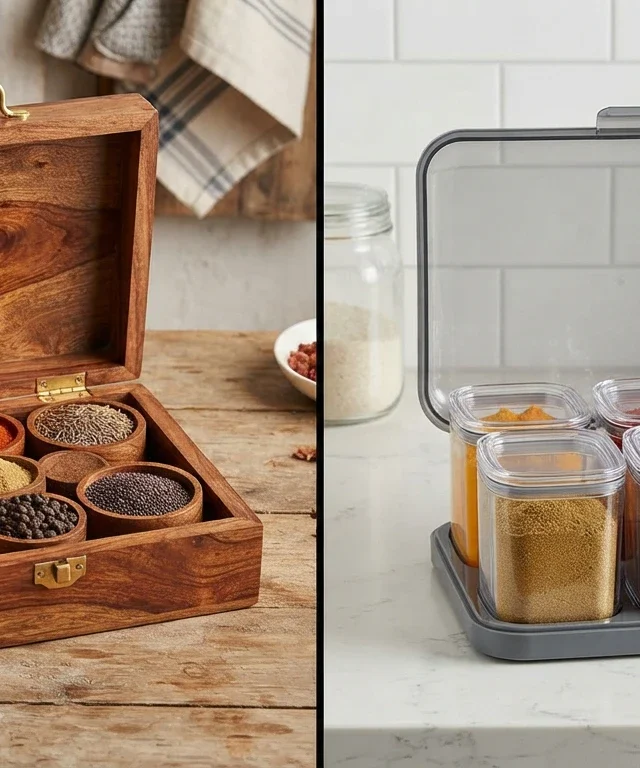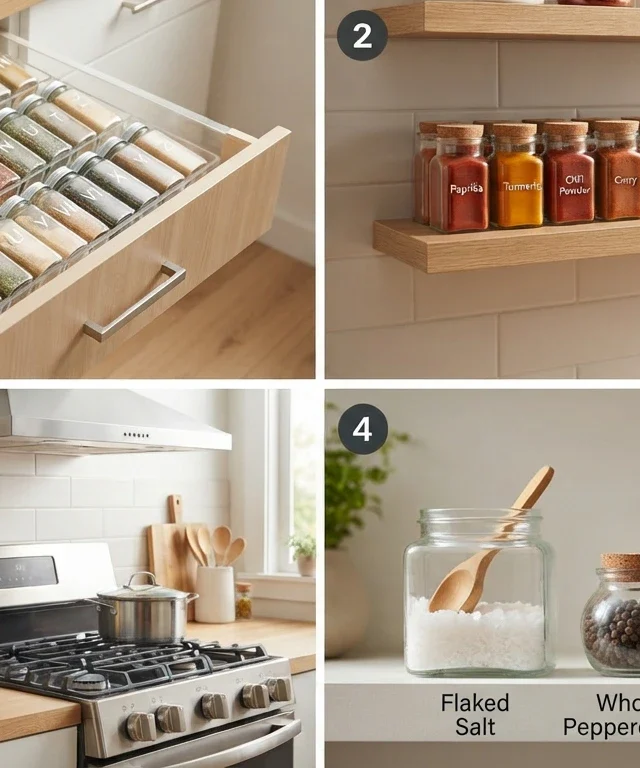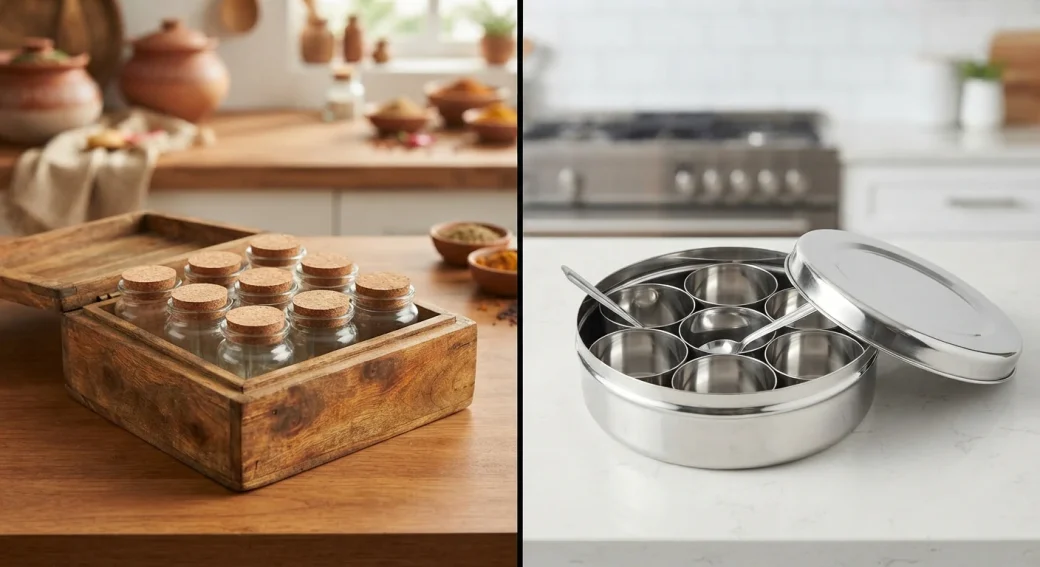
Choosing between a wooden spice box vs stainless steel spice box sounds easy until you start looking at the many styles in shops and online. Both can hold your daily masalas well. What really matters is where you keep the box, how often you open it, and how much care you can give it. In short, stainless steel is the easier pick for a busy or damp kitchen, while wood is lovely if you like the look and can keep it dry.
This guide explains the difference in plain words. You will see how each material handles moisture, cleaning, smell and daily use. By the end, you will know which box fits your kitchen.
What Is a Spice Box, Masala Dani or Masala Dabba?
A spice box is a small container with a lid, usually holding several little cups for the spices you use every day. In South Asian homes it is also called a masala dani, masala dabba, masala box or spice dabba. Some shoppers type it as one word, spicebox, and others search for a masala container or a masala storage box.
They all mean the same kitchen helper. In shops and online lists you may also see a spices box, a kitchen spice box, a kitchen spices box, a masala spice box, a masala spices box or a spice dabba box. Some listings say masala box spices, masala box for kitchen use or spices box for kitchen, and a few say spices boxes in the plural for a full set.
Most boxes hold turmeric, red chilli powder, coriander, cumin and garam masala. You keep it close to the stove so you can reach for a pinch while cooking. Because it sits in a busy part of the kitchen, the material matters more than people think.
Which Material Is Best for a Spice Box?
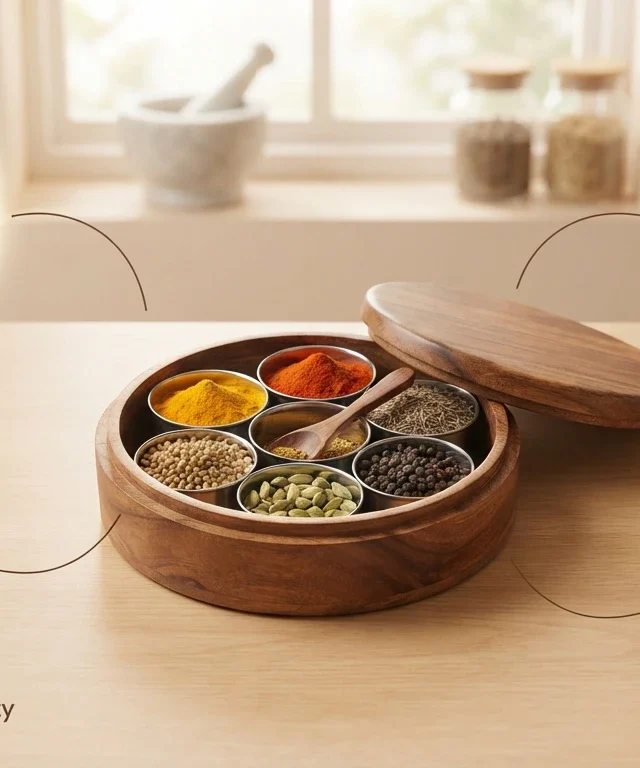
There is no single winner for every home. For most kitchens, a stainless steel masala dabba is the easier choice because it is strong, easy to wipe clean and does not soak up water. A wooden masala box looks warm and handmade, but it needs more care. Often the best choice is a wooden outer box with steel cups inside.
| Your situation | Better pick |
| Steamy or damp kitchen, heavy daily use | Stainless steel |
| Dry kitchen, light use, love the traditional look | Wood |
| Gift or table display | Wood with steel cups |
| You want the least upkeep | Stainless steel |
Wondering how wood compares with plastic instead? See how wood stacks up against plastic spice containers for that side of the choice.
Wooden Spice Box vs Stainless Steel Spice Box: Side-by-Side Comparison
The table below gives the short version of how these two materials compare. The sections after it explain each point in simple words, so you can decide what matters most in your own kitchen and your own daily cooking habits.
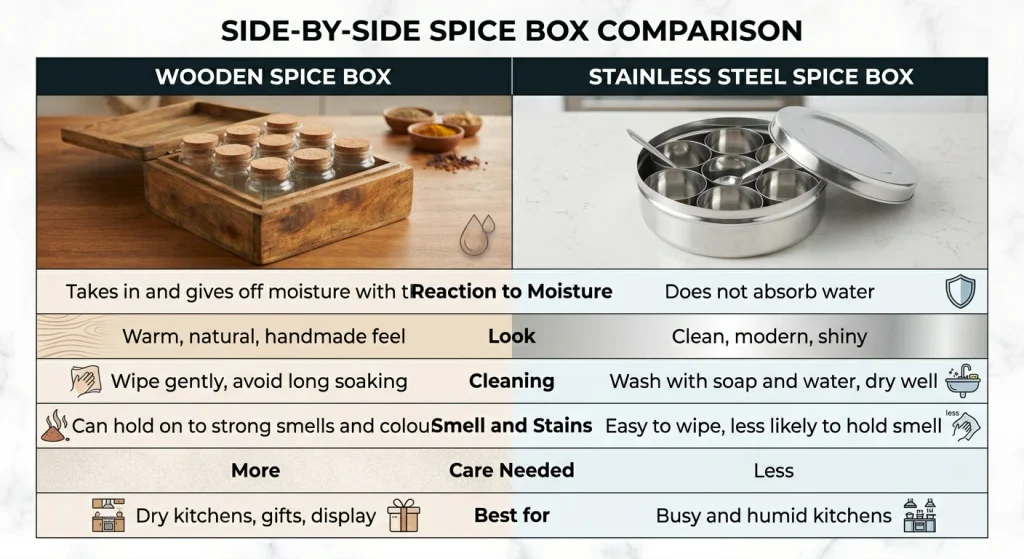
| Feature | Wooden spice box | Stainless steel spice box |
| Reaction to moisture | Takes in and gives off moisture with the air | Does not absorb water |
| Look | Warm, natural, handmade feel | Clean, modern, shiny |
| Cleaning | Wipe gently, avoid long soaking | Wash with soap and water, dry well |
| Smell and stains | Can hold on to strong smells and colour | Easy to wipe, less likely to hold smell |
| Care needed | More | Less |
| Best for | Dry kitchens, gifts, display | Busy and humid kitchens |
Moisture and Freshness
Spices lose flavour and colour when they meet moisture, light, heat and air. Oklahoma State University Extension gives this same advice in its herbs and spices fact sheet, and it adds that spices should sit in tightly covered containers. A box is only as good as its lid.
Wood is a natural material that takes in moisture from the air and lets it go again. Stainless steel does not do this. That is why a steel box is the safer choice when your lid is not very tight or your kitchen gets steamy.
Why a Humid Kitchen Changes the Answer
If your kitchen gets steamy while you cook, or damp in the rainy season, steel gives you more peace of mind. Wood can swell a little when the air is damp and shrink when it is dry. Over time that can loosen a lid or open small cracks.
A tight inner lid, or a steel cup inside the wooden box, solves most of this. You can also learn how to keep wood from splitting with a few simple habits that work for any wooden item in your kitchen.
Looks, Feel and Gifting
Looks matter because a spice box sits on your counter or table every day. A wooden masala box feels warm and handmade, and it suits a traditional kitchen or a dining table. It also makes a thoughtful gift for a new home.
A stainless steel box looks clean and modern. It blends with steel pots and gas stoves, and it does not clash with other colours in the kitchen. If you like a round, classic design, a steel masala dabba is the style many families grew up with.
Cleaning, Stains and Smell
Steel is the easier one to clean. You can wash it with mild soap and warm water, then dry it fully before you refill it. Wipe the lid and the rim too, because that is where spice dust gathers.
Wood needs a gentler hand. Wipe it with a slightly damp cloth and do not leave it soaking. Bare wood can pick up colour from turmeric and red chilli, and it can hold on to strong smells. If that happens, this guide on getting strong food smells out of wood can help.
Strength and Long-Term Use
A good stainless steel box is tough and handles daily use for years. Look for food-grade steel such as grade 304, also called 18/8, when the seller tells you the grade. Very thin, cheap steel can dent, so check the weight and the lid hinge before you buy.
A wooden box can last a long time too if you keep it dry and away from heat. It will not last forever, though, because wood changes with the seasons. If you want to see how the same two materials compare in other tools, read about wood against metal in other kitchen tools.
Is a Wooden Masala Box Good?
Yes, a wooden masala box is good if it has a tight lid, is made from well-dried hardwood, and stays away from steam and water. The best ones have small steel or glass cups inside, so the spices never touch the wood directly. A wood masala box without any inner lids is a weaker choice for spices you want to keep fresh.
When a Wooden Spice Box Works Best
A wooden spice box works best in a dry kitchen where the box sits on a shelf or table, not right beside the stove. It is also a good fit for small families who use spices slowly, and for people who care about the handmade look.
In India and Pakistan you will also see a wooden spice box Indian style, with carved lids or a traditional shape. An Indian wooden spice box like this makes a lovely gift. Just check the inside for cups or a lining before you buy. Sellers also list the same style as an Indian masala dabba, an Indian spice dabba, a masala box India page, a masala dabba India style or a masala box Indian style, and the wooden ones may be called a spice box wooden, spices box wooden, masala box wooden or masala dabba wooden set.
Wooden Spice Box vs Stainless Steel Spice Box for Daily Cooking
For daily cooking, you open the box many times, often with damp hands and steam nearby. That is where steel has the edge, because water and small spills do not harm it. Wood can still do the job, but you must be more careful to keep the box dry.
Whichever you pick, do not sprinkle spices straight from the box into a steaming pot. The Oklahoma State fact sheet warns that this lets moisture into the container. Spoon the spice into your hand or a dry spoon first, then add it to the pot.
Wooden Spice Box vs Stainless Steel Spice Box Review Points to Check
We have not tested individual brands in this guide, so use this short checklist when you read any review or look at photos:
- Does the lid close tightly, with no gap?
- Are the cups removable so you can wash them?
- Is the steel grade listed, such as 304 or 18/8?
- Is the wood finish described as food-safe?
- Are the buyer photos real and recent, not only shop images?
- Can you return it if the lid does not fit?
What Is the Best Masala Dani Box for Storing in the Kitchen?
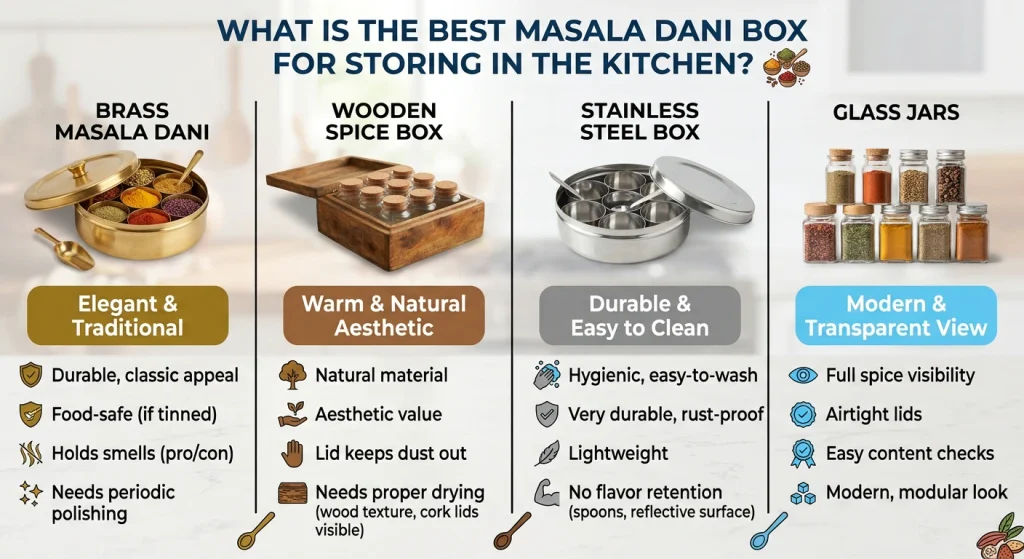
The best masala dani box is one that closes tightly, keeps out light and sits away from heat. Oklahoma State University Extension says spices keep their quality best when you avoid moisture, light, heat and air. So the right box matters, but the right spot in your kitchen matters just as much.
Where to Keep Your Spice Box
Keep your spice box inside a cupboard or drawer, or on a shelf that stays out of direct sun. The same fact sheet says to avoid the area above the stove, dishwasher, microwave and fridge, and to avoid places near a sink or heating vent.
This is easy to plan when you set up the whole kitchen at once. These ways to organize your kitchen with wood show shelves and racks that keep a spice box close but away from the heat of the stove.
Stainless Steel Masala Dabba: Why So Many People Choose It
A stainless steel masala dabba is very common in South Asian kitchens, and it is easy to see why. It is simple, strong and easy to clean. A steel spice box or steel masala box also does not soak up water the way wood can.
You will see many names for it, such as a stainless steel spice box, a masala box stainless steel set, or a masala dabba steel version. They all point to the same idea: a metal body, a lid and a set of small cups for daily spices. Other common names are spice box steel, spice box stainless steel, masala box steel, stainless steel masala box and masala dabba stainless steel.
Brass Masala Box and Vintage Masala Dabba
A brass masala box has a warm golden look and a traditional feel. You may also see it called a brass spice box, a brass masala dani, a masala dani brass set, a masala box brass piece, a masala dabba brass piece or a brass dabba. Brass changes colour over time as it meets air and moisture, so it needs polishing to keep its shine.
A vintage masala dabba can be beautiful, but it is hard to judge an old piece. If you are not sure whether a vintage dabba is safe for food, use it for display and keep your spices in a modern food-grade container.
Wooden Masala Box With Steel Cups
A wooden masala box with steel cups gives you the look of wood and the easy cleaning of steel. The cups hold the spices, and the wood is the outer body and the lid. If you like wood but worry about moisture, this is the style to look for.
What Is the Best Masala Dabba Box? A Simple Pick for Every Need
The best masala dabba box depends on the person using it, so here is a simple way to choose. Think about your kitchen first, then your habits, then the look you want.
- Busy family or humid kitchen: choose a stainless steel masala dabba with a tight lid.
- Dry kitchen, light use, love the traditional look: choose a wooden masala box with steel or glass cups inside.
- Gift or table display: choose a wooden spice box with a good finish and removable cups.
- Classic old-style look: a brass masala dabba can work, if you are happy to polish it.
If you are still unsure, start with steel. It asks the least from you, and you can always add a wooden box later as a serving piece.
How to Use a Masala Dabba Spice Box in Everyday Cooking
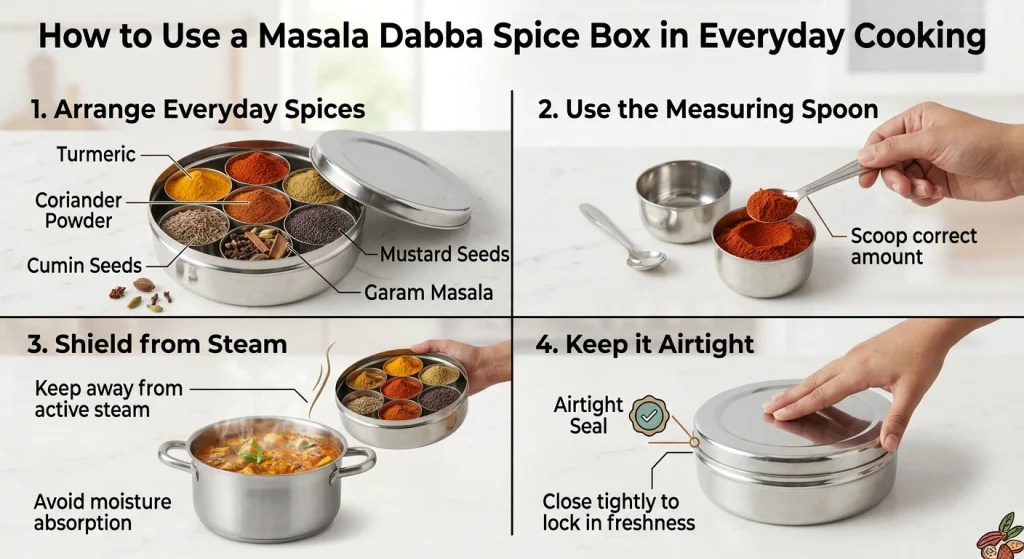
A masala dabba is not a recipe by itself, but it makes every recipe faster. Instead of opening many packets, you scoop what you need from one box. That is why a masala dabba spice box is so popular for daily tadka, dal and curries.
A Simple Seven-Cup Setup
Many boxes come with seven cups. Here is a simple way to fill them:
- Turmeric powder
- Red chilli powder
- Coriander powder
- Cumin seeds
- Garam masala
- Mustard seeds
- Salt
You can change this list to match your own cooking. The goal is to keep your most-used spices in easy reach.
Habits That Keep Spices Fresh
Fill each cup with only what you will use soon, and keep the rest in a sealed container in a cupboard. Always use a dry spoon, because a wet spoon adds moisture. Close the lid right after use.
Spices do not last forever. The Oklahoma State fact sheet suggests keeping ground spices and herbs for about a year, and whole spices for about two years. Write the buying date on the bottom of the box so you do not forget. Good spice box storage is mostly about these small habits.
Buying Tips for a Spice Box Online or in a Shop

Whether you look at a masala box Amazon listing, a spice box Amazon page, a masala dabba Amazon result, a page of spice boxes Amazon sellers or a spicebox Amazon search, or a local shop, the same simple checks apply. Many people also compare an Amazon masala box with a spice box for kitchen use from a nearby maker before they decide. Look closely at the lid, the cups and the material.
- Material: ask for the steel grade, or ask what kind of wood and finish.
- Lid: it should close firmly, with no gap.
- Cups: removable cups are easier to wash and refill.
- Size: match the cup size to how fast you use spices.
- Returns: buy from a seller who lets you return a box that does not fit well.
If you are buying in Pakistan, this Pakistan-focused guide to buying wooden kitchenware will help you check quality before you pay.
FAQs About Wooden and Stainless Steel Spice Boxes
These are the questions people ask most often before they buy a spice box. Each answer is short, so you can find what you need quickly and get back to cooking.
Which material is best for a spice box?
For most homes, stainless steel is the easiest and safest all-round choice. It handles moisture, cleans easily and lasts a long time. Wood is a good choice if you love the look, keep the box dry, and pick one with steel or glass cups inside.
Is a wooden masala box good for spices?
Yes, if it has a tight lid, a good finish and inner cups, and you keep it away from steam and water. A bare wooden box with no inner lids is not the best way to protect spices from moisture and smell.
Is a stainless steel masala dabba safe?
Food-grade stainless steel, such as grade 304 (18/8), is widely used for food contact. Research that found small amounts of nickel and chromium moving into food looked at cooking, where food is heated in the pan. A spice box holds dry spices at room temperature, which is a different situation. If you have a known nickel allergy, ask your doctor.
Can I keep a spice box next to the stove?
It is better not to. Heat and steam can damage spices and, with wood, can also dry out or warp the box. Oklahoma State University Extension says to avoid storing spices above the stove, so keep your box in a nearby drawer or cupboard instead.
How long do spices stay fresh in a spice box?
Ground spices keep their best quality for about a year, and whole spices for about two years, if the box is tightly closed and kept cool, dark and dry. Smell is a good test: if a spice has almost no aroma when you rub it between your fingers, it is time to replace it.
Final Thoughts: Which Spice Box Should You Pick?
In the wooden spice box vs stainless steel spice box choice, steel wins for easy care and everyday strength, and wood wins for warmth and looks. If you want one simple rule, pick steel for a busy kitchen and wood for a dry kitchen or a gift. A wooden box with steel cups gives you a little of both.
Whatever you choose, keep the box tightly closed, away from the stove and dry. That one habit does more for your spices than any material.