If you are tired of digging through a messy cupboard for the cumin, you are not alone. Learning how to organize spices in a kitchen saves time, cuts waste, and helps your food taste better. This guide shows simple ideas for cabinets, drawers, racks, and small spaces.
You do not need a big budget or a new kitchen. You need a plan, a few good containers, and a spot away from heat. Below, you will find easy ways to sort your jars, label them, and keep them fresh, so the work you do today still pays off months from now.
How to Organize Spices in a Kitchen
Here is the short version. Pick a cool, dark spot away from the stove. Empty your shelf and toss spices that have lost their smell. Move the rest into matching jars with tight lids, then label them and group them by how you cook.
- Choose a cool, dark, dry spot.
- Take everything out and check each spice.
- Throw away spices that smell weak or look faded.
- Pour the rest into clean, dry jars with tight lids.
- Label each jar with the name and the date.
- Group jars by category and keep daily spices in front.
Those six steps answer most people’s questions. The rest of this guide explains each step in plain words, so you can fit them to your own kitchen, whether it is big, small, or somewhere in between.
Where Do Spices Go in a Kitchen?
Many people ask where to store spices and which ways to store spices work best, and the answer is simple. Spices keep their flavor best when they stay away from heat, light, and moisture. The question of where to put spices in kitchen cabinets, drawers, or shelves comes down to those three things.
Places to Avoid
Texas A&M AgriLife Extension advises keeping dried herbs and spices away from sunlight, and it lists spots to skip: above the stove, the dishwasher, the microwave, or the refrigerator, and near a sink or a heating vent. You can read their short storage guide for dried herbs and spices for the full list.
The Best Places to Store Spices
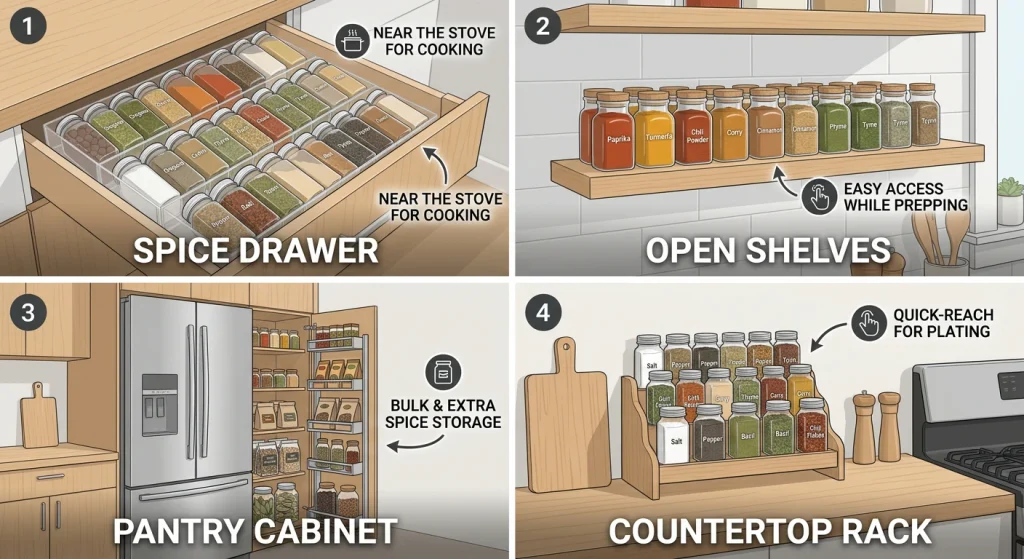
A cabinet or drawer away from the stove is a good start. It is also the best way to store spices in kitchen spaces of any size. If you have a pantry, organizing spices in pantry shelves works well because pantries are usually darker and cooler. Pick one fixed home for all your jars, so you always know where to look.
Step 1: Check What You Have First
Before you buy anything new, take every jar out and put it on the counter. Wipe the shelf. This is the best moment for organizing spices, because you can see duplicates, empty jars, and old packets you forgot about.
Smell each one. According to the same AgriLife guide, a good spice should have a strong aroma, a bold taste, and a lively color. If a spice is dull and smells like dust, replace it. Spices rarely turn unsafe, but they do lose their punch.
How Long Do Spices Last?
The AgriLife guide gives home cooks these rough ranges. Whole spices such as peppercorns last about three to four years. Ground spices such as cumin, paprika, and chili powder last about two to four years. Leafy herbs and most seasoning blends last about one to three years.
These are guides, not strict rules. Your nose and tongue are the best test. Write the date you bought each spice on the jar, and you will not have to guess later.
Step 2: Pick the Right Spice Jars and Containers
Good containers make a spice cabinet easier to use. Pick jars that close tightly, are easy to refill, and are the same size, so they stack and line up neatly. A matching spice jar set also looks tidy and makes labels easier to read.
You will see many kinds of spice jar containers in shops, from small tins to tall bottles. Choose a size that fits your cabinet. Smaller jars are handy for spices you use slowly, because you can refill them from a larger bag.
Spice Jars Glass vs. Other Materials
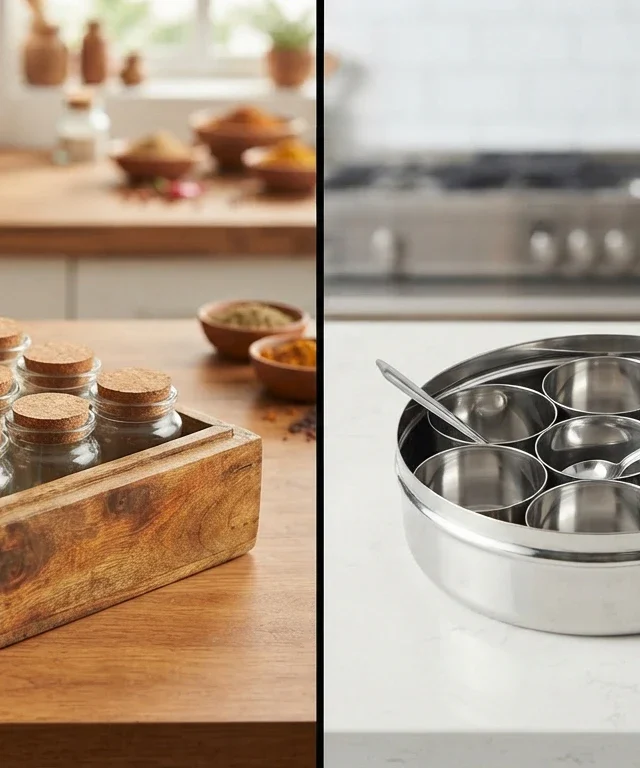
Spice jars glass options are popular because you can see what is inside, and glass is easy to wash. Clear jars are fine inside a closed cabinet. If you keep jars on an open shelf, remember that sunlight and heat can hurt flavor, so tin or dark jars may suit that spot better.
Seasoning Jar, Herb Jars and Masala Jars
A seasoning jar with a shaker top is handy for salt, pepper, and chili flakes. Herb jars with a wide mouth make it easy to scoop in a spoon. Masala jars, often sold in sets, work well for the spices you use every day in curries and rice.
Labels That Last
Put the spice name on the lid and on the side of the jar. Add the purchase date underneath. Use a waterproof marker or printed labels. If your hands are often wet or oily, labels on the lid and the side give you two chances to read them.
Ways to Organize Spices by Category
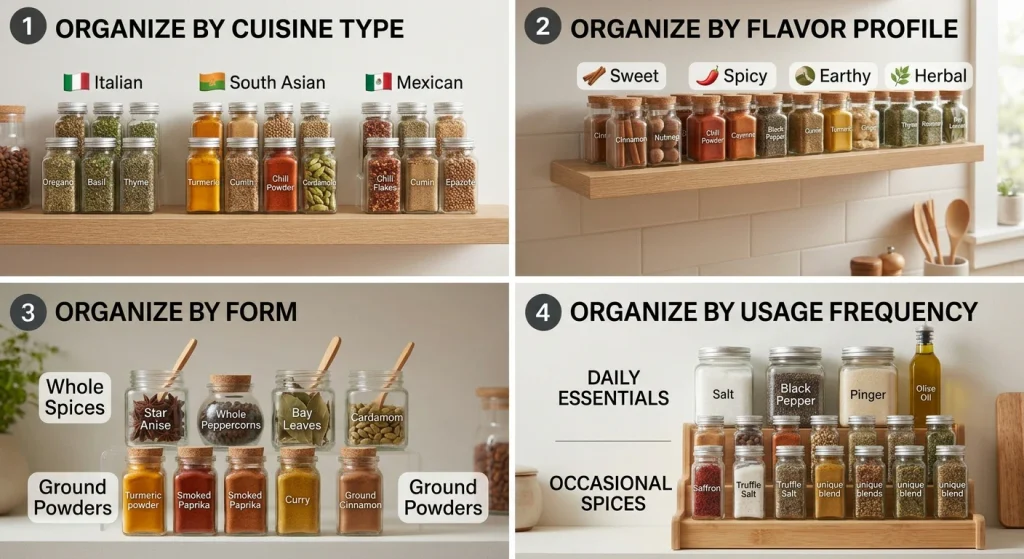
When you think about ways to organize spices, sorting by category is the easiest place to begin. If you like seasoning organization ideas that need no tools, this is the one. Group jars that you use together, so you reach for one section of the shelf instead of hunting through every jar when you cook.
How to Organize Spices by Category
Try groups like baking spices (cinnamon, nutmeg, cardamom), whole spices (cloves, bay leaves, cumin seeds), ground masalas (turmeric, coriander, red chili), and herbs (oregano, thyme, mint). This is how to organize spices by category without any special tools. Just keep each group side by side.
By Cuisine or By Alphabet
Some cooks like to sort by cuisine, with one shelf for Pakistani and Indian spices and one for Italian herbs. Others prefer alphabetical order, which works well if you own many jars. Pick the system you will actually follow. If it feels like work, you will stop using it.
How to Organize Spices in a Kitchen Cabinet
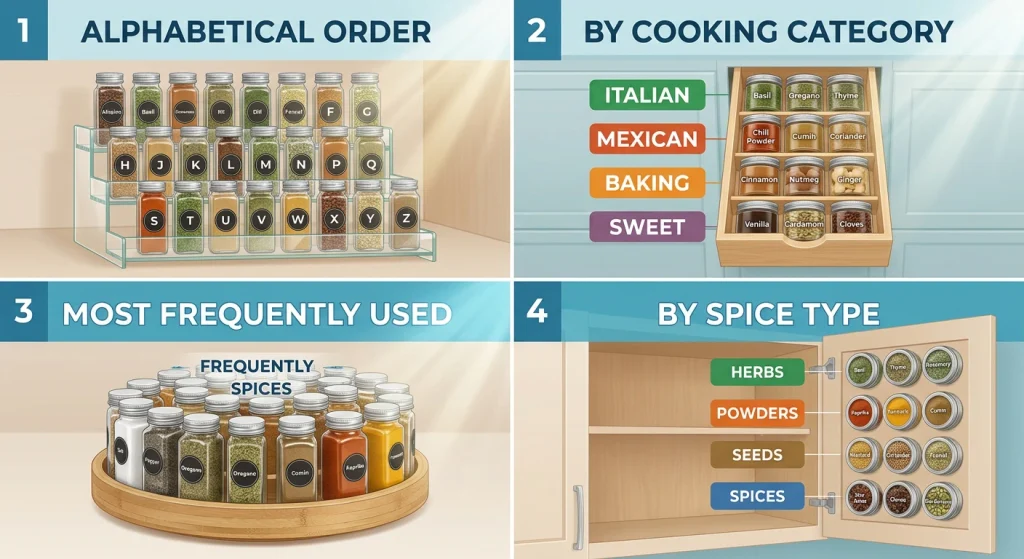
A cabinet is the most common home for spices, and it is a good one. It stays dark, and it keeps dust away. If you wonder how to organize spice cabinet shelves, or how to organize spices in cabinet space that feels crowded, the trick is to use the height of the cabinet, so you do not stack jars three deep and lose the ones at the back.
Start by sorting the jars into groups. Put daily spices at the front and at eye level. Put rarely used spices on the top shelf or at the back. This is the best way to organize spices in a cabinet because it matches how often you reach for each jar.
Best Way to Organize Spices in Cabinet Shelves
Add a small step shelf, so the back row sits higher than the front. A lazy Susan (a turntable) also helps, because you can spin it to bring any jar forward. For a tall cabinet, a second shelf riser doubles your space.
How to Organize Spices in a Small Cabinet
If you want to know how to organize spices in small cabinet space, use fewer jars. Keep the ones you use at least once a month and store backup stock somewhere else. Choose slim, square jars, which waste less space than round ones. Stick to one size so the shelf looks tidy and you can see every label.
How to Organize Your Spice Cabinet Every Few Months
Pick two or three times a year to check your spice cabinet. Pull out everything, wipe the shelf, smell each jar, and remove old stock. A quick check takes about fifteen minutes and keeps the cabinet from filling with jars you never use.
Drawer Ideas for Spices
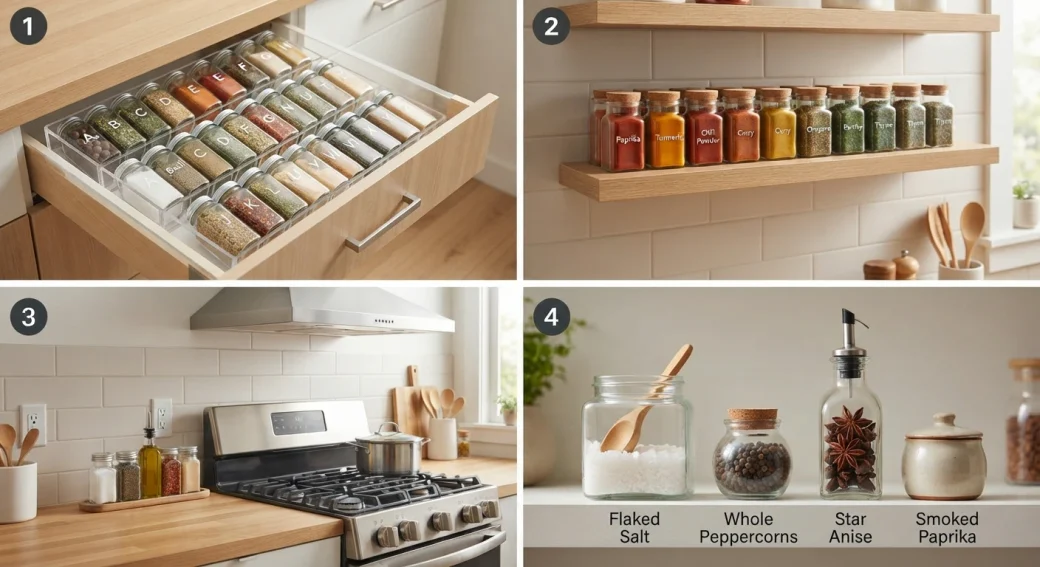
A drawer is another great place for spices, and some cooks like it even better than a cabinet. You can see every label at a glance, and nothing hides behind another jar. A drawer near the stove, but not directly under it, keeps jars handy.
How to Organize Spices in a Kitchen Drawer
Lay the jars flat or at a slight angle with the labels facing up. Use a drawer insert or small dividers so jars do not slide around. Keep the daily spices near the front. If the drawer is narrow, use small jars so the lids are easy to see.
How to Organize Spices in a Deep Drawer
A deep drawer can hold more jars, but items at the bottom can get buried. Use a tiered insert so each row sits a little higher than the one in front. Another simple trick is to use small trays, so you can lift out a whole group of spices at once.
Spice Storage Ideas for Small Spaces
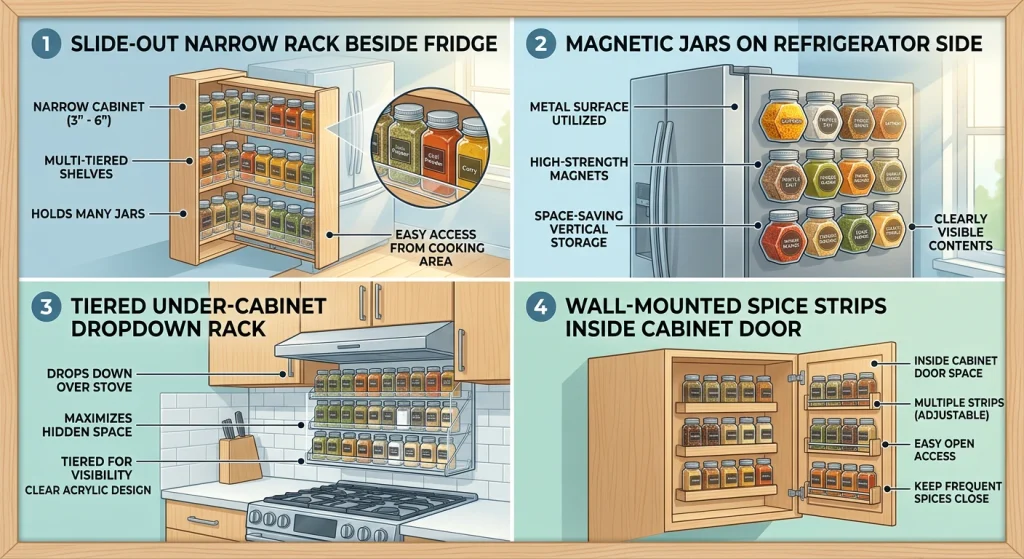
A tiny kitchen does not mean a messy one. These storage ideas for spices, and other ideas for storing spices, fit tight spots. With a few smart choices, you can fit more spices into less room. The goal is to use spots you already have, such as cabinet doors, wall space, and the gap between shelves.
Spice storage for small spaces works best when you reduce clutter first. Keep only what you use, and store extra packets in a box in another room. Then add one or two of the ideas below to use your space well.
Space Saving Spice Rack Ideas
For space saving spice rack ideas, try a slim rack that hangs on the inside of a cabinet door. Another option is a narrow pull-out rack between a wall and the fridge. Magnetic tins on a side panel also work. Just keep them away from heat and sunlight.
Spice Rack Ideas for Small Spaces
A one-row wall shelf, a small corner shelf, or a stackable two-level rack all fit tight spots. Spice rack ideas for small spaces should be shallow, so jars sit in a single row. That way you can read every label without moving anything.
Spice Shelving Ideas and Spice Rack Shelves
If you have a free wall, spice shelving ideas can include a narrow floating shelf or a set of stepped spice rack shelves. If the shelf is open, place it far from the stove and out of direct sun, because heat and light dull spices over time.
How to Organize Spices in a Kitchen Without a Cabinet
If you have no spare cabinet, you can still do it. Use a small rolling cart, a basket that tucks into a corner, or a tray on a shelf. Add a lid or cover if the spot gets light, and keep it away from the stove and the sink.
Spice Rack, Spice Organizer and Kitchen Spices Organizer Options
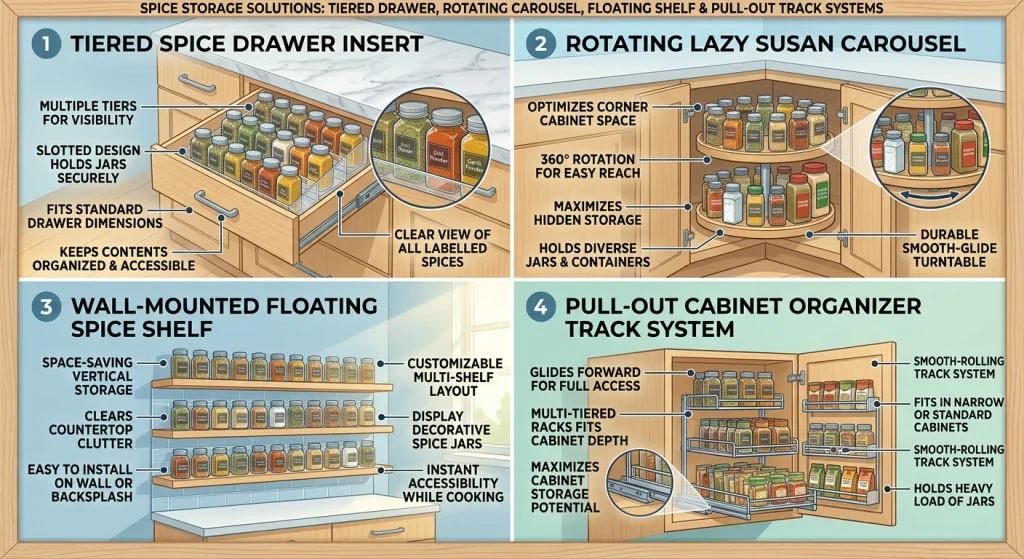
Shops sell many types of organizers, so it is easy to feel lost. Start with how many jars you own and where they will go. Then choose the style that fits that space instead of buying the nicest-looking one.
What Is the Best Spice Organizer?
There is no single winner. The best spice organizer is the one that fits your cabinet, holds your jars, and is easy to clean. A tiered shelf suits a cabinet. A turntable suits a corner. A drawer insert suits a shallow drawer.
Spice Rack, Spice Holder and Spice Rack Organizer Types
A classic spice rack hangs on the wall or sits on a counter. A spice rack organizer usually sits inside a cabinet. A spice holder can be a simple stand or a magnetic strip. Good spice holder ideas include a wall strip, a counter stand, or a cabinet-door rack. Kitchen spice organizers and a seasoning organizer are just different names for similar tools.
Spice Jars and Rack Sets
Some stores sell spice jars and rack sets together, which saves time because the jars already match the rack. Check the jar size before you buy, so it fits your cabinet. Also check that the lids close tightly. A set is only a good deal if the lids work.
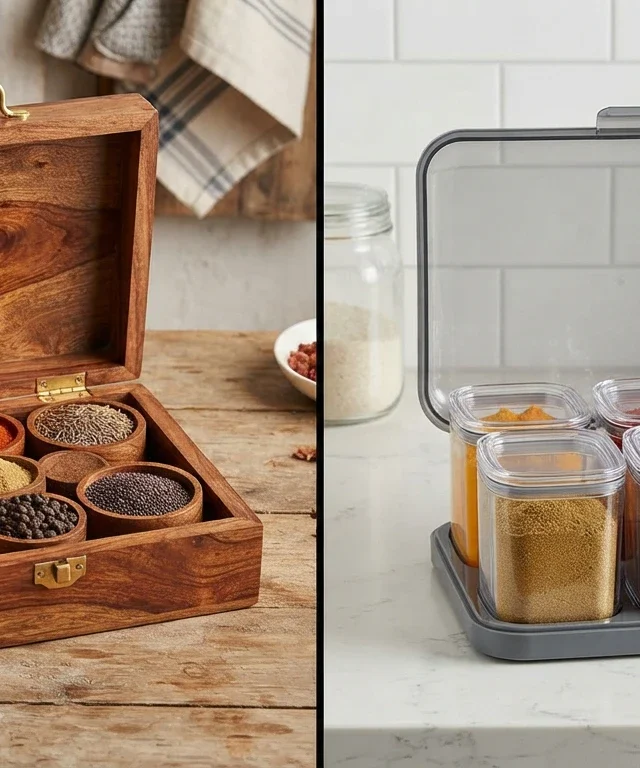
Wooden Options
Wood adds warmth to a kitchen, and many people like the look of a wooden holder. If you want to explore wooden shelves and kitchen organizers, our earlier guide covers layouts and styles. Keep any wooden holder dry and away from steam.
Kitchen Spice Organizer Ideas You Can Make at Home (DIY)
You do not have to spend a lot of money to organize spices. A few simple supplies can do the job. If you like making things, how to organize spices in a kitchen DIY style can be quick, cheap, and fun.
Easy DIY Spice Organizer Ideas
Reuse clean, dry glass jars with tight lids. Cut a tray from a wooden board or use a small basket. A cardboard box with dividers can sort packets inside a drawer. Cover the lid with a label so each jar is easy to find.
Choosing Safe Materials for DIY
If you use wood, pick a clean, smooth piece that has no strong smell or rough edges. For help with this, see these tips for picking safe wooden pieces. Avoid anything that has held chemicals, and let freshly cut wood dry before it holds jars.
Desi Spice Storage: Masala Boxes and Daily Jars
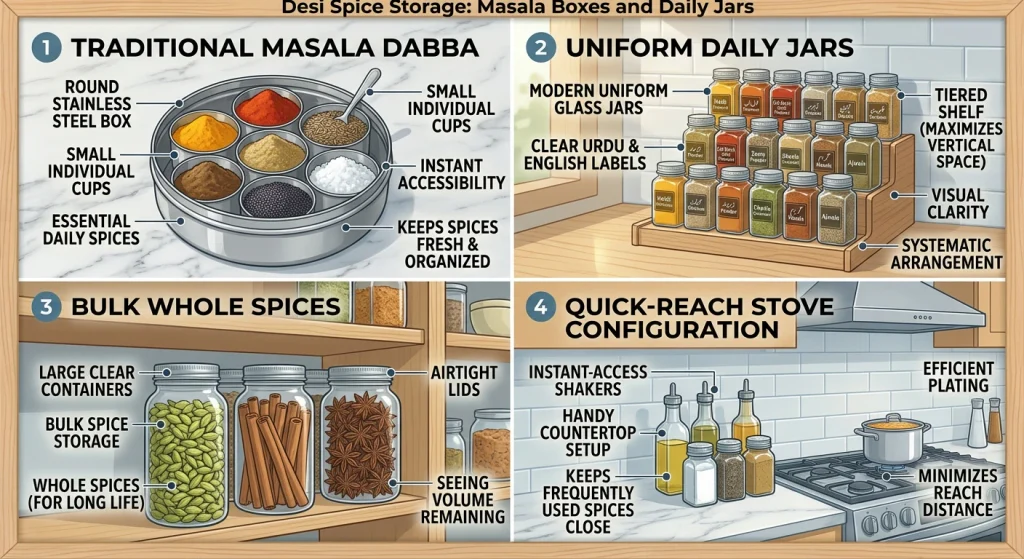
Desi kitchens often use many spices every day. That means more jars, more refilling, and more mess. A good setup keeps your daily masalas close and your backup stock safe and dry.
A Simple Desi Spice Storage Plan
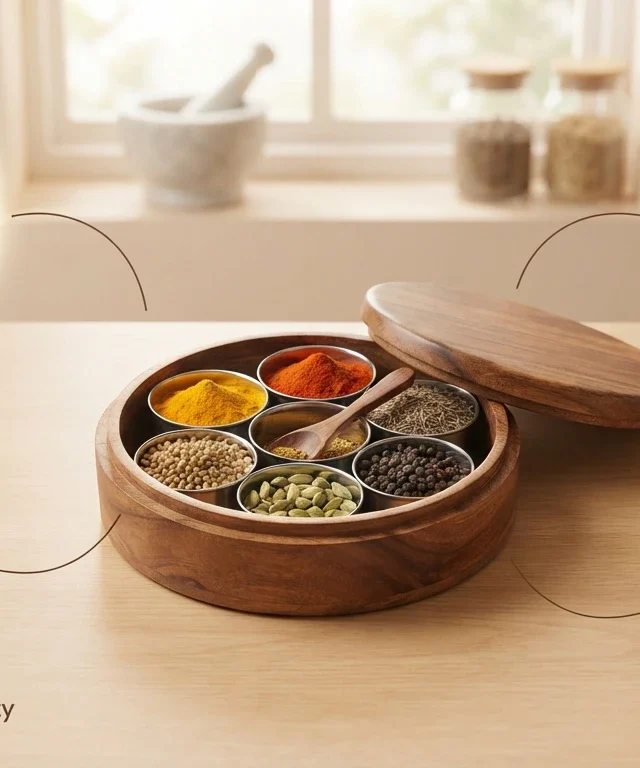
Use a round masala box or a few small jars for daily spices such as salt, turmeric, red chili, coriander, and cumin. Keep bulk bags in a sealed container in a cool cupboard. Refill the small jars every week or two, so the main stock is opened less often.
Wooden Masala Boxes and Spice Boxes
Many people like wooden masala boxes for their look and feel. If you are shopping, read about local makers of wooden kitchen accessories before you decide. It also helps to understand what makes wooden pieces cost more or less, so you can compare options fairly.
Spice Storage for the Long Term
Some people buy spices in bulk or save them for later, and they ask how to store spices for long term use. Others ask how to store spices long term in a small home. If that is you, a little extra care helps. For daily cooking, a cabinet is enough. Long term spice storage is mainly for stock you will not open for months.
How to Preserve Spices for a Long Time
If you wonder how to preserve spices for long time use, start here. To preserve spices for a long time, keep them whole when you can, because whole spices last longer than ground ones in the AgriLife ranges above. Store the bulk stock in tightly closed containers in a cool, dark place, and fill a small daily jar from it.
Best Way to Store Spices Long Term
The best way to store spices long term is to keep the main stock sealed and untouched. Long term storage spices need the same care as daily ones: cool, dark, dry, and tightly closed. Every time you open a bag, air and moisture get in. Splitting bulk spices into smaller sealed portions means you open only the portion you need.
Can Spices Be Stored in Mylar Bags?
People do use mylar bags to store dry food, and some add oxygen absorbers. Many readers ask how long will spices last in mylar bags. There is no trusted, university-backed shelf-life number for spices in mylar bags, so this guide does not promise a number of years. If you try it, label the date and check the aroma later.
How Long Will Vacuum Sealed Spices Last?
The same applies to vacuum sealing. It can reduce air around dry spices, but there is no single reliable figure for every spice. Treat any promise of many years with care, and test the smell and color before cooking. Replace anything that has faded.
Can You Freeze Dried Spices?
Some cooks freeze spices, but it is not required for home use, and the AgriLife guide above does not list it as a step. One practical risk is moisture: a cold jar opened in a warm kitchen can collect water. If you try it, let the jar warm up before opening.
Common Mistakes When You Organize Spices
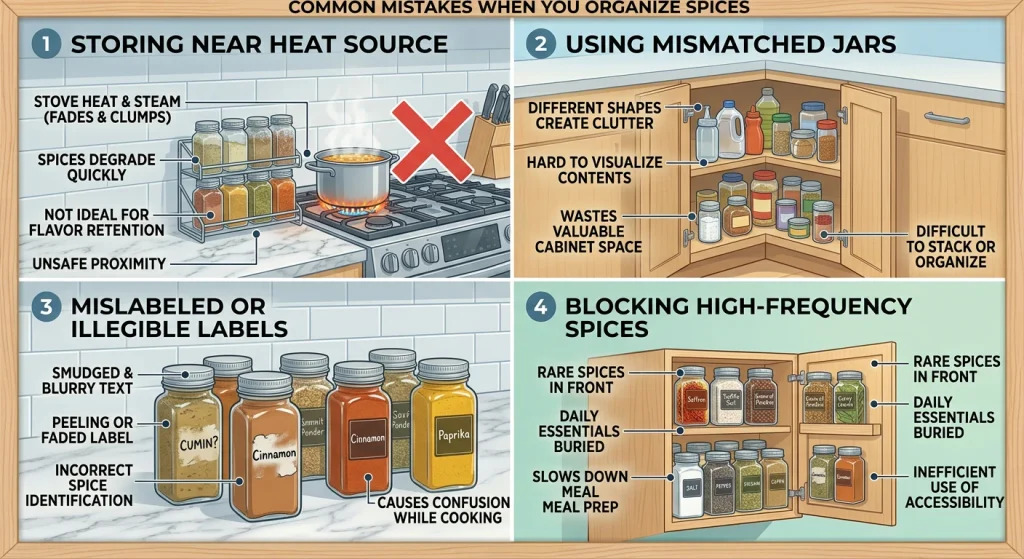
Small habits can undo a neat setup. These mistakes are easy to fix once you know about them, and fixing them keeps your spices fresher, your shelf tidier, and your cooking much easier day after day.
Storing Spices Above the Stove
It is tempting to keep spices right by the stove, but heat and steam are the enemy. Move them to a spot at least a short walk away. Keep one small jar of salt near the stove if you like, and store the rest elsewhere.
Letting Moisture In
Do not shake spices straight over a steaming pot, because steam can get into the jar. Measure into a dry spoon or your palm away from the steam. Always dry spoons before dipping them into jars. Screw lids on tight after every use.
Forgetting About Smell
Spice smells can cling to scoops and spoons, especially wooden ones. If that happens, read how to get strong masala smells out of wood, and keep a separate spoon for strong spices like garlic powder and curry blends.
Weekly and Seasonal Habits That Keep Spices Organized
An organized spice shelf is easier to keep than to fix. A few small habits take almost no time and keep clutter from coming back, so the effort you put in today does not fade away.
Simple Habits to Keep Your Setup Tidy
When you finish a spice, do not buy it again until you need it. Put new jars at the back and older ones at the front, so you use the oldest first. Wipe the shelf once a month and put each jar back where it belongs.
Caring for Wooden Tools and Holders
If you use wooden scoops, spoons, or small trays with your spices, wash and dry them well. Here is how to keep wooden spoons and scoops clean. Never leave them wet inside a spice jar.
FAQs About Spice Organization
Here are quick answers to the questions people ask most about spice storage. Each answer is short and plain, so you can read it fast, pick the idea that suits your kitchen, and get back to cooking.
How to organize spices in a kitchen?
Pick a cool, dark spot away from heat. Take out all the spices, throw away old ones, and pour the rest into matching jars with tight lids. Label each jar and sort them by category. Keep the ones you use daily at the front.
How can I organize my spices?
Start by checking every jar and removing weak or expired spices. Then choose a system that suits you, such as sorting by cuisine, by category, or alphabetically. Use a tiered shelf, a turntable, or a drawer insert to keep every label visible.
Where do spices go in a kitchen?
Spices go in a cool, dark, dry place such as a cabinet, a drawer, or a pantry shelf. Keep them away from the stove, oven, dishwasher, sink, and sunny windows. A spot you can reach easily while you cook is best.
What is the best spice organizer?
It depends on your space. A tiered shelf works well in a cabinet, a turntable fits corners, a drawer insert suits shallow drawers, and a wall rack helps in small kitchens. Pick one that holds your jars and is easy to wipe clean.
Conclusion
Now you know how to organize spices in a kitchen without making it complicated. Check what you have, choose a cool and dark spot, use matching jars, label everything, and sort by category. These steps work in a big kitchen or a tiny one.
Start with one shelf or one drawer today, then build the habit slowly. In a few weeks, you will find cooking faster, your spices will smell better, and you will waste less money on duplicates. A small effort now makes every meal easier.