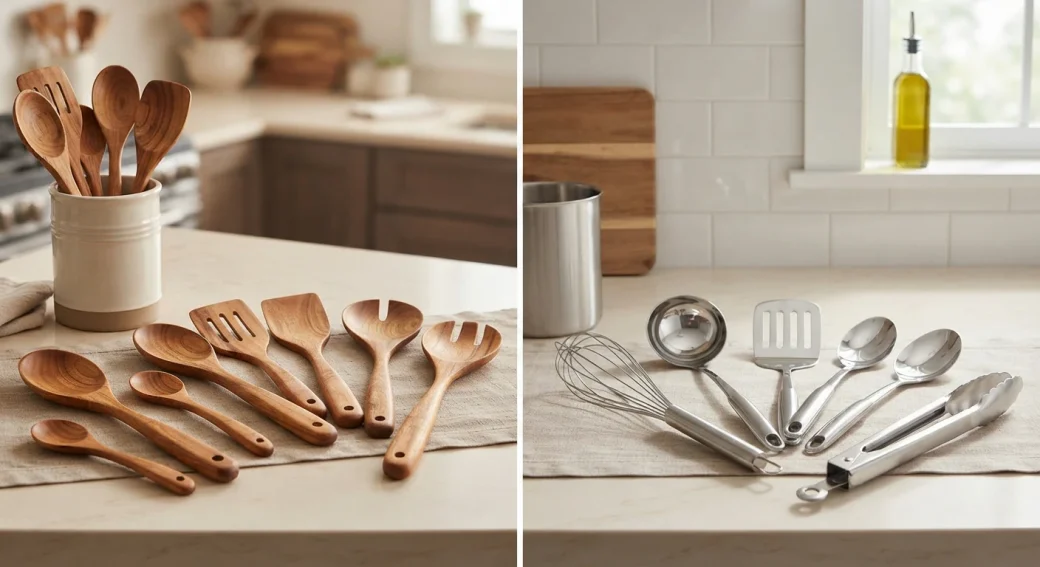
If you’ve ever stood in a shop holding a wooden spoon in one hand and a steel spatula in the other, you already know the question behind wooden utensils vs stainless steel utensils. Which one will treat your pans, your food and your wrists better? Neither material wins every time. The answer depends on your cookware, how often you cook and how much care you’re willing to give your tools.
Searching for the best cooking utensils wooden or stainless steel tends to turn up loud opinions rather than clear answers. This guide compares wooden utensils vs stainless steel utensils for cooking one decision at a time, so you can buy once and stop second-guessing.
Wooden utensils vs stainless steel utensils
Here’s the short version. Choose wood for nonstick and other coated pans, for slow stirring, and for any job where you want a gentle touch. Choose stainless steel when you need a thin, rigid edge, a tool that shrugs off hard use, or something you can wash without thinking twice. Most home kitchens end up with both, and that’s usually the smartest setup. Wooden cooking utensils compared to stainless steel tools come out ahead on pan protection, while steel pulls ahead on raw toughness.
Wooden utensils vs stainless steel utensils at a glance
The table below sums up the differences between wooden and stainless steel cooking tools. It works as a quick kitchen utensil material comparison. Think of it as a map: skim it first, then jump to the sections that match what worries you most, whether that’s scratched pans, cracked spoons or the time you spend at the sink.
| What you care about | Wooden utensils | Stainless steel utensils |
| Nonstick pans | Gentle on coatings | Can scratch or chip the coating |
| Stainless steel pans | Gentle, leaves no marks | Safe to use, but can leave marks over time |
| Handles near heat | Stay comfortable longer | Solid metal handles can get hot |
| Cleaning | Hand wash, dry promptly | Usually simple; check the label for dishwasher use |
| Moisture and odors | Wood can absorb both | Does not absorb |
| Cracking or warping | Possible if soaked or dishwashed | Not an issue |
| Edge for flipping | Thicker, rounder edge | Thin, rigid edge |
| Upkeep | Occasional food-grade mineral oil | None |
What are wooden and stainless steel kitchen tools made of?
Before comparing performance, it helps to know what you’re actually holding. The two materials behave so differently because they start from completely different places, one grown in a forest and one alloyed in a furnace, and that origin explains most of what follows in this guide.
Natural wood kitchen utensils
Most wooden cooking tools are carved from dense hardwoods such as maple, beech, teak or olive wood. A tight grain matters because it resists soaking up liquid and splintering. Look for a smooth, sanded surface and a food-safe finish, or no finish at all. If you want to compare species in detail, this breakdown of which hardwoods hold up best in a busy kitchen covers the trade-offs.
Stainless steel kitchen tools
Stainless steel is an iron alloy that contains at least 10.5 percent chromium, and that chromium is what gives it its corrosion resistance. Common kitchen grades include 18/10 and 18/0, numbers you’ll often see stamped on a spoon or printed on the packaging. Stainless steel cooking equipment ranges from slotted turners and ladles to whisks, tongs and full sets of pots.
Wooden utensils vs metal utensils for nonstick cookware
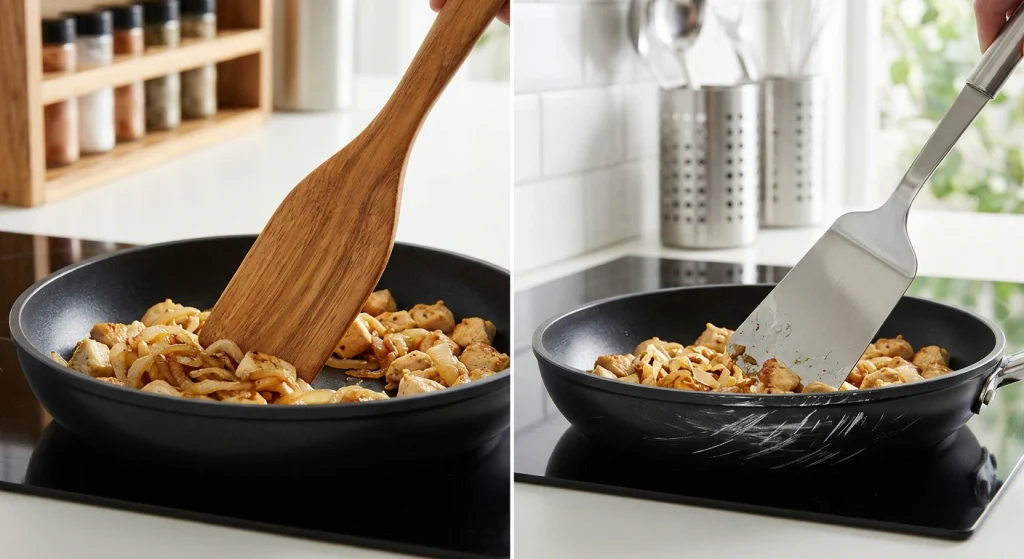
This is the matchup where the answer is clearest, and it’s the reason many people switch to wood in the first place. Nonstick coatings are thin, and they don’t forgive hard edges, so the material in your hand matters more here than anywhere else in the kitchen.
Why metal cooking utensils scratch coatings
Cookware makers are consistent on this point. Made In says that even a stainless steel fish spatula, a pair of tongs or a metal serving spoon can scratch or chip a nonstick coating, even when handled gently, and that the damage is permanent. Once a coating is chipped, the pan loses its slick surface and stops performing the way it did.
Wood as one of the nonstick cookware safe utensils
Wood is soft enough that it won’t scratch a coating. Misen’s care guidance tells owners to use wood or silicone and to avoid metal, because scratches shorten the life of the pan. That makes wooden spoons and spatulas dependable cookware-friendly kitchen utensils, especially for eggs, pancakes and other delicate foods.
Wooden utensils vs stainless steel utensils on a stainless steel pan
Stainless pans are tougher, so the rule relaxes. Stellar, a cookware brand, says stainless steel pans can be used with metal, silicone or wooden tools. Metal can still leave marks over time, so wood remains the gentler choice if you care how the pan looks after a few years of regular use.
Silicone as a third option
Silicone is another gentle choice for coated pans, though heat limits vary from product to product, so read the label before you trust it with a very hot pan. If you’re torn between all three materials, this look at how wood stacks up against silicone fills in the rest of the picture.
Durability of wooden utensils vs stainless steel utensils
Durability sounds like a simple contest, but it really has two parts: how tough the tool is on day one, and how well it copes with the way you actually treat it. Steel wins the first part easily. Wood can compete on the second if you give it a little care.
How long wooden utensils last
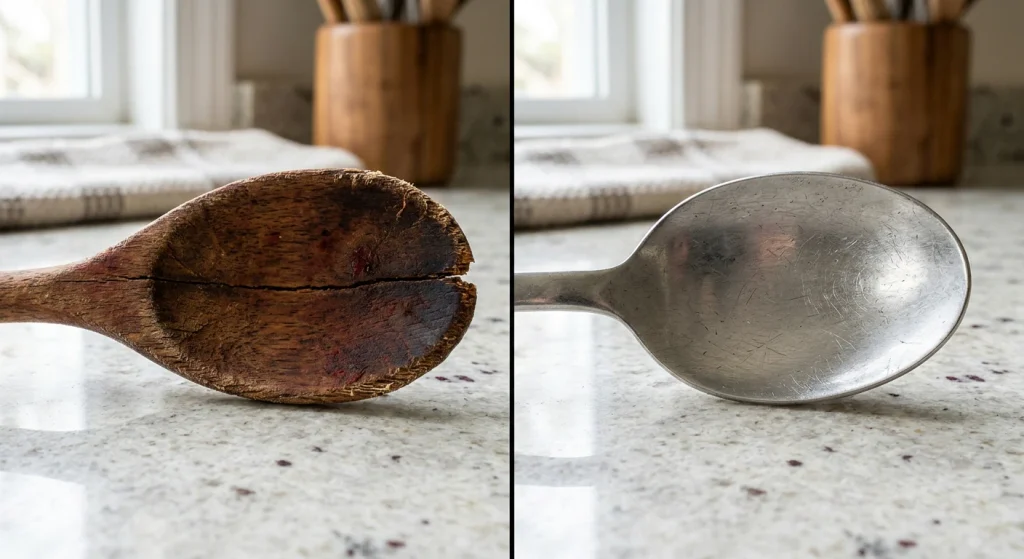
Wood doesn’t like long soaks or dishwasher cycles. Water makes it swell, and drying shrinks it again, and over time that cycle causes warping, cracking and splitting. A rough, fuzzy spoon isn’t finished, though. Sanding it with fine-grit paper, washing it and then oiling it can bring it back. Most early failures trace back to a handful of habits, which this guide to avoidable errors that shorten the life of wooden tools walks through.
How stainless steel cooking equipment holds up
Stainless steel doesn’t absorb water, so it can’t swell, crack or warp the way wood can. It can pick up scratches and dull marks, but those are usually cosmetic. When it comes to kitchen utensil durability and maintenance, steel is the low-effort option: wash it, dry it and put it away.
Which cooking utensils last longer: wood or stainless steel?
People often ask which cooking utensils last longer wood or stainless steel. On raw toughness, stainless steel generally lasts longer, because water, heat and repeated washing barely affect it. A well-kept wooden spoon can still serve you for many years, but treat any exact lifespan figure you see online with caution, since none of the sources checked for this article gave reliable numbers. Judge by condition instead. Cracks, deep stains or a rough surface mean a wooden tool is due for replacement.
Wooden vs stainless steel kitchen utensils for everyday use
Day-to-day cooking is where personal preference shows up. Think about the three jobs your tools do most, which are stirring, flipping and serving, and match the material to the job rather than picking one material for the whole kitchen.
Wooden vs stainless steel utensils for frying and stirring
For stirring soups, sauces and curries, wood feels comfortable and stays quiet against the pan. For frying, a thin metal turner often slides under food more easily. Neither choice is wrong. The job in front of you decides, and so does the pan underneath it.
Stirring: wooden spoons and metal spoons
Wooden spoons are the classic choice for risotto, sauces and slow-cooked curries. They’re comfortable to hold, they don’t clank against the pot, and the handle doesn’t heat up the way a solid metal one can. Metal spoons are handy for tasting and serving, and they rinse clean quickly.
Flipping and frying: wooden spatulas vs steel spatulas
A steel spatula’s thin edge slips under fish, fried eggs and crispy bases without tearing them. A wooden spatula has a thicker edge, so it takes a little more practice, but it’s the kinder tool on coated pans. If your pans are nonstick, choose wood and accept the slightly chunkier edge.
Heat resistant kitchen utensils and comfortable handles
Wood doesn’t conduct heat the way metal does, so a wooden handle resting in a hot pan stays comfortable far longer than a steel one. Solid steel handles can get hot, which is why many metal tools have hollow or insulated handles. Wood can scorch if it sits on a burner edge, so don’t leave it there.
Easy to clean wooden or stainless steel kitchen utensils?
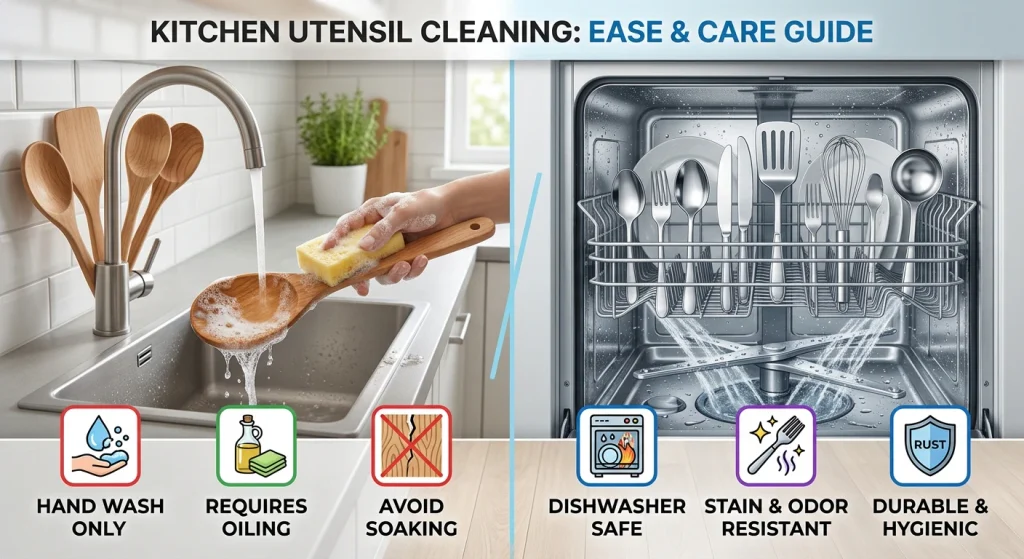
Cleaning is where the two materials feel most different day to day. One asks for a quick rinse and a place in the dishwasher. The other asks for a little more attention, and the extra effort pays off in how long it lasts.
Washing wooden cooking tools
Wash wooden tools by hand with warm water and mild dish soap, then dry them right away rather than letting them soak or air-dry in a puddle. Skip the dishwasher, since long hot cycles can crack and warp wood. Every so often, rub them with food-grade mineral oil. Cooking oils like olive or vegetable oil can turn rancid and leave an odor.
Washing stainless steel kitchen tools
Stainless steel is the easy one. It doesn’t soak up water or smells, so a rinse and a wash with soap does the job. Many stainless tools are dishwasher-friendly, but check the maker’s label first, especially for pieces with wooden or plastic handles that won’t enjoy the heat.
Hygienic cooking utensil materials: what the research says
Both materials can be kept hygienic with ordinary habits, though they raise different questions. For wood, the question is porosity. For steel, it’s whether metals can move into food. Here’s what the evidence says about each.
Wood: porous, but manageable
Because wood is porous, it can hold moisture and odors, which is why drying it properly matters. That’s not the same as being unsafe. If you want the full picture on heat, acidic foods and cracks, this explainer on whether wooden spoons are fine around hot food goes through it. For food-safe wooden cooking tools, retire any spoon that has deep cracks or a splintering surface.
Stainless steel: the nickel and chromium question
Stainless steel is widely used for food contact, and the Nickel Institute, an industry body, says well-designed studies show very little nickel transfers into food. Independent research adds some nuance. A 2013 study by Oregon State University researchers simmered tomato sauce in stainless steel for hours and found that nickel and chromium levels rose, more so with longer cooking and with new cookware. That work tested cookware during long, acidic cooking, not a quick stir with a spoon. If you have a nickel sensitivity, it’s worth asking your doctor, but for most people stirring with a steel spoon is not a concern.
Wooden utensils vs stainless steel utensils for beginners
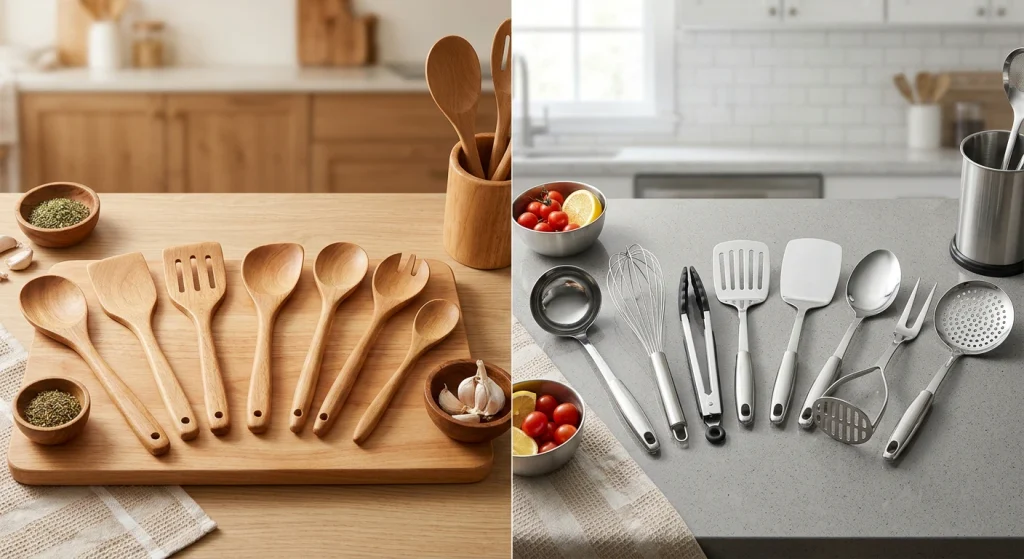
If you’re setting up your first kitchen, you don’t need a drawer full of gadgets. A short, sensible set of kitchen tools for daily cooking will cover almost every recipe you’re likely to try in your first year.
A simple starter set
Start with two or three wooden spoons in different sizes, one wooden spatula for pans with a coating, and one stainless steel turner and pair of tongs for tougher jobs. If you want a gentler on-ramp, these starter wooden tools for new cooks are a good place to begin.
Choosing the right material for cooking utensils
Match the tool to your cookware first, then to the job. Wooden or stainless steel utensils for home cooking can both do nearly everything, so the pan is the tiebreaker. Nonstick pans point to wood or silicone, and stainless or cast iron pans leave you free to use either. For a wider look at shapes, sizes and finishes, there’s a complete overview of wooden cooking tools, plus how to pick good wooden tools without overspending.
Buying wooden or steel tools in Pakistan
If you’re shopping locally, start with a practical shopping checklist for buyers in Pakistan. Then compare what pushes the price of wooden tools up or down locally, and browse local names worth considering for wooden kitchen accessories before you commit to a set.
Pros and cons of wooden and stainless steel utensils
Every material is a trade-off, so it helps to see the good and the bad side by side before you decide. The lists below are meant for quick scanning, and each point connects back to the sections above.
Benefits of cooking with wooden kitchen tools
Wood is gentle on cookware, comfortable in the hand and stays cooler near heat. Many cooks also simply enjoy how it looks and feels. For the broader picture, here are reasons home cooks enjoy natural wood in the kitchen, and an honest look at the upsides and downsides of wooden kitchenware.
- Won’t scratch nonstick coatings
- Comfortable, with handles that stay cooler near heat
- Quiet against pots and pans
- Easy to replace when worn
The downsides are real, too:
- Must be hand washed and dried
- Can crack, warp or stain
- Can hold moisture and odors
- Thicker edges are less handy for delicate flipping
Advantages of stainless steel cooking utensils
Stainless steel is tough, doesn’t soak up water or smells and handles frequent washing. Its thin edges make it good for flipping and lifting. The main drawback is that metal cooking utensils can scratch coated pans, so keep them away from nonstick surfaces.
- Very durable, with no swelling or cracking
- Thin, rigid edges for flipping and lifting
- No moisture or odor absorption
- Simple to clean
And the trade-offs:
- Scratches and chips nonstick coatings
- Solid handles can get hot
- Can clank loudly against pans
- Long, acidic cooking in new stainless cookware can release some nickel and chromium
Frequently asked questions about wooden vs stainless steel utensils
These are the questions people ask most often when they’re choosing between the two materials. Each answer is short, so you can get what you need and get back to cooking.
Are wooden utensils better than stainless steel utensils?
It depends on the pan. Wooden utensils are better for nonstick and coated cookware because they won’t scratch it. Stainless steel utensils are better when you need a thin edge or a tool that tolerates frequent washing. Neither is better in every situation.
Which is better wooden or stainless steel cooking utensils?
For most home cooks, the most useful kit is a mix: wood for everyday stirring and nonstick pans, steel for flipping, lifting and anything that needs a rigid edge. If you can only buy one type, choose wood if you own nonstick cookware and steel if you don’t.
Can I use stainless steel utensils on nonstick pans?
It’s best to avoid it. Cookware brands including Made In and Misen advise against metal on nonstick coatings because scratches and chips can permanently damage the surface. Stick with wood or silicone, and save steel tools for stainless or cast iron pans.
Which kitchen utensil materials are best for healthy cooking?
When choosing kitchen utensil materials for healthy cooking, condition matters more than material. Keep wooden tools clean, dry and crack-free, and replace any tool that is splintering. With stainless steel, the main question is nickel sensitivity during long, acidic cooking. For quick stirring, both wood and steel are reasonable choices.
Choosing between wood and steel: the bottom line
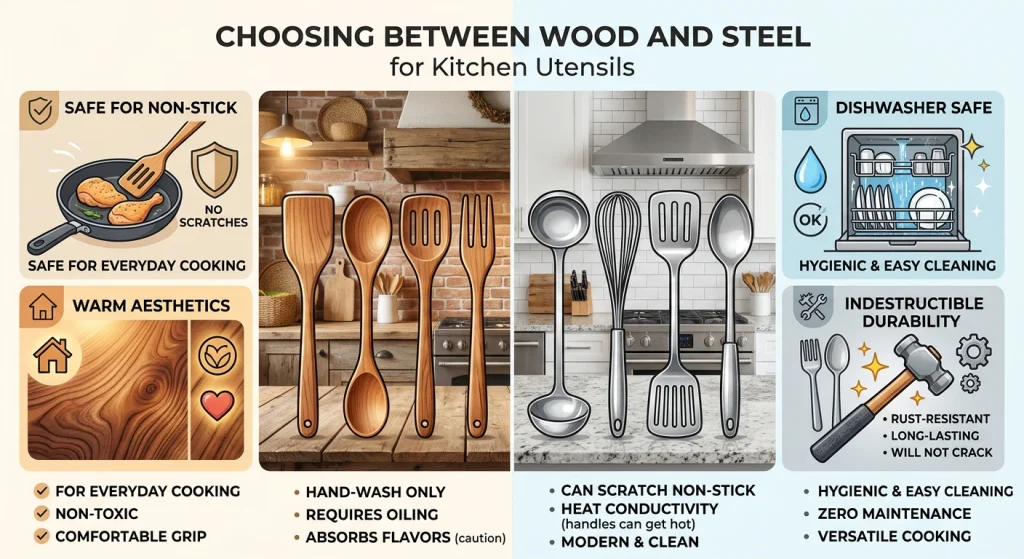
When it comes to the best material for kitchen cooking tools, there’s no single winner. Wooden and steel utensils for different cooking needs cover different ground: wood protects your pans and feels good in the hand, while steel handles heavy use and thin-edge work. A comparison of wood and stainless steel kitchen accessories always ends up in the same place, which is a small, mixed set. Whether you’re weighing wood versus metal kitchen accessories for the first time or reworking a drawer you’ve had for years, wooden kitchen tools compared with metal alternatives are best judged by the pans you own. Wood or steel utensils for kitchen use don’t have to be an either-or decision. Pick wood for coated pans, steel for tough jobs, and look after whichever you choose.

[…] a wooden spoon is a sensible choice for hot cooking gets its own answer. For everyday upkeep, a simple wash-and-dry routine for wooden tools will get you most of the way. Several brands above describe their pieces as “food-safe” […]
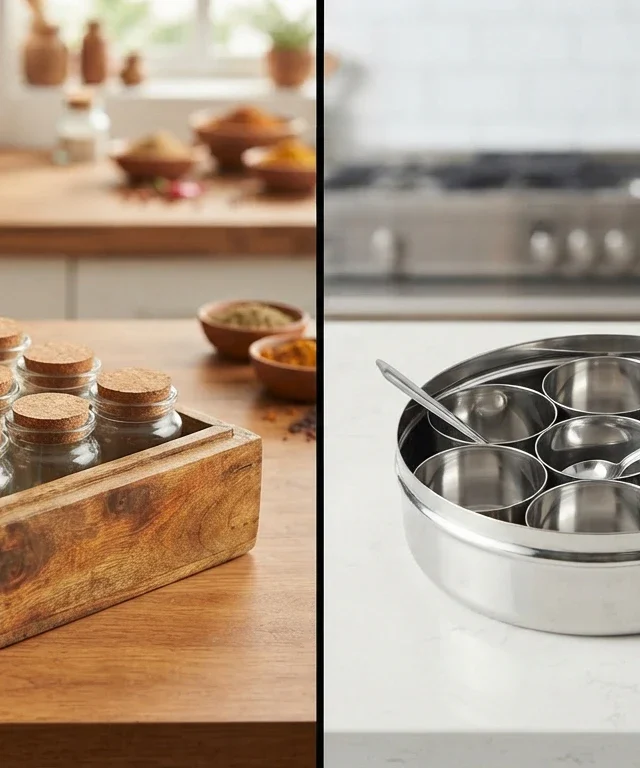
[…] A wooden box can last a long time too if you keep it dry and away from heat. It will not last forever, though, because wood changes with the seasons. If you want to see how the same two materials compare in other tools, read about wood against metal in other kitchen tools. […]