If you are wondering how to remove smell from wooden spoons, the short answer is baking soda, a splash of water and a minute or two of gentle scrubbing. Wood is porous, so a spoon that stirred last night’s garlic curry can still smell like it this morning. You do not need harsh chemicals to fix that. A few pantry staples will usually do the job, and this guide shows you exactly how to use each one.
Along the way you will find simple wooden spoon odor removal steps, fixes for garlic, onion, curry and sour smells, and a few habits that stop the problem from coming back. Everything here is about how to deodorize wooden spoons naturally, so you will not need bleach just to get rid of a smell.
How to Remove Smell From Wooden Spoons
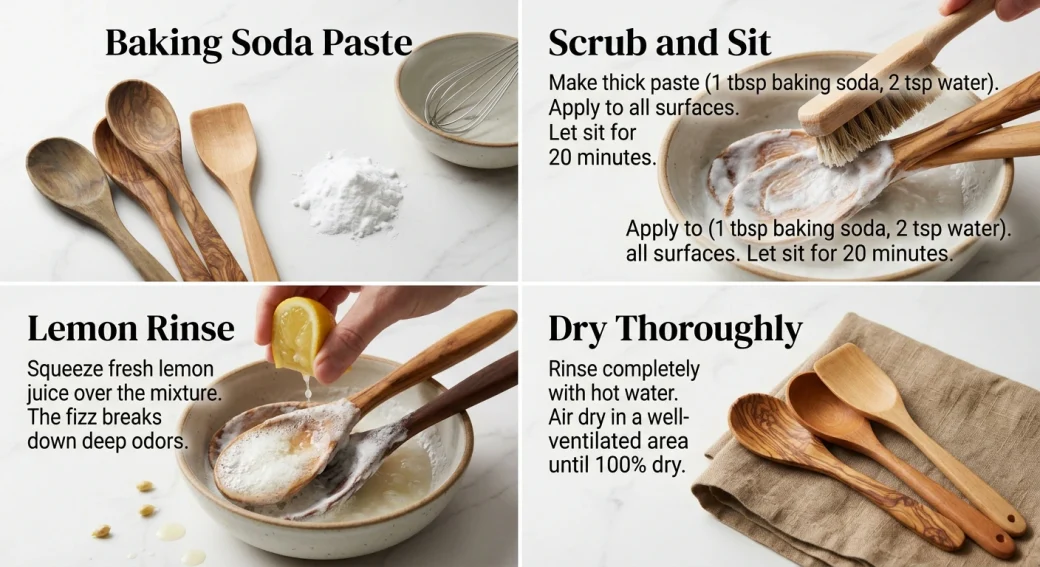
Wash the spoon in warm water with a little mild dish soap. Then rub it with a paste made from one tablespoon of baking soda and one teaspoon of water, leave it for a few minutes, rinse it well and let it air dry completely. For most kitchens this is the best way to remove odor from wooden spoons, because it costs almost nothing and works on every kind of smell.
- Rinse off food and wash with warm water and mild dish soap.
- Mix 1 tablespoon of baking soda with 1 teaspoon of water.
- Rub the paste over the bowl and handle of the spoon.
- Let it sit for a few minutes, then rinse thoroughly.
- Stand the spoon upright somewhere airy until it is completely dry.
If a faint smell is still there after one round, repeat the paste once or move on to the vinegar soak in Method 2 below.
What You Need Before You Start
You probably have everything in the kitchen already. Gather these items first so the spoon is not sitting wet on the counter while you hunt for a lemon. These are also the basic natural ways to clean wooden spoons, and they are gentle on your hands too.
- Baking soda
- A lemon or bottled lemon juice
- White vinegar
- Mild dish soap
- A soft brush or sponge
- A clean towel
- Food-grade mineral oil (optional, for aftercare)
Why Wooden Spoons Absorb Smells
Wood is full of tiny pores. That is part of what makes it so pleasant to cook with, but it also means a wooden spoon can pick up flavors and odors from anything it touches. A spoon that spends an hour in a pot of caramelizing onions will remember the experience for a while.
Porous Wood and Weak Organic Acids
Cooks at America’s Test Kitchen explain that the odors trapped in a spoon’s surface are often caused by weak organic acids, and that baking soda neutralizes those acids. In other words, it removes the smell instead of covering it up. That is why a baking soda scrub is real wooden spoon odor removal and not just a nicer scent on top of the problem.
Why Soaking Creates a Bad Smell
Before you learn how to get bad smell out of wooden spoons, it helps to know where it came from. One common cause is leaving the spoon in water for too long, since wood that stays wet can turn musty or sour. Soaking wooden spoons overnight is a habit worth dropping, and the habits section below explains what to do instead. If you are also unsure whether wood is a sensible choice for hot food, our notes on whether wood is a safe material for hot pots and pans cover that question in detail.
Method 1: How to Remove Smell From Wooden Spoons With Baking Soda
Baking soda is the first thing to try. In the same America’s Test Kitchen comparison, a panel of testers sniffed spoons treated with a few different approaches, including lemon dipped in salt and plain water. The only spoon they judged odor-free was the one scrubbed with baking soda.
Baking Soda for Wooden Spoon Odors, Step by Step
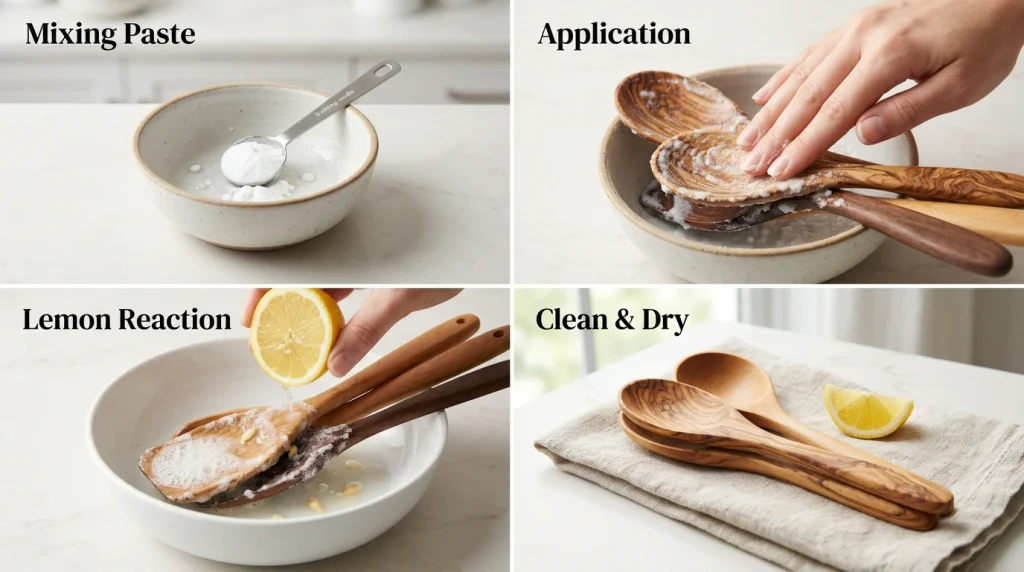
Start by washing off any food so the paste can reach the bare wood. Mix one tablespoon of baking soda with one teaspoon of water until it looks like wet sand, then press it into the bowl of the spoon and along the handle. Let it rest, rinse it under warm running water and wipe the spoon with a towel.
This is the simplest way of how to remove food odor from wooden cooking utensils of any shape, from ladles to turners. If you were hunting for how to clean wooden spoons baking soda style, this is exactly that routine.
How to Remove Smell From Wooden Spoons Without Damaging the Wood
Go gently. Use light pressure with your fingers or a soft brush, because the paste does the work and hard scrubbing only roughs up the surface. Do not leave the paste sitting for hours, and never let the spoon soak in it. Rinse well, then dry the spoon right away and stand it upright so air can reach every side.
How to Remove Smell From Wooden Spoons With Lemon Juice and Salt
No baking soda in the house? Lemon is the usual substitute. Several cooking guides suggest rubbing a cut lemon half over the spoon, or mixing lemon juice with baking soda into a paste that sits for five to ten minutes before you rinse. Treat lemon as plan B, though. In the testers’ comparison, baking soda was the clear winner, so keep a tub of it for exactly this job.
Method 2: Vinegar Cleaning for Wooden Utensils
When baking soda alone does not finish the job, move on to vinegar cleaning for wooden utensils. Vinegar is a pantry staple that many cooks reach for when a spoon has absorbed grease along with the smell. The goal is the same as before, which is deodorizing wooden cooking utensils without damaging them.
The Simple Vinegar Soak
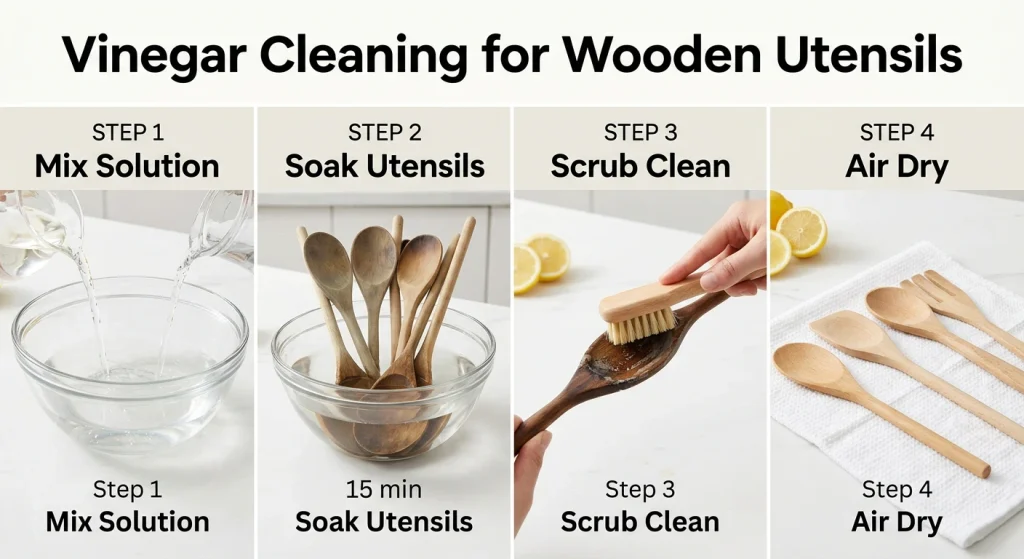
Mix equal parts white vinegar and water in a bowl or tall glass and stand the spoon in it for 15 to 20 minutes. Rinse thoroughly with plain water and dry it well. If you want to know how to clean wooden spoons with vinegar, or you keep searching for how to clean wooden spoons vinegar methods, honestly this is the whole trick. One thing to know: vinegar has a smell of its own, so rinse well and let the spoon air out before you cook with it.
Hot Water, Vinegar and Baking Soda for Deep Cleaning Wooden Cooking Spoons
For smells that refuse to budge, a home and garden guide describes mixing equal parts distilled white vinegar and boiling water in a tall container, stirring in a couple of spoonfuls of baking soda, and leaving the spoons for 20 to 30 minutes. Rinse them in plain water afterwards and dry them thoroughly.
This is the method behind how to clean wooden spoons with boiling water vinegar, and it is a handy option for deep cleaning wooden cooking spoons. Handle the hot liquid with care and let it cool a little before you pour or reach in.
Is Boiling Water Safe for Wooden Spoons?
Plenty of readers ask whether they should boil wooden spoons. If you search how to clean wooden spoons with boiling water, how to clean wooden spoons in boiling water or cleaning wooden spoons in boiling water, you will find lots of advice to pour hot water over the wood. Plain boiling water can dissolve grease, but the same home and garden guide says it is not as effective as water mixed with vinegar and baking soda.
Heat plus long exposure to moisture is also the reason dishwashers are a bad idea for wooden spoons, so the same logic applies to a long boil. If you do want to clean wooden spoons in boiling water, clean wooden spoons boiling water style, or clean wooden spoon boiling water for one stubborn case, keep it brief and let the wood dry completely afterwards.
Boiling wooden spoons to clean them for minutes at a time, or boiling wooden spoon to clean a single smell, is rarely worth the risk. In short, boil wooden spoons only if you must, and boil wooden spoon to clean only as a last resort.
Removing Stubborn Food Odors From Wood: Garlic, Onion, Curry and Sour Smells
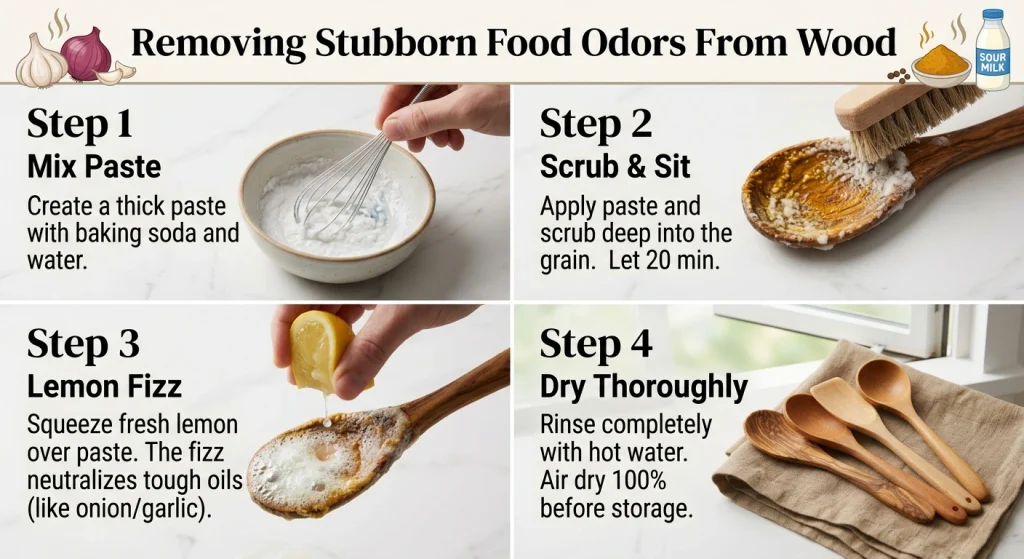
Removing stubborn food odors from wood sometimes takes two rounds instead of one, and that is normal. The fixes below all build on the same two tools, baking soda first and vinegar second. If you are not sure how to clean smelly wooden kitchen utensils, start with the method for the smell that matches yours.
How to Get Garlic Smell Out of Wooden Spoons
Garlic is a classic offender. Wash the spoon first, then press on the baking soda paste, wait a few minutes and rinse. If the smell comes back faintly once the wood warms up, follow with a lemon rub or a short vinegar soak. Dry the spoon fully so you do not trade a garlic smell for a damp one.
How to Remove Onion Smell From Wooden Spoons
Onion tends to hang around in the bowl of the spoon where it sat in the pot. For how to remove onion smell from wooden spoons, rub the bowl with a cut lemon half, wash it with soap and then finish with the baking soda paste. The lemon freshens the wood and the baking soda handles what is left underneath.
How to Get Curry Smell Out of Wooden Utensils
Curry brings strong spices and often a stain along with the smell. Baking soda is useful here because several cleaning guides recommend it for lifting both odors and food stains. If you want to know how to get curry smell out of wooden utensils, repeat the paste twice, then do a vinegar soak and dry the spoon in open air. Some staining may stay even after the smell is gone, and that is only cosmetic.
How to Remove Sour Smell From Wooden Spoons
A sour or musty smell usually points to dampness rather than food. Wash the spoon, scrub with baking soda paste and soak it in the equal parts vinegar and water solution for 15 to 20 minutes. If you are working out how to remove sour smell from wooden spoons, also look at how the spoons are stored. A wet spoon left in a drawer or sitting in a mug of water is the likely cause.
What to Do If You Spot Mold
If you see dark spots, one cleaning guide suggests soaking the spoon in a vinegar solution for 30 minutes to an hour and then brushing the area with a soft brush. If the spots return or sit inside cracks you cannot reach, replace the spoon. Extension guidance on wooden cutting boards says the same about worn surfaces with deep grooves, since they are hard to clean thoroughly.
Deep Clean, Sanitize or Disinfect: Which One Do You Need?
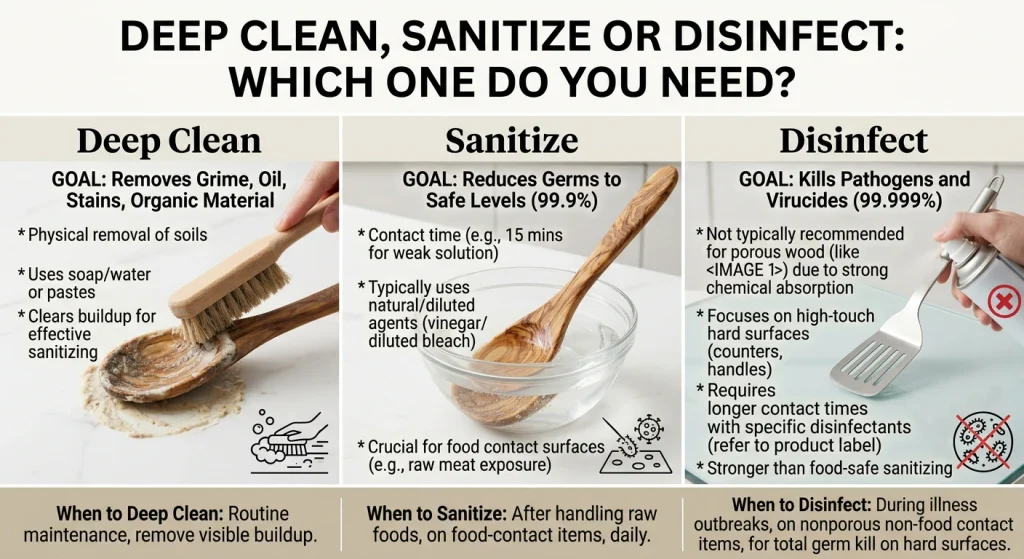
These three words get mixed up, so here is the difference. Deodorizing removes a smell. Deep cleaning lifts built-up grease and residue. Sanitizing and disinfecting deal with germs, which matters most after a spoon has touched raw meat or poultry. A spoon can smell fine and still need sanitizing, and a smelly spoon is not necessarily unsafe.
How to Deep Clean Wooden Spoons
If you want to know how to deep clean wooden spoons, the hot water, vinegar and baking soda soak above is a good start. Deep cleaning wooden spoons this way is also useful when the smell comes with a greasy film. The same steps work when you need to deep clean wooden spoons in a batch, and they are also how to deep clean wooden utensils such as spatulas and ladles. One cleaning brand quoted by a home magazine suggests doing this deep cleaning once a month, which is a handy rhythm for spoons you use daily.
How to Sanitize Wooden Spoons
Odor removal is not sanitizing. If you are researching how to sanitize wooden spoons, how to sanitize wooden utensils, how to sterilize wooden spoons, how to disinfect wooden spoons or how to disinfect wooden utensils, the key point is to clean first. A 2026 University of Arkansas Division of Agriculture report on cutting boards found that cleaning food-contact surfaces before sanitizing makes the sanitizer work better. For the exact steps, see our guide to safer ways to sanitize a spoon that touched raw meat.
Everyday Wooden Spoon Care After the Smell Is Gone
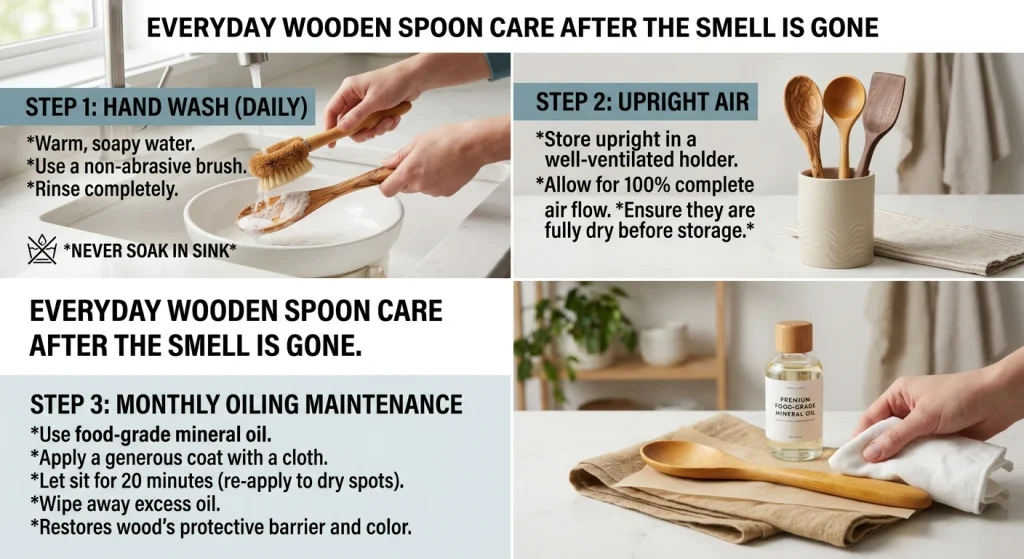
Once the smell is gone, a little routine keeps it that way. Good wooden spoon care is mostly about washing promptly and drying fully. Here are the wooden kitchen utensil cleaning tips that make the biggest difference.
How to Wash a Wooden Spoon After Every Use
Here is how to wash a wooden spoon day to day. Use warm water and mild dish soap, wash by hand and dry it right away. If you are asking how do you clean wooden spoons without a fuss, that is the answer. The same steps cover how to clean a wooden spoon, how to clean wooden spoon handles, how to clean wooden spoons you use for sauces, and how to clean your wooden spoons after baking.
Some people prefer to search for how to wash wooden spoons, wash wooden spoon routines or how to clean wood spoon tips, and the advice is the same: wash soon, rinse well and dry. If you want the best way to clean wooden spoons for everyday use, that is it. For how to properly clean wooden spoons or cleaning wooden spoons and cleaning wooden spoon surfaces in more detail, see our everyday washing routine for wooden kitchen tools.
How to Clean Wooden Spatulas and Other Utensils
Spatulas, ladles and turners get the same treatment. If you are looking up how to clean wooden spatulas, how to clean wooden spatula edges or how to clean wood spatula corners, a soft brush helps reach the narrow edges. For general guidance on how to clean wooden utensils and how to properly clean wooden utensils, wash by hand, rinse and dry. Cleaning wooden utensils and cleaning wood utensils this way keeps the grain from absorbing grease.
Preventing Odors in Wooden Kitchenware
Preventing odors in wooden kitchenware comes down to a handful of habits. Do not soak wooden spoons for long, and if you wonder whether to soak wooden spoon sets overnight, the answer is no. Many people ask how to take care of wooden utensils, how to take care of wooden spoons or even how to take care of wooden spoon handles, and the answer is consistent. Wash soon, dry fully and store them where air can move around them.
For how to maintain wooden utensils, how to care for wooden spoons and how to care for wooden cooking utensils or how to care for wood utensils, the same routine applies. Caring for wooden spoons, care for wooden utensils and care for wooden spoons all come back to those same simple habits, and several of the usual slip-ups are covered in our piece on habits that quietly ruin wooden kitchen tools.
How to Maintain Fresh-Smelling Wooden Utensils
To keep wooden utensils fresh-smelling, wash them soon after cooking, stand them upright to dry and keep them out of the dishwasher. Do a baking soda scrub whenever a smell starts to creep in and a vinegar soak about once a month. Some cooks also wipe on a little food-grade mineral oil now and then, which is optional and works as aftercare rather than as a deodorizer.
When It Is Time to Replace a Spoon
Even well-kept spoons do not last forever. If a spoon is cracked, splintering, deeply grooved or smelly no matter what you try, it is time to replace it. When you buy the next one, it helps to know which hardwoods make the best spoons, since the wood itself affects how the spoon wears.
Frequently Asked Questions About Smelly Wooden Spoons
These are the questions readers ask most often once the main fixes are done. Each answer is short on purpose, so you can scan for the one that matches your spoon and get back to cooking.
Can dish soap alone remove the smell from wooden spoons?
Dish soap clears food residue and surface grease, but it often leaves trapped odors behind. Baking soda is better at the smell itself because it neutralizes the acids in the wood. The best order is to wash with soap first, then follow with the baking soda paste.
How often should I deep clean wooden spoons?
There is no single rule. One cleaning brand quoted by a home magazine suggests monthly deep cleaning, which works well for spoons used daily. If a spoon starts to smell sooner, give it a baking soda scrub whenever the smell appears.
Can I put smelly wooden spoons in the dishwasher?
It is not a good idea. Cooking guides say heat and long exposure to moisture can damage wooden spoons, and the dishwasher does exactly that. Washing by hand and drying right away is safer for the wood and works better against smells.
Does oiling a wooden spoon remove odors?
No. Oiling is optional care that many kitchen experts recommend, but it does not neutralize odors that are already in the wood. Deodorize first with baking soda or vinegar, let the spoon dry completely and only then consider a light coat of food-grade mineral oil.
Final Thoughts
Now you know how to remove smell from wooden spoons: start with baking soda, use lemon or vinegar as backup, and treat deeper or sourer smells with a short hot soak. Keep the habits simple. Wash soon, dry fully, and skip the long soaks. If you want the bigger picture on choosing and caring for wood in the kitchen, our broader primer on wooden cooking tools is a good next read.


[…] into the wood, which is how a small surface problem turns into a split. If a spoon holds on to stubborn garlic or curry smells, rough fibers can be one of the reasons, and that roughness is worth fixing before it […]
[…] soda scrub or a short rub with vinegar and water often takes the edge off. You can read more about getting garlic and onion smells out of wood in a dedicated guide. Letting the spatula dry in fresh air and sunlight for a while also […]
[…] from turmeric and red chilli, and it can hold on to strong smells. If that happens, this guide on getting strong food smells out of wood can […]
[…] habits show how to keep wooden kitchen tools tidy. If a strong smell stays in the wood, tips on getting strong smells out of wood can […]