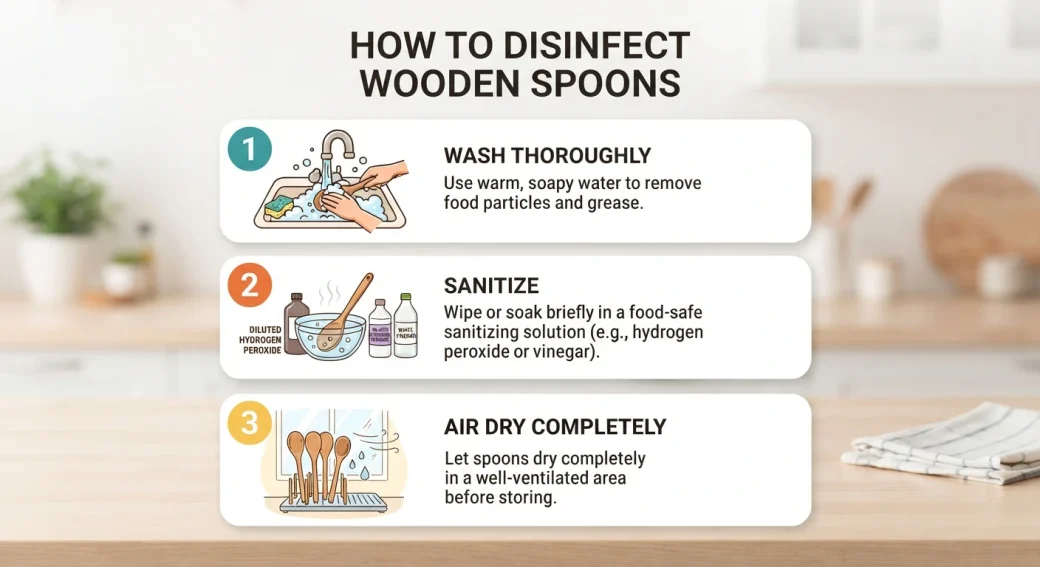
If you are wondering how to disinfect wooden spoons without wrecking them, the short answer is this: wash first, sanitize second, and dry completely. Wood is porous, so a spoon that has stirred raw chicken or a week of curries needs more than a quick rinse. It also cannot take boiling pots or dishwasher cycles very well. This guide covers the methods that food safety sources actually support, and it says so plainly where the evidence is thin.
If you only need to know how to clean wooden utensils day to day, the everyday washing routine for wooden tools covers that. This article is about the extra step that matters after raw meat, after a bad smell, or when a spoon has been around for years.
How to Disinfect Wooden Spoons in Five Steps
Here is the short routine that extension and food safety guidance points toward, and it is the best way to sanitize wooden spoons at home without special equipment. Each step is explained in more detail further down, including what to do after raw meat and why a few popular shortcuts are not worth the risk.
- Scrape off food, then wash the spoon by hand in hot water with dish soap.
- Rinse it well so no soap or residue is left.
- Apply either 3% hydrogen peroxide or 5% white distilled vinegar, never both together, and leave it on for about 10 minutes.
- Rinse again with clean water.
- Let the spoon air-dry standing upright, and rub on a little food-grade mineral oil once in a while.
For spoons that touched raw poultry, meat or seafood, the bleach option in the raw meat section is the one that follows USDA guidance most closely.
Why Wooden Spoons Need More Than a Quick Rinse
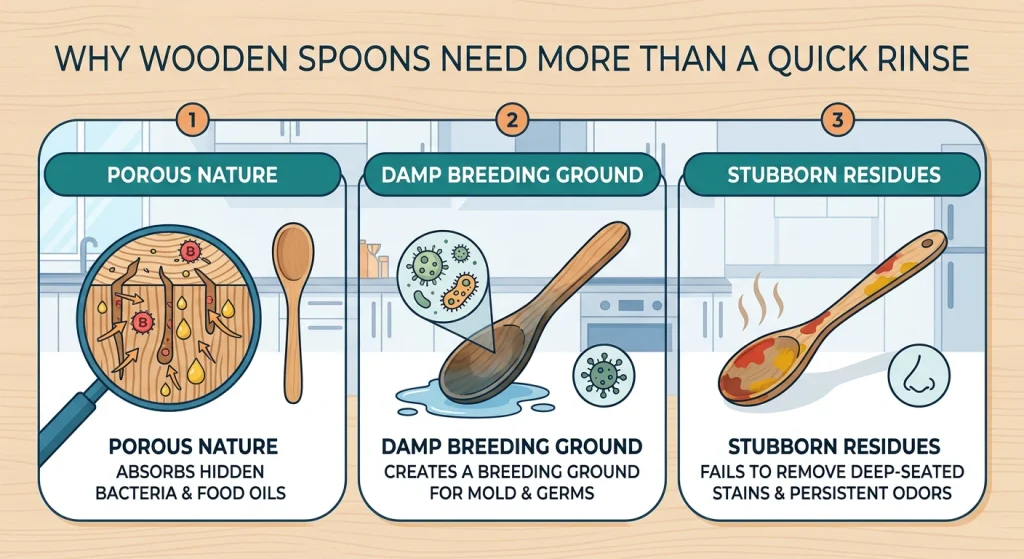
A wooden spoon looks clean long before it actually is. The grain of the wood holds onto moisture and tiny bits of food, and the surface wears with every wash. That is why wooden utensil hygiene takes a bit more thought than rinsing a steel ladle, and why it helps to understand what is really happening in the wood. Whether you are working out how to disinfect wooden utensils in general or just one favorite spoon, the same logic applies.
How Bacteria End Up in Wood
Wood is a porous material, so liquids and tiny particles can settle into the surface and into any cracks. Washington State University Extension points out that both wood and plastic cutting boards become contaminated when they touch raw animal products, and both can pass bacteria to other foods unless they are sanitized. Spoons are no different from boards in that respect.
You may have heard that wood is naturally antibacterial. There is some research behind that idea, and Which? notes that certain studies found fewer recoverable bacteria on wooden boards than plastic ones. The same article adds that a well-cleaned plastic board is still very hygienic. So treat the claim as a small bonus, not a reason to skip cleaning. If you are curious whether wood is a good choice in the first place, there is a closer look at whether wood is a sensible material for cooking on the site.
Bacteria Buildup on Wooden Spoons: What Raises the Risk
Bacteria buildup on wooden spoons usually comes down to four things: moisture that lingers, food residue that never fully washes out, cracks or deep grooves where residue hides, and contact with raw foods. Reduce any one of those and the risk drops, which is the whole idea behind how to kill bacteria on wooden spoons and keep it from coming back.
The good news is that most of it is within your control. Quick washing after use, thorough drying, and an honest look at the spoon’s condition do more than any fancy product. Good food safety and kitchen hygiene is mostly built from small habits like these.
Clean First: Remove Food Residue Before You Sanitize
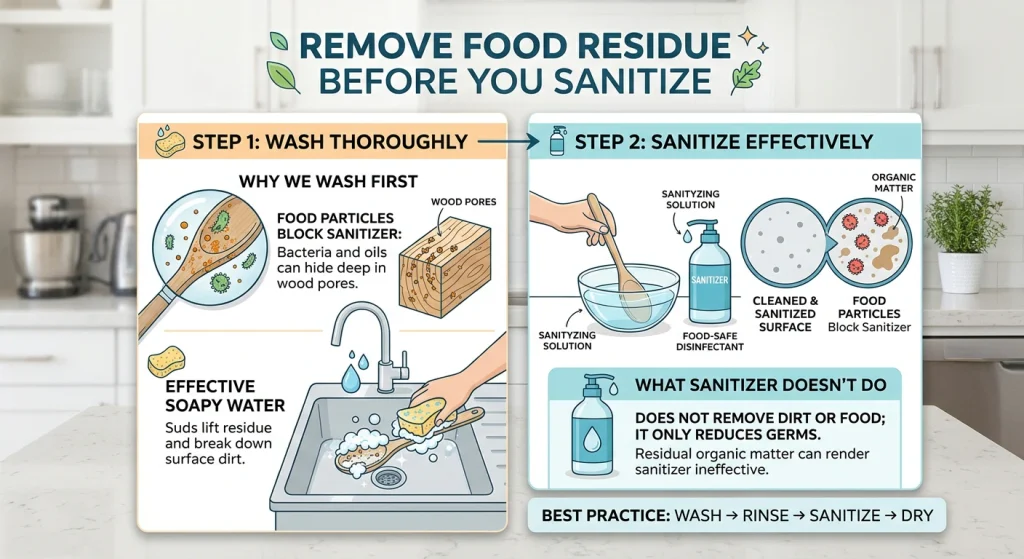
To clean and sanitize wooden kitchen utensils properly, the order matters, because sanitizing is not a replacement for washing. Extension guidance is consistent here: cleaning removes visible food and dirt, and sanitizing then reduces the number of bacteria that remain. A sanitizer poured over a sticky spoon mostly sits on top of the residue instead of reaching the wood underneath.
How to Wash a Wooden Spoon the Right Way
For anyone asking how to wash a wooden spoon, or how to properly clean wooden utensils in general, the process is simple. Hand washing is the best way to clean wooden spoons, so use hot water and a mild dish soap, a soft brush or sponge, rinse thoroughly, and do it soon after cooking. Wood absorbs odors and flavors quickly, so waiting only makes the job harder.
This is the core of how to clean a wooden spoon and of everyday wooden spoon care, and the same idea applies to a ladle or a turner. If you want the full routine for stains, grease and oiling, the longer walkthrough on the site covers it. Here, the goal is just a clean starting point before you disinfect.
Removing Food Particles From Wooden Utensils
Cleaning wooden spoons properly means removing food particles from wooden utensils, and that is the step people rush. Scrape thick residue off with the edge of a plastic scraper, then work a soft brush into the bowl of the spoon and along the edges. If you are wondering how to clean wooden spatulas, give the thin edge and any handle joins the same attention.
Avoid steel wool or hard scrubbing pads. They scratch the wood, and scratches give food particles new places to hide.
Soaking Wooden Spoons: Why It Backfires
It is tempting to leave a crusty spoon in the sink overnight, but soaking wooden spoons is one of the quickest ways to damage them. Long contact with water makes the wood swell and then crack as it dries, and cracks are exactly where bacteria like to settle.
If something is stuck on, a short soak of a few minutes in hot water with a little vinegar is the most you should do. Then wash, rinse and dry as normal.
Safe Ways to Disinfect Wooden Spoons Without Bleach
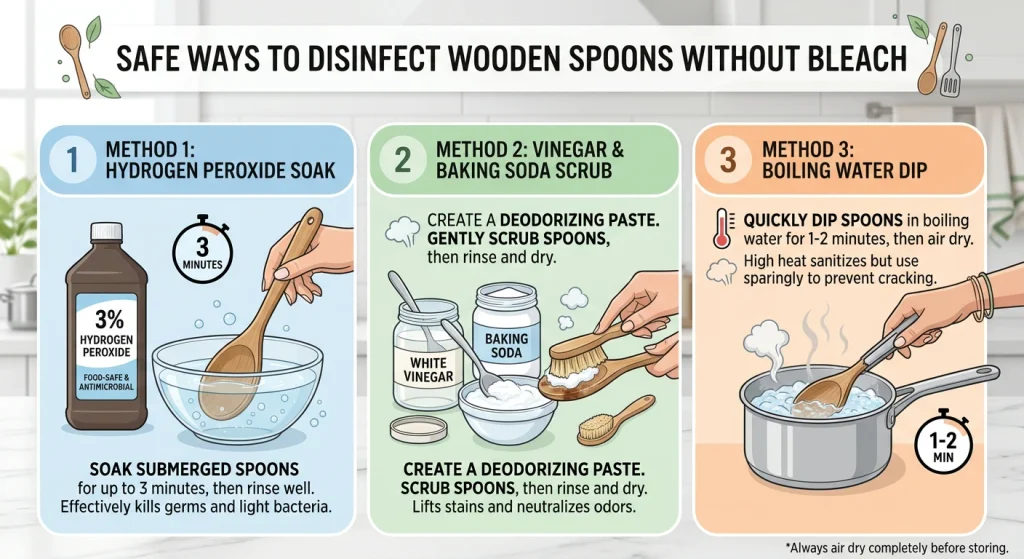
Among the usual wooden spoon sanitizing methods, these are the antibacterial cleaning methods with the clearest support, and they answer how to sanitize wooden utensils without harsh products. If you would rather skip bleach, there are two household options that extension educators list for wooden cutting boards and other kitchen surfaces: 3% hydrogen peroxide and 5% white distilled vinegar. Spoons are the same kind of porous wood, so these are reasonable safe ways to sanitize wooden spoons at home. Just remember they are borrowed from board and surface guidance, not tested on spoons specifically.
How to Disinfect Wooden Spoons With Hydrogen Peroxide
Hydrogen peroxide is the method most cooking and cleaning guides recommend for a deeper disinfecting step. You can buy 3% solution at any pharmacy, and it is a handy option when you want a hydrogen peroxide approach that does not leave a chemical smell behind.
Step-by-Step Peroxide Method
Here is how to disinfect wooden spoons with hydrogen peroxide:
- Wash the spoons first with hot water and dish soap, then rinse.
- Lay them on a clean tray or baking sheet.
- Pour or spray 3% hydrogen peroxide over every surface, including the back of the bowl and the handle.
- Leave it on for about 10 minutes. Ohio State University Extension gives that contact time for room-temperature peroxide on cutting boards and counters, so it is a sensible match for spoons.
- Rinse well with clean water and stand the spoons upright to air-dry.
Safety Notes and Wood Care After Peroxide
Never mix hydrogen peroxide with vinegar in the same container. Use one or the other, not both at once. Ohio State’s guidance also suggests testing peroxide on a hidden spot first, since it can lighten some surfaces.
Peroxide can also dry out the wood. MasterClass recommends treating spoons with food-grade mineral oil afterward, which is a good idea once the spoon is fully dry, and it is how you sanitize wooden spoons without damaging them over the long run.
How to Disinfect Wooden Spoons With Vinegar
Plain white distilled vinegar at 5% acidity is the other extension-listed option. Ohio State Extension describes using it at room temperature for about 10 minutes, then wiping or rinsing. For spoons, spray or wipe the vinegar over the washed wood, wait, then rinse and dry.
Vinegar is also handy as a gentle cleaner. A half-and-half mix of vinegar and water works for how to clean wooden spoons with vinegar when you mostly want to cut residue and odor rather than disinfect. Do not follow vinegar with peroxide, and never mix it with bleach.
Can Baking Soda Sanitize Wooden Spoons?
People often ask how to sanitize wooden spoons with baking soda. Baking soda is a mild abrasive and a good deodorizer, so it helps lift stains and smells when you make a paste and rub it on gently. I could not find authoritative food safety guidance showing that it disinfects.
Think of it as a cleaning helper and one of the natural wooden spoon cleaners for odor, not as a sanitizer. Rinse the paste off, then use peroxide, vinegar or the bleach method if you need real disinfecting.
Should You Boil Wooden Spoons to Clean Them?
Boiling comes up constantly in searches, from how to clean wooden spoons in boiling water to people mixing boiling water and vinegar. The trouble is that wood and prolonged high heat do not get along. Which? advises keeping wooden spoons away from boiling water, and a cleaning guide from GolfLink also recommends against boiling them.
Heat might kill germs on the surface, but it can also warp or crack the spoon, and a cracked spoon is harder to keep clean. I did not find a spoon-specific boiling time from a food safety authority, so I would skip it. Washing in plenty of hot water is fine, and the sanitizing methods above do the real work.
How to Clean Wooden Spoons After Raw Meat
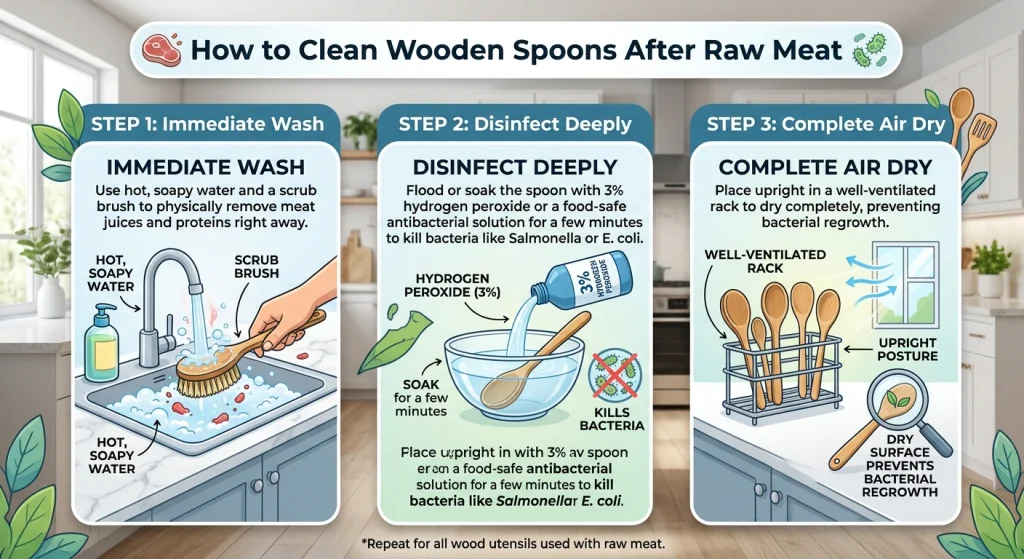
Raw chicken, beef, fish and eggs raise the stakes. The easiest fix is prevention: keep one spoon for raw food and a separate, clean one for stirring or serving the cooked food. Food safety guidance on cross-contamination points to this simple swap, and it costs nothing.
When the same spoon has touched raw meat, wash it properly right away, and consider sanitizing it before it touches anything else. If you cook for children, older adults or anyone with a weaker immune system, this is worth doing every time. Silicone is one alternative some cooks prefer for raw-meat jobs, and how silicone tools compare when hygiene is the priority is explained in a separate comparison.
The USDA Bleach Option for Raw Meat, Poultry and Seafood
The USDA lists a diluted bleach solution for sanitizing wooden and plastic cutting boards: 1 tablespoon of unscented liquid chlorine bleach per gallon of water. Extension services repeat it widely. I am applying it to spoons by analogy, because I did not find a USDA page that names spoons directly.
A food safety specialist at Clemson, quoted by Slate, said commercial kitchens sanitize wooden utensils with soap and scalding water or a weak bleach solution. At home, many people find bleach harsh and prefer peroxide or vinegar, which is a personal call. Whichever you pick, rinse thoroughly afterward so no chemical taste is left.
How to Disinfect Wooden Spoons After Raw Meat: The Full Routine
This is the full routine for how to clean wooden spoons after raw meat, how to remove germs from wooden cooking utensils, and how to remove bacteria from wooden kitchen utensils:
- Scrape off any raw residue, then wash in hot water and dish soap, rinsing well.
- Sanitize with one of the options above: the diluted bleach solution, 3% hydrogen peroxide, or 5% vinegar.
- Rinse again under clean water until nothing remains.
- Air-dry upright with plenty of airflow.
- Keep that spoon away from ready-to-eat food until it is completely dry.
If you prefer, you can also run this routine between uses when the same spoon moves between raw ingredients and finished dishes.
Disinfecting Old, Smelly or Damaged Wooden Spoons
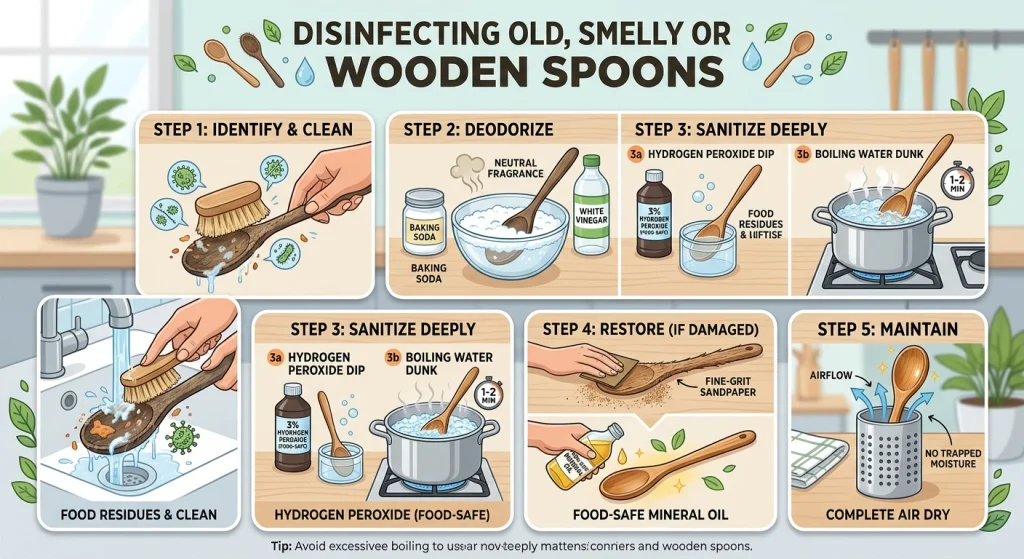
Age does not make a wooden spoon unsafe on its own. Condition does. A smooth, well-kept old spoon can be fine, while a younger one that has split or turned fuzzy should go. Check each spoon honestly before deciding how much effort it deserves.
Old Wooden Spoons: Sand, Sanitize or Replace
For how to disinfect old wooden spoons, start by looking closely. If the surface is merely rough or fuzzy, a light pass with fine-grit sandpaper can smooth it, followed by a wash, a sanitizing step and a little mineral oil. If you see deep cracks, splits or dark patches that will not wash out, replace the spoon. If you are searching how to deep clean wooden spoons, this sequence of sanding, washing, sanitizing and oiling is the deep clean.
The USDA says worn cutting boards with deep, hard-to-clean grooves should be discarded, and the same logic applies to spoons. For more on the habits that wear spoons out early, see habits that quietly shorten a wooden spoon’s life.
Smelly Wooden Spoons: Deodorize Before You Disinfect
To clean wooden spoons that smell bad, remember that odor and germs are separate problems. Smell comes from oils and food compounds trapped in the grain, and disinfecting alone may not remove it. Start by washing, then try a half-and-half vinegar and water wipe, or rub the spoon with a cut lemon and a little coarse salt.
Rinse, let it dry, and only then disinfect if the spoon touched raw food or you simply want the extra assurance. If the smell returns right away, the spoon may be too saturated to save.
How Often Should You Disinfect Wooden Spoons?
Wash your spoons after every use. Disinfect them every time they touch raw meat, poultry, seafood or eggs. For spoons that only stir cooked or plant-based dishes, an occasional sanitizing step is plenty.
One home-care guide suggests disinfecting about once a month, and that is a reasonable routine, but please treat it as a practical suggestion and not an official rule. I did not find a regulatory figure. If a spoon sees heavy use, or you cook for someone vulnerable, do it more often.
Mistakes That Undo Your Disinfecting
A careful sanitizing step can be wasted by what happens next. Two habits cause most of the trouble, and both are easy to fix once you know about them. They also tie into the broader wooden kitchen utensil care, from cleaning and sanitizing wooden cookware to storage, that keeps spoons lasting for years.
Putting Wooden Spoons in the Dishwasher
Opinions are mixed here. Some older articles suggest a hot dishwasher cycle is an easy way to sanitize wood. But Which?, and many wooden utensil makers, say the heat and long cycles can make spoons split and strip their natural oils, and cracks then become hiding spots for bacteria.
My advice is to wash by hand unless the manufacturer clearly says the spoon is dishwasher safe. A spoon that survives the dishwasher for a while may still be quietly cracking.
Mixing Cleaning Products
Never mix vinegar with hydrogen peroxide, and never mix bleach with vinegar. Combining cleaning products can create irritating or harmful substances, so apply them one at a time with a thorough rinse and a dry in between. If you are unsure, pick one method and stick to it.
Stick to food-safe cleaning solutions and safe cleaning products for wood: mild dish soap, plain vinegar, 3% hydrogen peroxide, and, where appropriate, the USDA bleach dilution. Skip anything scented or labeled for floors and furniture.
Drying and Storing Wooden Spoons After Washing
Proper drying of wooden cooking utensils is as important as the disinfecting itself. Wood that stays damp invites bacteria and mold, and it is also what causes cracking over time. After washing, shake off the water, pat the spoon with a clean towel or paper towel, and stand it upright with the bowl up so air can circulate.
How to dry wooden spoons after washing comes down to airflow. Do not store them damp in a closed drawer or a deep crock. A dish rack, an open jar on the counter or a hanging rail works well, and every few weeks an oil treatment keeps the wood from drying out. That is also most of what people mean when they ask how to take care of wooden utensils or how to maintain wooden utensils for the long term.
Preventing Cross-Contamination and Keeping Wooden Tools Hygienic
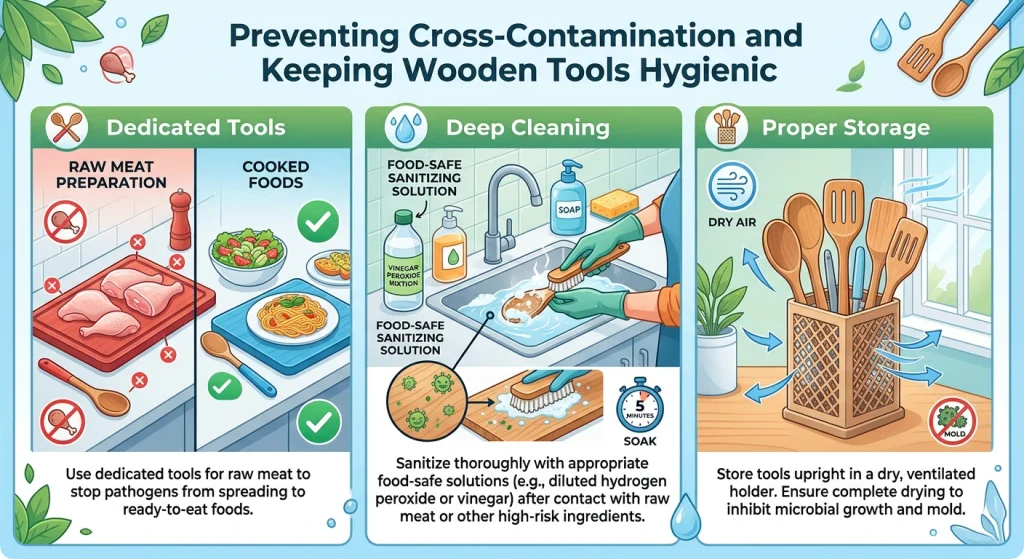
Preventing cross-contamination in the kitchen is mostly about habits rather than products. Use separate spoons for raw and cooked food, wash right after cooking, and check each spoon for cracks every so often. Together those habits prevent bacteria buildup before it starts. These are the wooden spoon maintenance tips that matter most, and they also work for spatulas and ladles.
If you are choosing new tools, the wood itself plays a part too. Which wood species hold up best to frequent washing is covered in its own guide. And for the bigger picture on maintaining hygienic wooden kitchen tools, from buying to storage, our broader overview of wooden tools in the kitchen pulls it all together.
FAQs
These are the questions readers tend to ask once they have the basic routine down. They are inferred search questions rather than verified People Also Ask data, and each short answer points back to a section above.
How do you sterilize wooden spoons naturally?
True sterilization is not realistic at home and is not needed for kitchen use. What you want is sanitizing, which reduces germs to a safe level. Natural options include a vinegar wipe and a lemon and salt rub for odor, though the best-supported home options are 3% hydrogen peroxide and 5% vinegar, used one at a time.
Can I disinfect wooden spoons with hot water alone?
Hot soapy water is the essential first step, and it removes most food residue. It is not the same as sanitizing. After raw meat, add a sanitizing step. Avoid boiling water, which can damage the wood.
Is it safe to use a wooden spoon after raw chicken?
Yes, if you wash it thoroughly and sanitize it first, then dry it before reuse. A safer habit is to use a separate spoon for raw chicken and another for the cooked dish, so you are not relying on cleaning at all.
How do I disinfect wooden spoons after cooking?
For everyday cooking, wash by hand with hot water and soap, rinse and air-dry. Use the peroxide, vinegar or bleach steps only when the spoon touched raw animal foods, smells off, or has not been sanitized in a while.
When should I throw away a wooden spoon?
Replace it if it has deep cracks, splits, a persistent musty smell, or dark spots that will not wash out. Light roughness can often be sanded and oiled, but damage that traps food cannot be cleaned reliably.
Final Thoughts
Learning how to disinfect wooden spoons is really about a short routine you can repeat: wash, sanitize when it counts, rinse, and dry well. No special equipment is needed, just 3% hydrogen peroxide or vinegar on hand, and care about what touches raw food.
Skip boiling, avoid the dishwasher unless the maker says it is safe, and retire spoons that are cracked beyond repair. For the official guidance on sanitizing surfaces with vinegar or hydrogen peroxide, see this Ohio State University Extension guide to sanitizing kitchen surfaces.

[…] Odor removal is not sanitizing. If you are researching how to sanitize wooden spoons, how to sanitize wooden utensils, how to sterilize wooden spoons, how to disinfect wooden spoons or how to disinfect wooden utensils, the key point is to clean first. A 2026 University of Arkansas Division of Agriculture report on cutting boards found that cleaning food-contact surfaces before sanitizing makes the sanitizer work better. For the exact steps, see our guide to safer ways to sanitize a spoon that touched raw meat. […]
[…] If the spatula touched raw meat, poultry or fish, wash it thoroughly with hot, soapy water straight away before it touches anything else. The USDA’s guidance on raw-food boards and utensils follows the same principle of washing with hot, soapy water after each food item. For a deeper look, see our guide to sanitizing wooden spoons after raw meat. […]