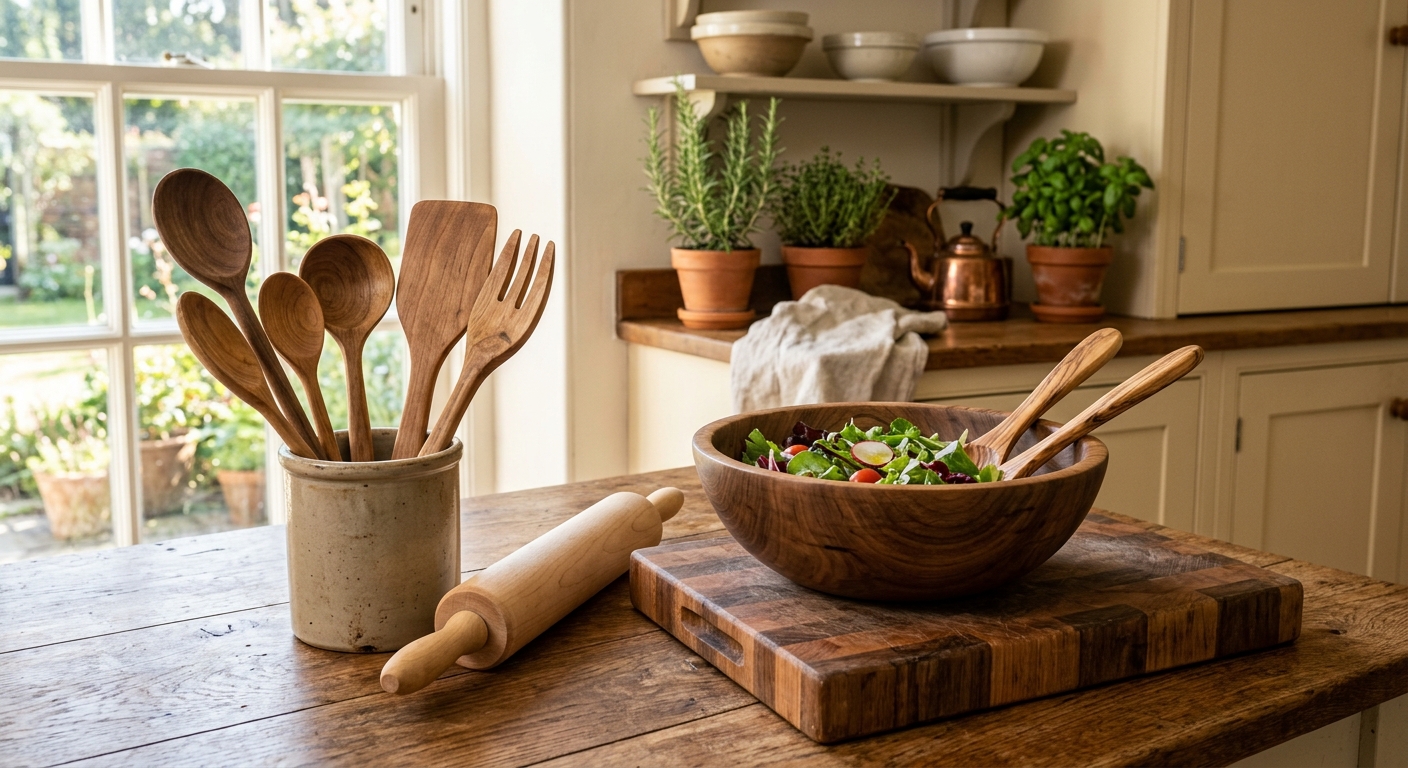
Wooden kitchenware for beginners can feel confusing: which spoons to buy first, whether wood is hygienic, and how to look after it without ruining it. This guide gives you a short starter list, the food-safety facts from reliable sources, easy care steps, a safe first DIY spoon plan, and a method for comparing prices in Pakistan.
It is written for first-time cooks, students, new households and anyone replacing worn plastic tools. We do not quote prices, because we could not verify current Pakistani prices from reliable sources while writing (see the Pakistan section for how to check them yourself).
For wooden kitchenware for beginners, start with two or three wooden spoons and one flat-edged turner. Choose smooth, closed-grain hardwood with a food-safe finish, wash by hand, dry completely, and retire any piece with deep cracks, splinters or a smell that will not go away. One food-safety researcher says he knows of no cases where wooden utensils caused food poisoning, but good care is what keeps wood safe.
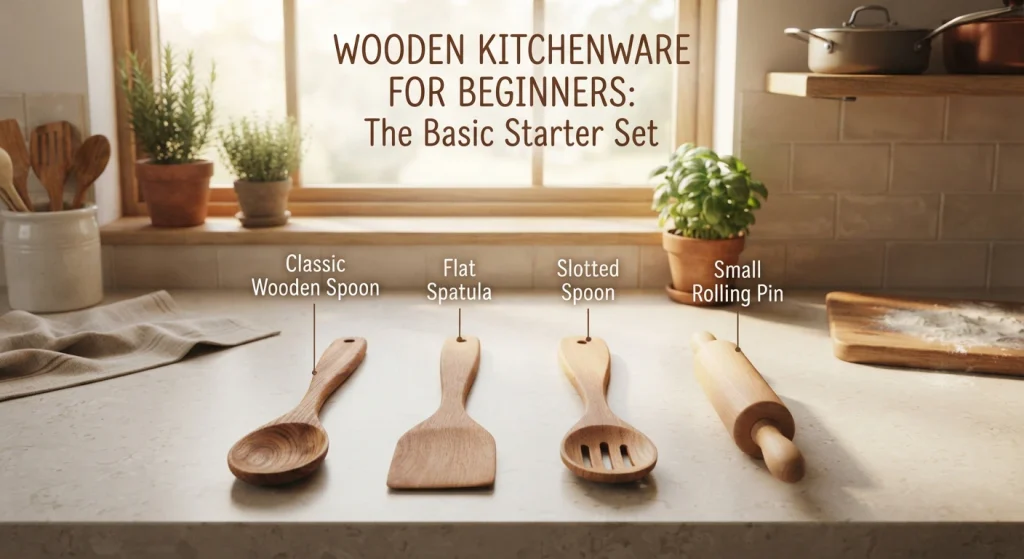
Wooden kitchenware for beginners: what to buy first
A beginner kitchen does not need dozens of tools. Beginner guides, including one reviewed by dietitians at the Academy of Nutrition and Dietetics, keep the core list short: a knife, cutting boards, bowls, a strainer, spoons and a heat-resistant spatula. Wood suits the stirring and serving jobs well because wooden spoons do not carry heat to your hand and do not scratch pan surfaces.
Wooden kitchenware for beginners: the starter set that covers most cooking
The table below is a practical starter list compiled from several beginner guides. Only some of the items are wooden, and that is deliberate: a good kitchen mixes materials and uses each where it works best.
| # | Tool | Suggested material | Why a beginner needs it |
| 1 | Chef’s knife | Steel | Does most slicing and chopping |
| 2 | Cutting board | Wood for vegetables and ready-to-eat food; a separate board for raw meat | Protects the knife and keeps raw meat away from salad |
| 3 | Mixing bowls | Any | Mixing, resting dough, serving |
| 4 | Wooden spoons (two or three shapes) | Wood | Stirring soups, sauces and curries |
| 5 | Heat-resistant spatula | Silicone or similar | Scraping bowls and hot pans |
| 6 | Turner (fish slice) | Wood or metal | Flipping eggs, pancakes and fish |
| 7 | Strainer or colander | Metal or plastic | Draining pasta and rinsing lentils |
| 8 | Peeler | Metal | Peeling vegetables quickly |
| 9 | Measuring cups and spoons | Any | Accurate recipes |
| 10 | One good pan | Your choice | Frying, sautéing, simmering |
Wooden kitchenware for beginners: what you can skip for now
You can leave large themed sets and rarely used shapes until you know what you reach for. Cooking guides aimed at beginners suggest starting with the short list and adding tools as real needs appear. One spoon is enough to begin, though a flat-edged one and a rounded one make daily cooking easier.
Wooden kitchenware for beginners: which wooden utensils are best for cooking?
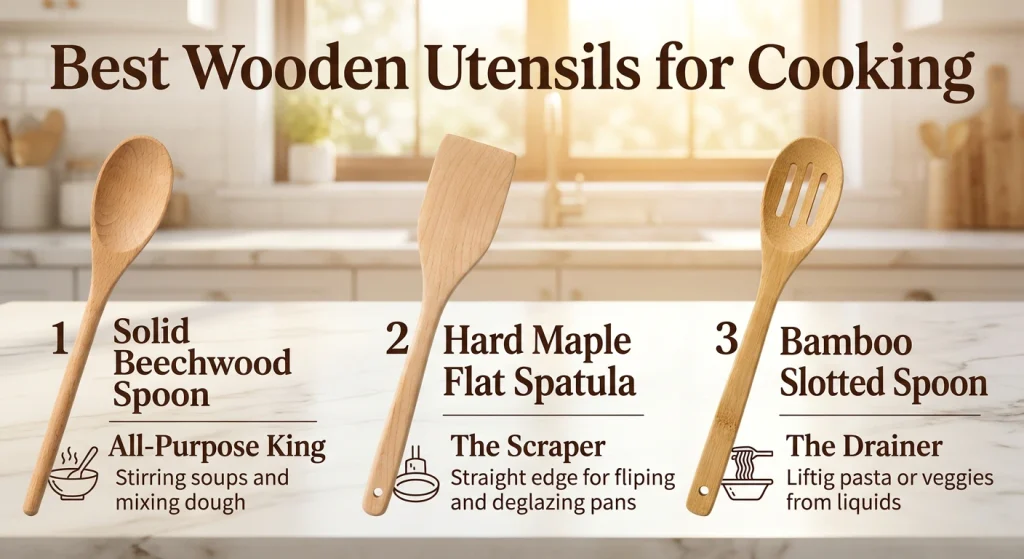
The best wooden utensils for a beginner are the ones that match the job: a rounded spoon for stirring, a flat-edged spoon or spatula for scraping the base of a pan, and a turner for flipping. Pick smooth, well-finished pieces without cracks, and add other shapes later.
Wooden kitchenware for beginners: which wooden spoon is best for cooking?
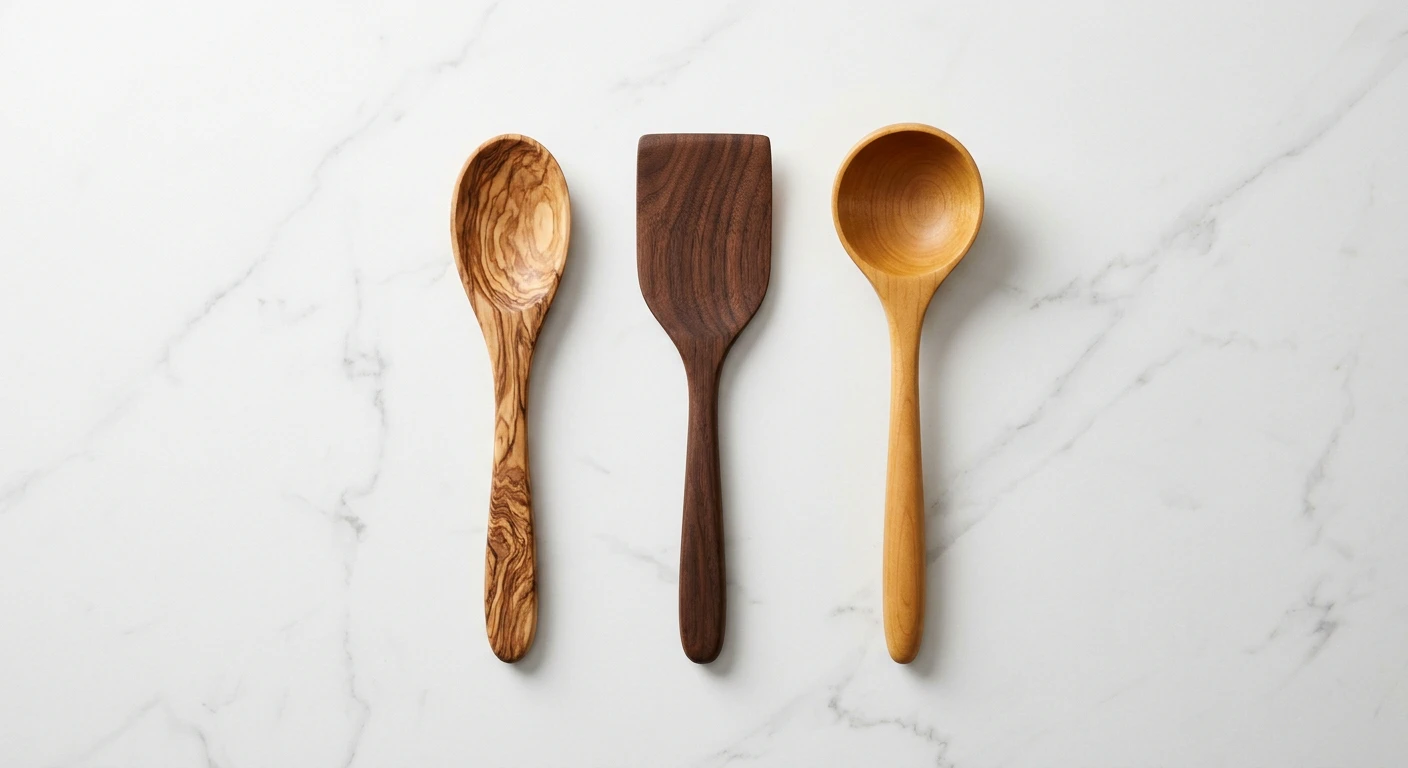
There is no single best wooden spoon, because different spoon shapes do different jobs. One cooking writer suggests three useful shapes: a flat-edged spoon for scraping, a rounded spoon for soups and batters, and a spoon with a corner for reaching pot edges.
Wooden kitchenware for beginners: flat-edged, rounded and cornered spoons
If you can only buy one spoon, a medium rounded spoon with a comfortable handle is the most flexible choice. Add a flat-edged spoon next, because it lifts browned bits from the pan and helps stop food sticking. A cornered spoon is a nice extra.
Wooden kitchenware for beginners: spatulas, turners and ladles worth adding next
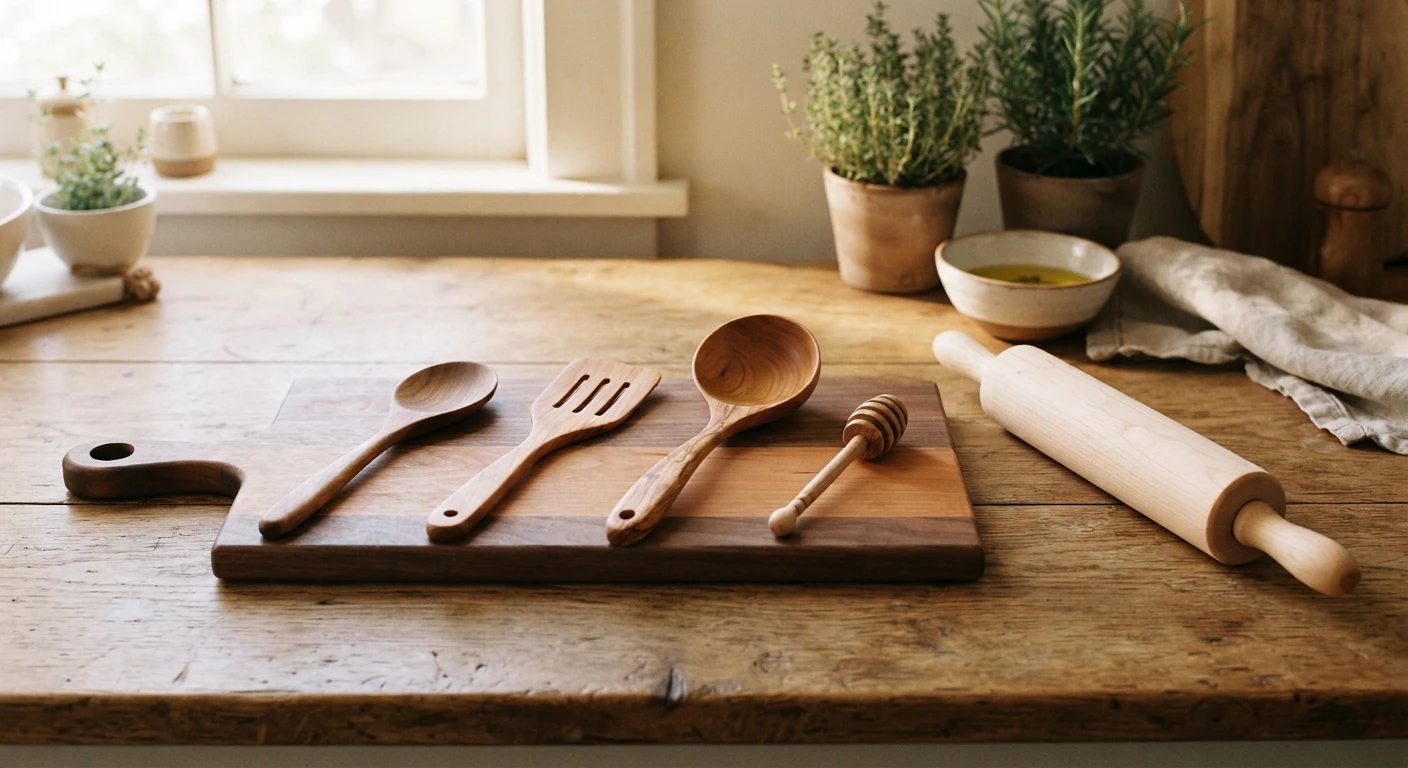
After your spoons, a wooden turner helps with eggs and flatbreads, and a ladle makes serving soup and dal easier. Buy these only when you notice you need them, and check that edges are smooth and thin enough to slide under food.
Wooden kitchenware for beginners: the healthiest wooden cooking utensils
No source we found proves that one wooden utensil is “healthiest”. What the sources do agree on is practical: use a closed-grain hardwood, a food-safe finish, and keep the utensil clean, dry and crack-free. Those factors matter more than any brand claim or fashionable species.
Wooden kitchenware for beginners: which type of wood is best?
Manufacturer guides name maple, beech, cherry and olive as popular, tight-grained choices, and note that tighter grain absorbs less moisture. These are trade sources, so treat them as practical guidance rather than regulation. Our full comparison is in the guide to the best wood for kitchen utensils.
Wooden kitchenware for beginners: food-safe finishes to look for
After consulting chemists, regulators and finishers, a Fine Woodworking writer reported that pure tung oil, raw linseed oil, mineral oil, walnut oil and beeswax are finishes everyone agrees are food-safe. For a bought utensil, look for a plain oil or wax finish, and avoid glossy, painted or unlabeled coatings unless the seller can tell you what they are.
Is wooden kitchenware for beginners safe to cook with?
Yes, wooden utensils can be a safe choice when they are kept clean, dried well and replaced when damaged. The best evidence comes from cutting-board research, not spoon studies, so it is a strong hint rather than a guarantee. This section explains what that research says and where wood does have real drawbacks.
Wooden kitchenware for beginners: is it healthy to cook with wooden utensils?
Food-safety researchers say yes, with care. In University of California, Davis experiments described by Discover magazine, bacteria were hard to recover from wooden boards because they were drawn into the wood, and the wooden boards held fewer bacteria than plastic ones. Dr. Ben Chapman of North Carolina State University says he knows of no cases where wooden utensils led to foodborne illness, and explains that wood works against bacteria best when it dries fully.
The original researchers noted that their results may not apply to every wood or plastic surface, so treat the findings as supportive, not final. To see the wider picture, read the benefits of wooden kitchen utensils.
Wooden kitchenware for beginners: what is safer, wood or silicone utensils?
Neither is automatically safer; the safer one is the well-made one that you use correctly. Dr. Erdle, an expert quoted by AOL, says high-quality, truly food-grade silicone does not appear to leach harmful chemicals under normal cooking conditions, and advises looking for “100% food-grade” or LFGB-certified products and staying under the heat limit, which can range from about 428°F to 500°F depending on the formulation.
Wood has no melting point to worry about in a normal pot, but it needs drying and replacing when damaged. A simple beginner rule: use wood for everyday stirring and serving, and keep one certified silicone spatula for scraping hot pans and bowls.
Wooden kitchenware for beginners: the real disadvantages of wooden utensils
Wood is not perfect. It should not go in the dishwasher, it should not be left to soak, and it can crack, stain or hold onto strong smells. The consumer group Which? recommends replacing wooden tools once they show deep cracks, splintering or persistent smells.
Cheap pieces may also hide an unknown finish or a poorly dried core. For the full list, see our article on the advantages and disadvantages of wooden kitchenware.
How to care for wooden kitchenware for beginners
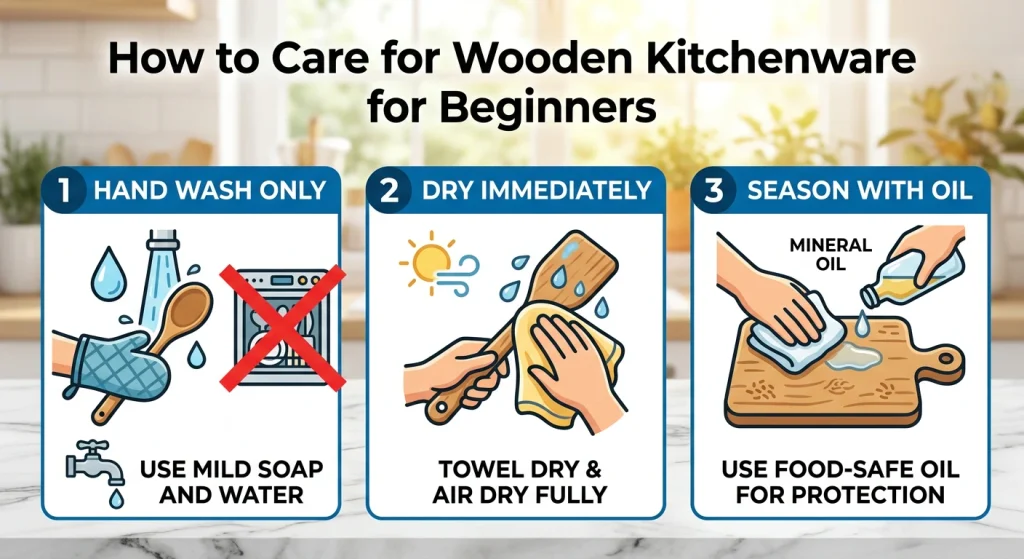
Care is simple, but it is where beginners most often go wrong. The goal is to clean away food, avoid too much water, and let the wood dry completely so it stays smooth, safe and crack-free for years.
Wooden kitchenware for beginners: daily washing and drying
Follow these steps after cooking, based on advice from Which? and other food-safety sources:
- Rinse and scrub off food soon after use with hot water and dish soap.
- Do not leave wooden utensils soaking, and do not put them in the dishwasher.
- Pat them with a towel, then stand them upright in open air so they dry fully.
- Store them only when completely dry.
This routine matters because a damp utensil stays damp longer, which is when problems start. One researcher quoted by Tasting Table suggests good airflow drying can take many hours.
Wooden kitchenware for beginners: should you boil wooden kitchen utensils?
You do not need to boil wooden utensils for everyday cleaning, and experts disagree about boiling at all. Lisa McManus, an editor at America’s Test Kitchen, warns that boiling can strip natural oils and cause shrinking and cracking as the wood dries, and Which? also advises against boiling water.
Other sources are more relaxed: one home-care site says a short boil is acceptable for heavily soiled spoons, and a Swiss outlet suggests about ten minutes in salted water. Because opinions conflict, the safest beginner approach is soap, hot water and thorough drying, with boiling kept as a rare last resort.
Wooden kitchenware for beginners: when to oil and when to replace
Oil your wooden utensils when they look dry or rough. Which? suggests a simple test: sprinkle a few drops of water on the wood, and if it soaks in rather than beading, it is time to oil. America’s Test Kitchen suggests food-grade mineral oil, or coconut oil as an alternative.
One note on hygiene: a 2023 study discussed by Discover found oiled cutting boards absorbed bacteria less than untreated ones during the first 24 hours, which left more on the surface. So always wash well first, and treat oil as protection against cracking, not as a cleaner. Replace any piece with deep cracks, splinters or a smell that stays after washing.
Wooden kitchenware for beginners: how to make your own wooden cooking utensils
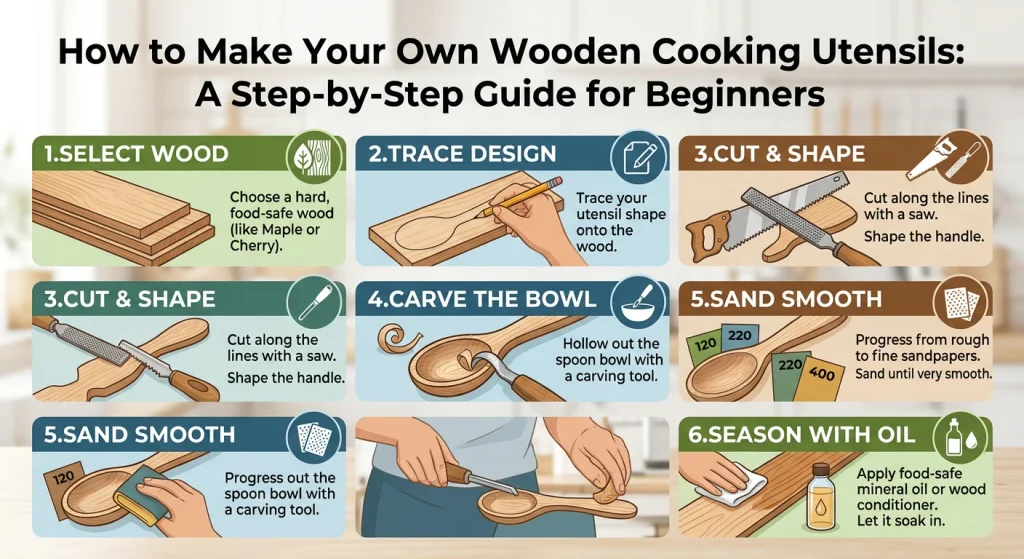
Making a spoon is a realistic first project, but it uses very sharp tools, so safety comes first. If you have never carved before, a short beginner workshop or a kit that includes a pre-cut spoon blank is a gentler start than working from a raw log.
Wooden kitchenware for beginners: how can I make my own wooden cooking utensils safely?
Spoon carving is usually done by shaping a piece of wood into a spoon with a carving knife and a hook knife, then sanding and finishing it. A maker who sells carving tools says a first basic spoon can take roughly two to four hours, depending on size, wood and tools.
Wooden kitchenware for beginners: tools and safety for a first spoon
You will typically need a carving knife, a hook or spoon knife, sandpaper, and a finish. Safety glasses are widely recommended. Opinions on cut-resistant gloves differ: some tool makers advise them, while one experienced teacher argues they can teach poor technique, so learn safe grips, keep tools sharp and carve slowly.
Wooden kitchenware for beginners: choosing wood for a DIY spoon
Use wood you can identify, from a source you trust, and avoid anything you cannot confirm. Fine Woodworking warns that all woods can irritate some people, mainly through dust, and notes a historical case in which meat cooked on oleander skewers poisoned soldiers. Wear a dust mask when sanding, and see the guide to the best wood for kitchen utensils.
Wooden kitchenware for beginners: finishing a handmade utensil
Sand the spoon smooth, then apply a food-safe oil or wax such as mineral oil, walnut oil or beeswax. Fine Woodworking describes a simple finish made by melting beeswax into warmed mineral oil. Let the spoon dry slowly, because workshops for beginners point out that drying too fast can crack the wood.
Wooden kitchenware for beginners in Pakistan: price and buying checks
We could not find reliable, current Pakistani price data in sources we could verify, so this article does not state any prices. Instead, this section gives you a way to compare listings fairly. The search results we reviewed for sheesham spoon sets were mostly Indian and export-focused listings, so confirm local availability before assuming a species is common in your market.
Wooden kitchenware for beginners price in Pakistan: how to compare fairly
Compare listings by what you receive, not only by the headline price. Check the number of pieces, wood species, finish, finish quality (smooth edges, no cracks), and whether the seller shows real photos of the actual item.
| Listing | Pieces | Wood species | Finish stated | Price (PKR) |
| [Daraz wooden spoon set] | [4 ] | [Teak wood (as listed) ] | [ Smooth polished finied ] | [480] |
| [Baig Store wooden spoon set] | [4 ] | [Natural wood; species not specified ] | [Smooth sanded, splinter-free ] | [700] |
Publishing editors should fill this table only with prices they have checked on the day of publishing, and add the date. For help with the buying criteria, read how to choose wooden kitchenware.
Wooden kitchenware for beginners online: questions to ask the seller
Buying online means you cannot inspect the wood, so ask a few direct questions before ordering. A trustworthy seller should be able to answer them clearly.
- What wood species is it?
- What finish or polish has been used, and is it food-safe?
- Are there any cracks, rough patches or splinters, and can you see photos of the actual piece?
- What are the return terms if the item arrives damaged?
If a seller cannot say what the finish is, choose another listing. You can see our own range at your wooden kitchenware collection.
Wooden kitchenware for beginners: FAQs
These short answers cover common beginner questions that are not fully handled above. Each one is a quick, direct answer, and the sections earlier in the guide give more detail.
Wooden kitchenware for beginners: do you need 20 or 50 kitchen items to start?
No. Beginner guides stress that you do not need a fully stocked kitchen. Start with about ten core tools, such as a knife, board, bowls, spoons, a spatula, a strainer and a pan, then add items only when a recipe needs them.
Wooden kitchenware for beginners: which type of wooden utensils are best?
By tool type, a rounded spoon and a flat-edged spoon cover most tasks. By wood type, manufacturer guides favor tight-grained hardwoods such as maple, beech, cherry and olive, which are described as absorbing less moisture. Always check for smoothness and a food-safe finish.
Wooden kitchenware for beginners: can wooden utensils go in the dishwasher?
No. Which? advises keeping wooden spoons, boards and rolling pins out of the dishwasher, because heat and long exposure to water can damage the wood. Hand wash with hot water and dish soap, then air dry.
Wooden kitchenware for beginners: are wooden spoons safe for nonstick pans?
Yes. A dietitian-reviewed beginner guide notes wooden spoons do not scratch pan surfaces and do not transfer heat. This is one of the main reasons wood is recommended for people who cook with nonstick cookware.
Wooden kitchenware for beginners: what about raw meat?
Wash any utensil with hot water and soap after it touches raw meat. For boards, Dr. Chapman of North Carolina State suggests plastic boards for raw meat and wooden boards for fruit, vegetables and ready-to-eat foods. Keep them separate.
Wooden kitchenware for beginners: your simple next step
Wooden kitchenware for beginners works best when you start small: two or three wooden spoons, one turner and a plan to wash and dry them properly. Choose smooth, finished pieces, replace anything cracked, and add more only as your cooking grows. When you are ready to compare options, browse your wooden kitchenware collection or read the guide on how to choose wooden kitchenware.

[…] a natural material that reacts to moisture, heat and age. If you’re only getting started, the wooden kitchenware for beginners guide covers the basics […]
[…] in your hand, not the word on the packaging. Beginners can find a gentler starting point in our wooden kitchenware for beginners […]
[…] so put your money into a sturdy long-handled spoon first and add a flat spatula next. Our wooden kitchenware for beginners article lists more starter pieces and explains what you can […]
[…] for cooking food of almost any kind? Generally, yes. If you are new to wooden tools, our guide to wooden kitchenware for beginners explains the basics, and the safety rules are the same whether you are new or experienced: clean […]
[…] checks matter more than the logo on the box. If you’d like the long version, there’s a longer buying checklist for Pakistani kitchens that walks through it step by step. The short version […]