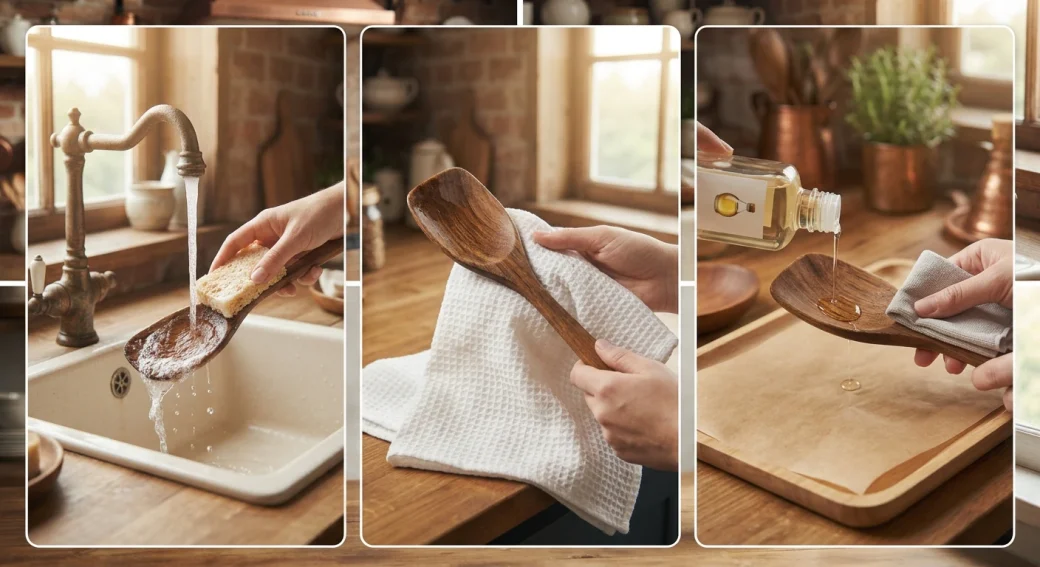
If you want to know how to maintain wooden spatulas so they stay smooth, strong and pleasant to cook with, the routine is shorter than most people think. Wash by hand soon after cooking, dry the wood properly, oil it when it starts to look pale, and store it somewhere with airflow. Those four habits are the core of every good set of wooden spatula care tips.
Wood is a natural material, and that is exactly why it needs a little attention. It soaks up water, oil and smells, then dries out and cracks if it is ignored. A plastic spatula forgives neglect. A wooden one does not, but it pays you back with years of quiet, scratch-free stirring. This guide covers wooden spatula maintenance from the first wash to the day you retire an old one, plus what to do about stains, smells and mold.
How to Maintain Wooden Spatulas
Here is the short version for anyone who just wants the routine. Follow these five steps and you will cover most of what wooden cooking utensil care involves, from daily washing to the occasional oil rub that keeps the grain from drying out.
- Wash the spatula by hand with warm water and a little mild dish soap soon after cooking.
- Rinse it and dry it right away with a towel, then let it finish drying standing up.
- Never leave it soaking and never put it in the dishwasher.
- When the wood looks dull, pale or rough, rub on a thin coat of food-grade mineral oil.
- Store it in an open, dry spot, and replace it once it is deeply cracked or impossible to get clean.
How to Care for a Wooden Spatula Every Day
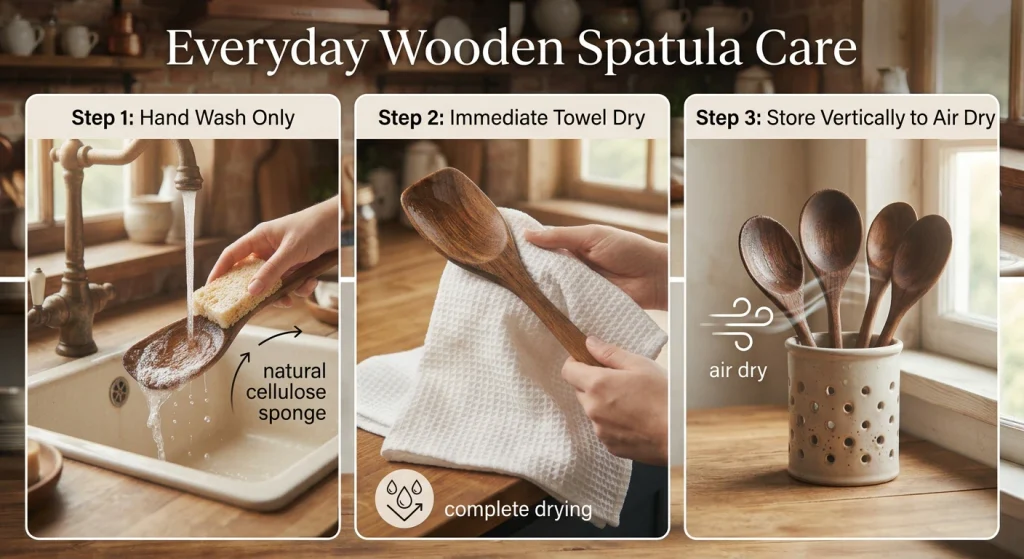
Most of the work happens in the first two minutes after you finish cooking. Wood absorbs whatever it sits in, so the sooner food and water come off the surface, the less the spatula swells, stains or holds on to smells. A little daily habit beats a big rescue job later.
How to Maintain Wooden Spatulas Properly Between Uses
The simplest way to look after a spatula is to treat it like a good knife: wash it yourself, dry it yourself and put it back. Do not let it sit in a sink full of water or in a damp pile of dishes, because trapped moisture is what causes swelling, warping and mold.
For everyday cleaning, warm water, mild soap and a soft sponge or cloth are enough. Wirecutter’s guidance is that washing wooden spoons in the sink with unscented soap is all most days require. The Guardian’s expert-sourced advice adds a useful warning: skip harsh scourers and abrasive cleaners, which roughen the surface and give grime more places to hide. If you want a longer walkthrough, there is a fuller wooden utensil washing routine you can follow alongside this one.
How to Clean Wooden Spatulas After Cooking
Scrape off any stuck food first, ideally with the edge of the spatula against the pan while it is still warm. Then wash the whole thing, handle included, under warm running water. Pay attention to the thin edge and any corner where sauce collects, since that is where residue lingers.
This is also how to clean a wooden spoon, a wood spatula or any other wooden spoon that has been in the pot. The method is the same for how to wash wooden utensils of every shape: quick, gentle and never a long soak. Soaking wooden spoons for a few minutes is not a disaster, but leaving them overnight is asking for trouble.
If the spatula touched raw meat, poultry or fish, wash it thoroughly with hot, soapy water straight away before it touches anything else. The USDA’s guidance on raw-food boards and utensils follows the same principle of washing with hot, soapy water after each food item. For a deeper look, see our guide to sanitizing wooden spoons after raw meat.
How to Dry Wooden Spatulas After Washing
Drying matters as much as washing. Wipe the spatula with a clean towel to take off the surface water, then stand it upright in a rack or utensil jar so air can reach every side. Lying it flat on a wet counter keeps one face damp for hours.
This simple step is the heart of wooden utensil cleaning and drying methods. A spatula that dries quickly and evenly is far less likely to warp, develop a rough “furry” surface or grow mold. If you cannot let it air dry for a while, at least towel it well before it goes into the drawer.
How to Maintain Wooden Spatulas in a Washing Machine (Short Answer: Don’t)
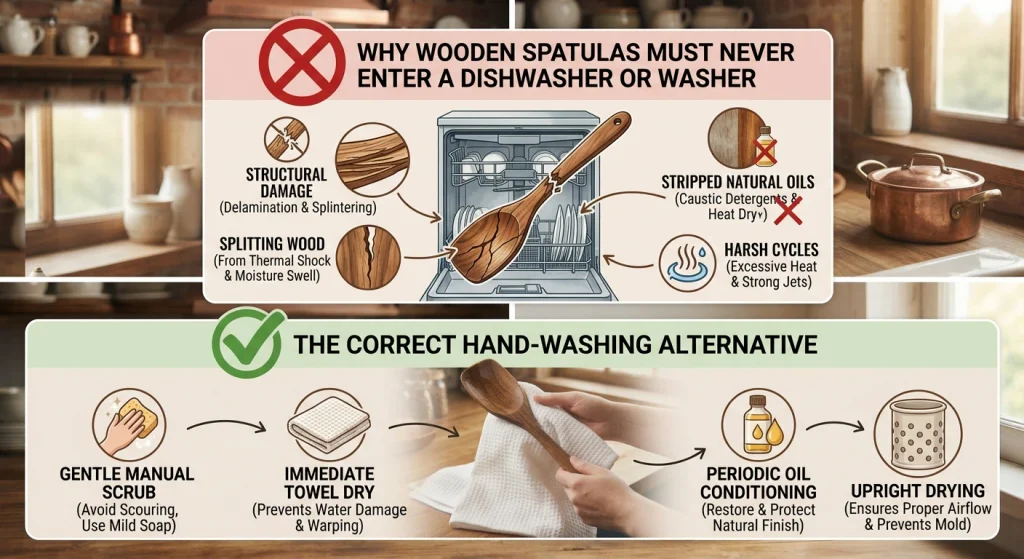
People often search for how to maintain wooden spatulas in washing machine setups, and the honest answer is that you should not. A dishwasher, which is what most people mean, combines long soaking, high heat and strong detergent, and wood handles none of those well. It swells, dries unevenly, then cracks.
Wirecutter describes wooden spoons as incompatible with dishwashers and prone to warping when exposed to high temperatures, and the Guardian’s expert tips say the same: always avoid the dishwasher. A clothes washing machine is even worse, since the long tumble and soak can crack and fray the wood. Hand washing takes about thirty seconds per spatula, which is a small price for tools that last.
Am I Supposed to Oil My Wooden Utensils?
Yes, from time to time. Oiling is the step most people skip, and it is the one that does the most to keep wood from drying out. Think of it as conditioning wooden kitchen utensils the way you might moisturize skin: it does not need to be constant, but it makes a clear difference.
Wood that never gets oil gradually loses moisture and flexibility, and that is when hairline cracks and splinters appear. A light coat fills the surface pores, repels some water and makes the spatula easier to wipe clean. So if you have ever wondered whether you should oil wooden spoons, the answer is the same: yes, but only when they need it.
Food-Safe Mineral Oil for Wooden Spatulas
Food-grade mineral oil is the most widely recommended choice. Wirecutter’s reasons are practical: it is neutral-tasting, odorless, affordable and easy to apply. It also does not go rancid the way cooking oils can, which matters for tools that touch your food every day.
If you are looking for what to oil wooden spoons with, the answer for most people is a bottle labeled food-grade or food-safe mineral oil, often sold as cutting board oil. It is the same product whether you want a mineral oil wooden spoon treatment or you are working on a spatula, a ladle or a rolling pin.
How Often Should You Oil Wooden Spatulas?
Sources disagree on a fixed schedule, which is a useful sign that the calendar matters less than the wood. Food Republic’s expert suggests about once a month, Wirecutter suggests every few weeks or when spoons look dry and dull, and another guide says once or twice a year is enough for lightly used pieces.
A practical rule: oil when the wood looks pale, feels rough or a drop of water soaks in instead of beading. A spatula used and washed daily may want oil monthly. One that comes out a couple of times a week may be fine for several months. When in doubt, check the surface rather than the date.
How to Maintain Wooden Spatulas With Oil, Step by Step
Start with a spatula that is clean and completely dry, since oil cannot soak into damp wood. Put a few drops of food-grade mineral oil on a clean, lint-free cloth or paper towel, then rub it along the grain, one section at a time, covering the handle, the head and the thin edges.
Let it soak in for a few hours or overnight, then wipe off any oil still sitting on the surface so the spatula does not feel sticky. That is the whole method for how to oil wooden spoons, wooden utensils and wooden cooking utensils alike, and it is also how to condition wooden spoons and how to treat wooden utensils without any special kit.
Best Oil for Maintaining Wooden Spatulas
Food-grade mineral oil is the safe default, and beeswax-and-oil blends made for cutting boards and utensils are a good alternative. Food Republic’s expert recommends a food-safe mineral oil or a beeswax-and-oil compound designed for this job, and both are easy to find.
What oil to use on wooden utensils is mostly a question of what not to use. The Manual warns against olive and canola oil because food-based oils can turn rancid and leave an unpleasant smell. Another care guide agrees that vegetable and olive oil stay sticky and can go off, though it lists walnut and linseed as exceptions. If anyone in your home has a nut allergy, skip walnut oil altogether and stick with mineral oil.
How to Deal With Stains, Odors and Deep Grime
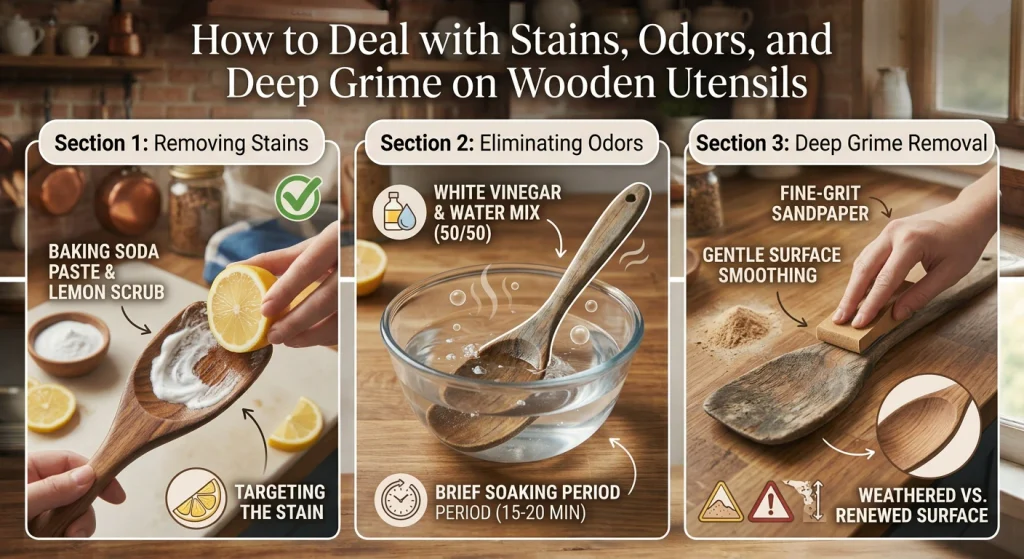
Cleaning wooden kitchen tools is mostly easy, but even a well-kept spatula picks up character over time. Tomato sauce, turmeric and garlic leave their mark, and none of it means the utensil is ruined. A few gentle fixes handle most problems without damaging the wood.
The key idea is to be gentle. Wood is soft, so harsh scrubbing, bleach and strong chemicals tend to do more harm than the stain did. Work with mild abrasives and short contact times, and finish every treatment with thorough rinsing, drying and, if the wood looks dry afterwards, a light oil coat.
How to Remove Stains From Wooden Spatulas
For light stains, make a paste of baking soda and a little water, rub it gently along the grain with a soft cloth or brush, then rinse and dry. A sprinkle of coarse salt with a cut lemon is another popular home method, using the salt as a mild scrub and the lemon for brightening.
Keep it brief. Acids and scrubbing both strip the surface, so do not leave lemon or vinegar on the wood for long. Some stains simply stay: turmeric yellow and tomato orange are cosmetic, not a hygiene problem. Cleaning wooden spoons with baking soda is gentler than most commercial cleaners, and it is a good first attempt before anything stronger.
How to Prevent Wooden Spatulas From Absorbing Odors
Smells get into wood because it is porous. The best prevention is washing right after use, drying thoroughly and avoiding long soaks in strongly flavored food such as curry or onion stew. A regularly oiled spatula also resists odors better than a dry, thirsty one.
If a smell has already set in, a baking soda scrub or a short rub with vinegar and water often takes the edge off. You can read more about getting garlic and onion smells out of wood in a dedicated guide. Letting the spatula dry in fresh air and sunlight for a while also helps.
Deep Cleaning Wooden Spoons With Boiling Water
You will find plenty of advice about boiling wooden spoons to clean them, and it is worth understanding both sides. Hot water does loosen grease and helps with deep cleaning wooden spoons, but wood swells in water and can warp or crack when exposed to high heat, as Wirecutter notes.
So if you decide to boil wooden spoons, or to try cleaning wooden spoons in boiling water, keep it short. Pour boiling water over the spoon in a heatproof bowl rather than simmering it in a pot, then lift it out, dry it well and oil it afterwards. Treat this as an occasional deep clean, not a weekly habit, and do not use it on spatulas with glued or inlaid parts.
Boiling Water With Vinegar or Baking Soda
If you want to clean wooden spoons with boiling water and vinegar, mix hot water with a splash of white vinegar in a bowl and let the spoon sit only briefly. For boiling water and baking soda, stir a spoonful of baking soda into the hot water first, or scrub with a baking soda paste.
Both are popular, but neither is magic. Vinegar may help loosen odors and surface film, while baking soda adds gentle scrubbing power. Rinse well, dry thoroughly and oil afterwards, because hot water and acids pull moisture and natural oils out of the wood. If you only want to clean wooden spoons with vinegar and no boiling, cool diluted vinegar works too.
Does the Same Care Work for Wooden Spoons?
Yes. Everything above works for spoons as well as spatulas, so if you came looking for wooden spoons cleaning or wooden spoon cleaning tips, the routine is identical. How to clean wooden utensils of any shape starts with soap, warm water and a quick dry, and cleaning wooden utensils this way is also how to clean your wooden spoons between meals.
It is also how to treat wooden spoons you have just bought. Should you oil wooden spoons? Yes, lightly. The same goes for how to oil wooden utensils in general, including how to oil wooden cooking utensils like ladles and rolling pins: oil wooden utensils only when they look dry, then wipe off the excess.
For a deeper clean, how to clean wooden spoons with vinegar simply means a short rinse in diluted vinegar. How to clean wooden spoons with boiling water means a quick pour, and some people also clean wooden spoons in boiling water or follow how to clean wooden spoons with boiling water vinegar, but a clean wooden spoon boiling water habit should stay occasional. Knowing how to clean wood spatula heads, or how to clean wooden spoons boiling water style, is mostly about restraint, and it is how to clean wooden spoons with boiling water and baking soda without wrecking the wood: a quick rinse, then dry.
Treat boiling wooden spoon to clean them, or any plan to boil wooden spoon to clean away grease, as a last resort, and deep clean wooden spoons only once in a while. If you also want to know how to disinfect wooden utensils, the sanitizing guide linked earlier covers it.
How Do I Remove Fungus From My Wooden Spoon?
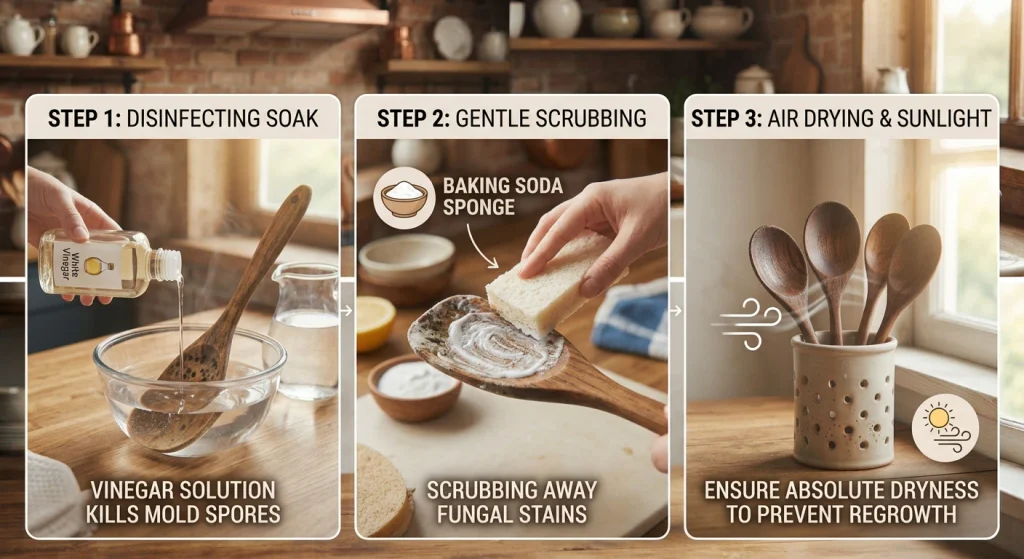
Mold on a wooden spoon looks alarming, but light mold does not always mean the end. The Manual suggests mixing equal parts white vinegar and water in a bowl as a first step. After that, scrub the spoon or spatula gently with a brush, rinse it well and dry it completely.
Then look closely at the wood. If the spots wipe away and the surface feels clean and smells fresh, you can oil it and keep using it. If dark patches have sunk into cracks or the spatula still smells musty after cleaning, replace it. The USDA says boards with hard-to-clean grooves should be discarded, and the same common sense applies to any wooden tool. If you are searching for how to clean wooden spoons with mold, prevention is easier: dry them fully after every wash.
How to Keep Wooden Spatulas From Cracking
Cracks form when wood goes through repeated cycles of soaking and drying, or when it simply dries out. Hot pans, dishwashers, long soaks and bone-dry storage all push in the same direction. Understanding that makes how to keep wooden spatulas from cracking mostly a matter of avoiding extremes.
Skip the dishwasher, never leave the spatula resting on the edge of a hot pan or burner, and dry it properly. Oil it before it looks parched. Wirecutter’s advice is that well-hydrated spoons can last years, even a lifetime. For a full look at stopping wood from drying out and splitting, check the dedicated article on that subject.
How to Prevent Wooden Spatulas From Splitting
Splitting usually starts at the thin tip or along the grain of the handle. Keep an eye on those areas. If you notice a hairline crack, oil the spatula right away so the wood stays flexible, and avoid scraping hard against stainless steel or cast iron where you can.
If a small split appears, you can sand it lightly with fine sandpaper, wipe off the dust and oil the area, as some care guides suggest. But if a crack runs deep, or flexes when you press it, do not keep using the spatula. Food and bacteria collect in the gap and you cannot clean it properly.
How to Store Wooden Spatulas in the Kitchen
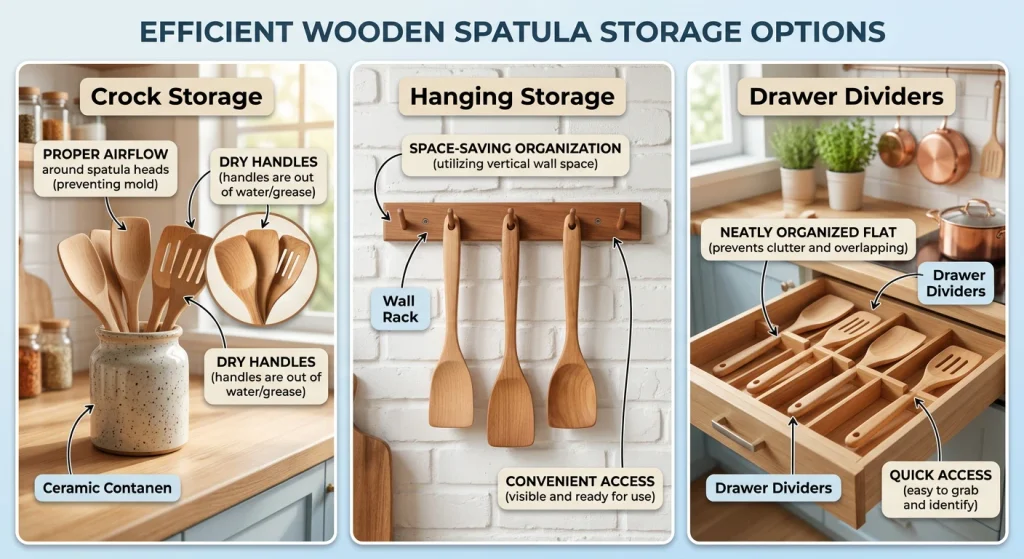
Proper wooden spatula storage is about airflow and dryness. Stand spatulas upright in a utensil crock or hang them on a hook near the stove, but not directly over the burner, where steam and heat will dry them out and roughen the surface.
Avoid sealing them in a plastic bag or a closed, damp drawer. One care guide specifically says not to store wooden utensils in sealed plastic. If you are putting a spatula away for a long stretch, give it a light coat of mineral oil first. Keep them away from the sink splash zone and out of direct, hot sunlight.
What Are the Disadvantages of Using a Wooden Spatula?
Wooden spatulas are not perfect, and it helps to be honest about the trade-offs. They need hand washing, they can absorb stains and smells, and they can crack or warp if you mistreat them. They also are not ideal for very high heat or for scooping thin, delicate foods.
The bigger concern is hygiene. The USDA Food Safety and Inspection Service describes wood surfaces as porous and advises replacing cutting boards once they become worn or develop hard-to-clean grooves, and that logic is reasonable for utensils too. Choosing a dense, tight-grained wood helps, and you can compare which woods hold up best in a kitchen before you buy. With good care, most of these downsides are manageable.
How to Restore Old and Dry Wooden Spatulas
An old spatula that looks gray, fuzzy or thirsty can often be brought back. Start with a good wash and a thorough dry. Then sand the surface lightly along the grain with fine sandpaper to remove the rough, raised fibers, and wipe away all the dust with a damp cloth.
Let it dry again, then apply food-grade mineral oil, wait, and add a second coat if the wood is very dry. This is how to restore old and dry wooden spatulas without special tools. Some wooden pieces have deep cracks or a strong rancid smell, and those are better replaced than rescued.
How to Make Wooden Spatulas Last Longer (and When to Replace Them)
The formula for how to make wooden spatulas last longer is the whole routine in one sentence: hand wash, dry well, oil when dull, store with airflow, and keep them away from extreme heat and long soaks. Do that and a decent spatula can serve for years.
Replacement is a judgment call. Retire a spatula when it has deep cracks, keeps splintering, stays stained or smelly after proper cleaning, or has mold you cannot fully remove. If you ever wonder whether wood is still a good material for cooking, you can read up on whether wood is a safe cooking material before you decide.
FAQs
These are the questions people ask most often about wooden spatula care. Each answer is short on purpose, and the longer explanations sit in the sections above if you want the full reasoning behind any of them.
How do you care for a wooden spatula?
Wash it by hand with mild soap and warm water soon after use, dry it right away, store it upright in the open air, and rub it with food-grade mineral oil when it looks dull. Avoid the dishwasher and long soaking, because both damage the wood.
Can you put wooden spatulas in the dishwasher?
No. The heat, moisture and detergent cause swelling, warping and cracking, which is why guides from Wirecutter and the Guardian both tell you to avoid it. Hand washing only takes a moment and keeps the spatula in far better shape.
What is the best oil for wooden spatulas?
Food-grade mineral oil is the standard choice because it is neutral-tasting, odorless and does not turn rancid. Beeswax-and-oil blends made for utensils also work well. Avoid olive, canola and other cooking oils that can leave a sticky film or go off.
Can you boil wooden spoons to clean them?
You can pour boiling water over a spoon for an occasional deep clean, but long boiling is not a good idea because wood can swell, warp or crack. Keep the contact short, dry the spoon thoroughly and oil it afterwards.
Conclusion
Knowing how to maintain wooden spatulas comes down to a few small habits: gentle hand washing, proper drying, occasional oil, sensible storage and a willingness to retire a spatula that has had its day. None of it takes long, and all of it helps your wooden tools last far longer.
Start with the next meal you cook. Wash, dry and stand the spatula upright, then check it once a month for dullness or cracks. If you want to go deeper on a specific problem, use the guides linked above for sanitizing, smells and cracks, and keep this routine as your everyday baseline.