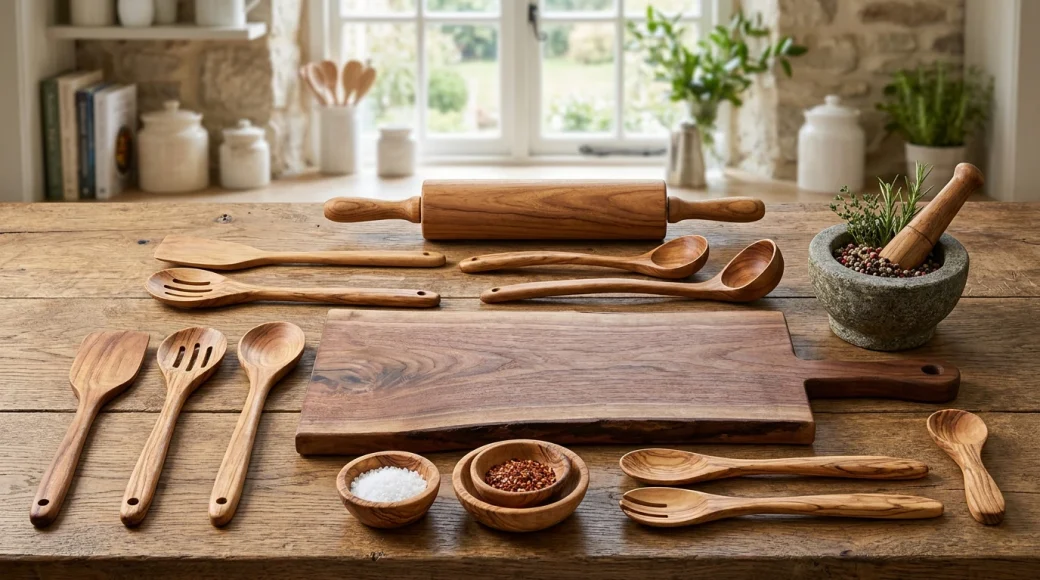
Most kitchens have a wooden spoon that’s been around for years. It gets used every day, and nobody thinks about it until it cracks, picks up the smell of last week’s curry, or starts to look gray and dry. This wooden cooking utensils guide puts everything in one place: the main types, how to pick the right wood, whether wooden cooking utensils are safe, and how to clean, oil, store and eventually replace them. It’s written for home cooks, so you don’t need any woodworking knowledge to follow it.
If you’re short on time, the quick answer below gives you the basics. The sections after it go deeper, and you can jump straight to whichever part you need.
Wooden Cooking Utensils Guide:
Are wooden cooking utensils safe to use? Yes, as long as they’re made from solid, food-safe wood, washed by hand, kept dry between uses and replaced once they develop deep cracks, splinters or smells that won’t go away. They’re also gentle on nonstick pans, which is one of the main reasons people reach for them. The trade-off is that wood needs a bit more care than silicone or stainless steel. If you want the longer case for owning them, our article on the benefits of wooden kitchen utensils walks through it.
Here’s the short version of everything below:
- Choose smooth, solid pieces made from a tight-grained wood, with no cracks or rough patches.
- Wash by hand with hot, soapy water, then dry them properly.
- Oil them with food-grade mineral oil when they start to look dry.
- Keep them out of the dishwasher and don’t leave them soaking in the sink.
- Replace any utensil with deep cracks, splintering or damage you can’t sand smooth.
Types of Wooden Cooking Utensils and Their Uses: A Wooden Cooking Utensils Guide
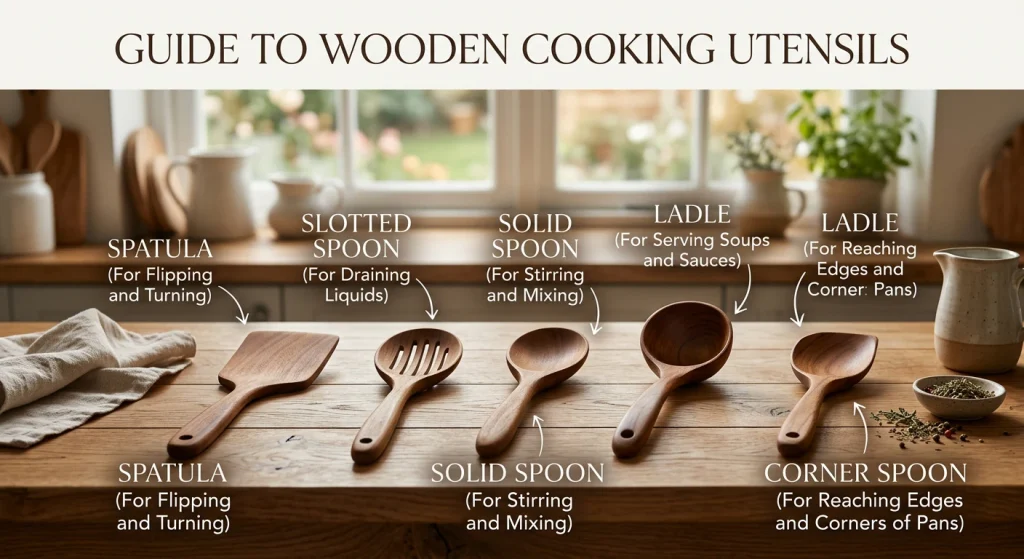
Before you buy anything, it helps to know what each tool is actually for. This guide to different types of wooden kitchen tools starts with the shapes you’ll meet most often, then shows which ones are worth owning first. Most people don’t need a drawer full of them. Three or four well-chosen pieces cover nearly everything you cook day to day.
Spoons and Ladles in This Wooden Cooking Utensils Guide
The classic round-bowled spoon is the workhorse. You’ll use it for stirring sauces, soups and curries, tasting, and mixing batters. A longer handle keeps your hand away from steam and splashes, which matters over a deep pot. A ladle does the same job for serving soup, dal or stew, while slotted and perforated spoons let liquid drain away so you can lift vegetables or boiled eggs out of a pot.
Spatulas, Turners and Spurtles: A Wooden Cooking Utensils Guide to Flipping and Scraping
Flat-edged tools are for scraping and turning. A wooden spatula or turner slides under eggs, pancakes and fish, and the straight edge lifts browned bits off the bottom of a pan. A spurtle is a straight, rod-like stick traditionally used for stirring porridge, and it also works well in a narrow pot. Square-edged spoons sit somewhere in between, giving you a flat edge for scraping and a bowl for stirring.
Essential Wooden Cooking Utensils for a New Kitchen: A Wooden Cooking Utensils Guide Starter Set
If you’re setting up a kitchen from scratch, you don’t need to buy everything at once. A sensible starter set is one long-handled round spoon for stirring, one flat-edged spatula or turner for scraping and flipping, and one slotted or serving spoon. Add a ladle once you start cooking soups regularly. That small set covers everyday cooking, and you can fill any gaps later as you notice what you’re missing.
Wooden Cooking Utensils Guide for Beginners in Pakistan: What to Buy First
Wooden cooking utensils for beginners in Pakistan don’t need to be any different from anywhere else, but your cooking style helps you decide. If you make a lot of curries and sautéed masalas, you’ll be stirring for long stretches, so put your money into a sturdy long-handled spoon first and add a flat spatula next. Our wooden kitchenware for beginners article lists more starter pieces and explains what you can skip.
How to Choose Wooden Cooking Utensils: A Wooden Cooking Utensils Guide to Wood and Build
Choosing well saves money, because a good utensil lasts for years while a poorly made one can crack within months. This is the beginner’s guide to choosing wooden kitchen utensils in practical terms: which wood, which finish and how the piece is built. For a wider walk-through that also covers other wooden kitchenware, see our guide on how to choose wooden kitchenware.
Best Wood for Making Cooking Utensils: A Wooden Cooking Utensils Guide to Wood Types
There isn’t one single best wood, but there are useful rules of thumb. Look for hardwoods with a tight, even grain, because they resist cracking and don’t soak up liquid as quickly as soft, open-grained woods. Maple, beech, teak and olive wood are all commonly used for spoons and spatulas. US food-safety rules for commercial cutting boards have long accepted maple or similar close-grained hardwood, which is a fair hint about what holds up in a kitchen. Bamboo is technically a grass rather than a wood, and USDA guidance on cutting boards describes it as harder and less porous than hardwoods. For a species-by-species comparison, read our guide to the best wood for kitchen utensils.
How to Identify Quality Wooden Cooking Utensils: Your Wooden Cooking Utensils Guide Checklist
Quality shows up in small details you can check in a minute, whether you’re standing in a shop or looking at product photos online. Run your hand along the whole piece. It should feel smooth, without rough patches, and the edges should be rounded rather than sharp. Use this quick checklist:
- One solid piece of wood where possible, rather than glued sections that can separate when they get wet.
- No cracks, especially where the handle meets the bowl.
- An even grain without large knots or gaps.
- A finish that doesn’t smell strongly of chemicals.
- A weight that feels solid but not heavy, and a handle that’s comfortable to grip.
If you want to choose durable wooden cooking utensils, pay the most attention to the first two points. A solid piece with no hairline cracks is the best starting point for a long life.
Wooden Cooking Utensils Guide to Food-Safe Wood and Finishes
How to choose food-safe wood for kitchen utensils comes down to two things: the wood itself and whatever has been put on it. Plain hardwood finished with food-grade mineral oil or beeswax is the simplest option. Be cautious with glossy coatings, paints and varnishes unless the seller clearly says they’re safe for food contact. If a seller can’t tell you which wood or finish was used, treat that as a warning sign and look elsewhere.
What to Look For When Buying Wooden Cooking Spoons: A Wooden Cooking Utensils Guide
When you’re deciding what to look for when buying wooden cooking spoons, think about how you actually cook. A bowl with a flat or slightly squared edge scrapes a pan better than a fully round one. A handle that’s thick enough to grip comfortably matters on long cooking sessions, and the narrow neck between handle and bowl is the weak point, so check that it isn’t too thin. The best wooden cooking utensils for everyday use are usually the plain, sturdy ones rather than heavily carved decorative pieces.
Are Wooden Cooking Utensils Safe to Use? What a Wooden Cooking Utensils Guide Should Tell You
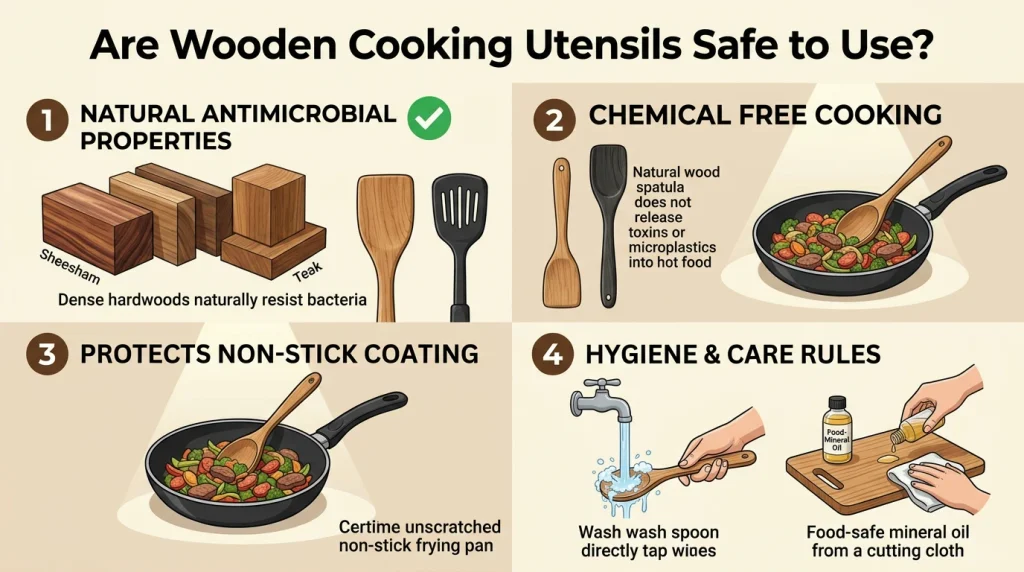
Yes, when they’re in good condition and kept clean. Most official food-safety guidance is written about cutting boards rather than spoons, so it helps to be clear about what it says. The USDA’s food safety service says consumers may use wood or a nonporous surface for cutting boards, recommends washing them with hot, soapy water, and says to replace them once they become excessively worn or develop hard-to-clean grooves. That advice isn’t written for spoons, but the logic carries over: wood can be cleaned, and it should be retired once damage makes it hard to clean.
Are Wooden Cooking Utensils Safe for Nonstick Pans? A Wooden Cooking Utensils Guide Answer
Yes, and this is where wood really earns its place. Cookware maker Made In describes wood as firm enough to break up ground meat or scrape up browned bits, yet soft enough that it won’t gouge a delicate nonstick coating. Metal utensils are the ones that tend to scratch and chip those coatings. The one caveat is condition: a rough or splintered edge could in principle scratch a pan, so wooden cooking utensils for nonstick cookware should be smooth and well maintained.
Wooden Cooking Utensils Guide to Hygiene: Bacteria, Mold and Splinters
Wood is porous, so it takes in liquid and odors more readily than glass or plastic. That’s why prompt washing and thorough drying matter so much. If you spot a light patch of mold, kitchen-care guides suggest sanding the spot smooth and re-oiling the utensil, though that advice comes from cooking publications rather than a food-safety agency. If the mold is deep or widespread, or the utensil is cracked or shedding splinters, replace it instead of trying to rescue it.
Wooden Cooking Utensils Benefits and Drawbacks: The Wooden Cooking Utensils Guide Overview
Every material has trade-offs, and wood is no exception. Here are the wooden cooking utensils advantages and disadvantages side by side, so you can decide whether the extra care is worth it for your kitchen. For a deeper pros-and-cons breakdown, our article on wooden kitchenware advantages and disadvantages goes through each point.
Benefits
- Gentle on nonstick and other coated pans.
- Firm enough for stirring thick mixtures and scraping the pan.
- Described by one kitchen publication as non-reactive with hot food.
- Can often be refreshed by sanding and oiling instead of being thrown away.
Drawbacks
- Needs hand washing and occasional oiling.
- Can absorb odors and stains.
- Can crack or warp if soaked or run through the dishwasher.
- Harder to clean than nonporous materials, which USDA notes are easier to clean than wood.
- Has to be replaced once it’s worn or damaged.
Wooden Cooking Utensils vs Silicone Utensils: A Wooden Cooking Utensils Guide Comparison
Both materials are good choices for nonstick pans, so the decision usually comes down to upkeep and heat. Silicone is generally dishwasher safe and, according to Made In, often heat-safe well past 500°F, though some silicone utensils aren’t rated for heat and could melt onto a pan. Wood needs more maintenance, but it won’t melt, and many cooks simply prefer how it feels in the hand.
| Wooden utensils | Silicone utensils | |
|---|---|---|
| Nonstick pans | Safe if smooth | Safe |
| Washing | By hand | Generally dishwasher safe |
| Heat | Keep out of direct flame | Check that it’s rated as heat-safe |
| Upkeep | Occasional oiling | Little needed |
Wooden Cooking Utensils vs Stainless Steel: A Wooden Cooking Utensils Guide Comparison
Stainless steel utensils are tough, easy to wash and need no oiling, which makes them convenient. The problem is that metal can scratch and chip nonstick coatings, so steel is better matched to uncoated pans such as stainless steel or cast iron. Wood is the safer pick whenever your pan has a coating. Many home cooks end up using both: steel for uncoated pans and wood wherever the surface needs protecting.
How to Care for Wooden Cooking Utensils: Wooden Cooking Utensils Guide to Daily Care
Care sounds like a lot, but it’s mostly a few habits. This is where the wooden cooking utensils maintenance tips for beginners start, and the same habits apply to every piece you own. If you want a printable-style summary, think of it as a complete wooden kitchen utensils care guide for home cooks: wash, dry, oil, store. Slipping up on these is behind most of the problems in our article on common wooden kitchenware mistakes.
How to Clean Wooden Cooking Utensils Properly: A Wooden Cooking Utensils Guide to Washing
Cleaning is quick once it becomes routine. Rinse the utensil soon after cooking so food doesn’t dry onto the wood, then follow these steps:
- Wash with hot, soapy water and a sponge.
- Rinse well with clean water.
- Pat dry with a clean towel.
- Stand it upright or lean it against something so air can reach every side until it’s fully dry.
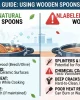
Skip the dishwasher and the long soak. America’s Test Kitchen ran spoons through ten dishwasher cycles, and most looked bleached and felt dry afterward, while spoons with a shellac-like finish lost most of it after about five cycles. Several other care guides warn that soaking can crack wood too.
How to Season Wooden Cooking Utensils: A Wooden Cooking Utensils Guide to Oiling
Seasoning, or oiling, replaces moisture in the wood and helps repel water. Use food-grade mineral oil, which is neutral-tasting and doesn’t go rancid, and check that the label says it’s food-grade rather than a hardware-store grade meant for other uses. Wipe a thin coat over the whole utensil with a clean cloth, let it soak in, and wipe off any excess. Several care guides advise against cooking oils such as olive or vegetable oil, which can turn sticky or smell rancid. Some cooks add a thin layer of beeswax afterward, and America’s Test Kitchen found that a mix of beeswax and mineral oil kept its protective coating longer than oil alone.
How Often to Maintain Wooden Cooking Utensils: A Wooden Cooking Utensils Guide to Oiling Timing
The honest answer is that sources vary. Some care guides suggest oiling every few weeks, others about once a month, and many simply say to oil whenever the wood starts to look dry or dull. A good rule is to let the wood tell you. If it looks pale, feels rough or seems thirsty, it’s time. Cooks who use their spoons every day will naturally need to oil more often than those who use them once a week.
How to Remove Odors and Stains: A Wooden Cooking Utensils Guide to Fresh-Looking Wood
Strong-smelling food like curry, garlic and onion leaves its mark on wood, and tomato or turmeric can stain it. Both are cosmetic rather than dangerous, and you can improve them without harsh methods. Handle odors and stains separately, since they respond to different things.
Wooden Cooking Utensils Guide to Removing Odors
To remove odors from wooden cooking utensils, wash as normal, then scrub with a paste of 1 tablespoon baking soda and 1 teaspoon water, and rinse well. That’s the method America’s Test Kitchen suggests. MasterClass also suggests soaking spoons in lemon juice to draw out odors. Either way, dry the utensil thoroughly afterward and oil it, because baking soda and lemon can dry out the wood.
Wooden Cooking Utensils Guide to Removing Stains
Learning how to remove stains from wooden cooking utensils starts with realistic expectations. Stains from sauces and spices often don’t come out fully, and that’s normal for wood. A baking soda scrub may lighten them. If the surface has also turned rough, care guides suggest sanding it lightly until smooth and then oiling it. America’s Test Kitchen found the dishwasher removed stains more thoroughly, but at the cost of drying out the wood, so it isn’t a good trade.
How to Prevent Wooden Cooking Utensils From Cracking: Wooden Cooking Utensils Guide Tips
Cracks come from the wood swelling and shrinking as it gets wet and dries out. The fixes are simple: don’t soak utensils, keep them out of the dishwasher, dry them properly and oil them when they look dry. It also helps to avoid leaving a spoon resting on a hot burner or against a flame, since heat dries the wood quickly. These habits do more to protect wooden cooking tools than any product you can buy.
How to Store Wooden Cooking Utensils in the Kitchen: A Wooden Cooking Utensils Guide
Store utensils only once they’re completely dry, ideally in a clean, well-ventilated spot such as an open crock or a wall rail. Standing them handle-down in a crock lets air circulate around the bowls. Avoid sealed drawers while they’re still damp, and keep them away from the stove’s direct heat. Good storage is one of the easiest tips for keeping wooden cooking tools in good condition, and it costs nothing.
How Often to Replace Wooden Cooking Utensils: A Wooden Cooking Utensils Guide to Warning Signs
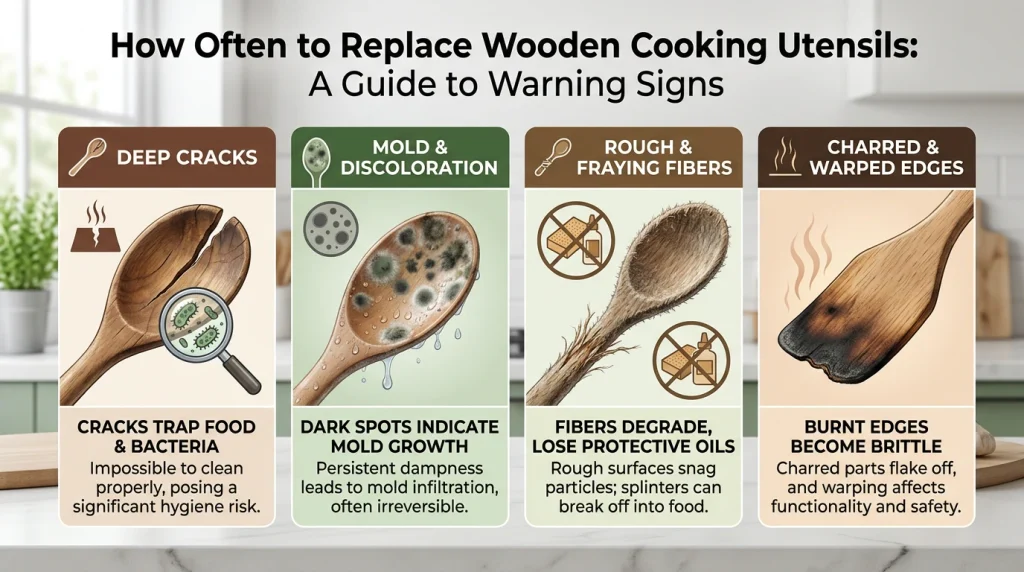
There’s no fixed lifespan, and none of the sources we reviewed give a number of months or years. A well-cared-for spoon can last for a very long time, while a neglected one may need replacing quickly. Instead of counting years, watch the condition. Replace a utensil if it shows any of these signs:
- Deep cracks or splits, especially ones you can’t sand away.
- Splintering or rough patches that shed fibers.
- Persistent mold or a smell that won’t go after cleaning.
- Warping that makes it uncomfortable or unsafe to use.
This follows the same principle USDA gives for cutting boards: once wood is too worn to clean properly, it’s time to replace it.
Wooden Cooking Utensils Guide for Pakistan: Prices and Buying Online
If you’re shopping locally, the main questions are what things cost and how to avoid disappointment when buying online. This section of the wooden cooking utensils guide covers both, and it works as a wooden cooking utensils buying guide for home cooks in Pakistan. For a fuller walk-through of shops, materials and checks, our wooden kitchenware buying guide for Pakistan is the place to go next.
Wooden Cooking Utensils Price in Pakistan: A Wooden Cooking Utensils Guide to What Affects Cost
We haven’t listed rupee prices here, because they change quickly between sellers and we don’t want to guess. What we can tell you is what usually moves the price: the type of wood, the size of the piece, how much hand finishing it needed, whether it’s sold singly or as a set, and where you buy it. Our article on wooden kitchenware price factors in Pakistan breaks down each factor so you can judge whether a price makes sense.
How to Buy Wooden Cooking Utensils Online in Pakistan: A Wooden Cooking Utensils Guide Checklist
When you can’t hold the piece, you have to check details from the listing instead. Look for clear photos from several angles, a stated wood type, stated dimensions and a clear description of the finish. Read reviews for comments about cracking, and check the return or replacement policy before you pay. When the parcel arrives, inspect it right away for cracks. If you’d like to compare sellers, our list of the top wooden kitchen accessories brands in Pakistan is a useful starting point, and you can also browse our own wooden cooking utensils collection.
Eco-Friendly Wooden Cooking Utensils Guide: Choosing Responsibly
Wood can be a good material from an environmental point of view, but only when it’s sourced responsibly. We haven’t found a reliable source that compares the environmental footprint of wood against silicone or steel, so we won’t claim one is greener. What you can do is ask sellers where the wood comes from, choose pieces built to last, and look after them so you replace them less often.
Wooden Cooking Utensils Guide FAQs
These are the questions people most often ask once they’ve started using wooden tools. Each answer is short, with a pointer back to the section above if you want more detail.
Can You Put Wooden Cooking Utensils in the Dishwasher? Wooden Cooking Utensils Guide FAQ
It’s best not to. Several care guides warn that dishwasher heat and long wet cycles can make wood warp, crack or splinter, and America’s Test Kitchen found that most spoons looked bleached and dry after ten cycles. Washing by hand takes only a minute and keeps the wood in better shape for much longer.
Do Wooden Cooking Utensils Absorb Smells and Flavors? Wooden Cooking Utensils Guide FAQ
They can. Wood is porous, so strong ingredients such as garlic, onion and curry can leave odors behind, and rinsing straight after use helps. If a smell lingers, use the baking soda method described above, then dry and oil the utensil.
Which Are the Best Wooden Cooking Utensils for Daily Cooking? Wooden Cooking Utensils Guide FAQ
For daily cooking, a long-handled spoon, a flat-edged spatula and a serving spoon will cover most meals. Choose smooth, solid pieces in a tight-grained wood, and don’t pay extra for decoration. Plain designs are easier to clean and often easier to hold.
Are Wooden Cooking Utensils Safe to Use Every Day? Wooden Cooking Utensils Guide FAQ
Yes, if they’re clean, dry and in good condition. Wash them after each use, oil them when they look dry, and replace them as soon as they develop deep cracks, splinters or persistent mold. Most food-safety guidance focuses on cutting boards, so treat it as a sensible guide rather than a rule written specifically for spoons.
Final Thoughts: Putting This Wooden Cooking Utensils Guide to Work
This complete guide to wooden cooking utensils boils down to a few simple habits. Pick smooth, solid pieces made from a good hardwood, wash them by hand, dry them well, oil them when they look dry, and replace them when damage makes them hard to clean. Do that and a few well-chosen tools can serve you for years, which is really everything to know about wooden cooking tools before you start using them. Pick one habit from the care section to begin with, and the rest will follow naturally.

[…] a wider look at wood tools beyond spoons, our wooden cooking utensils guide covers the whole […]
[…] pans leave you free to use either. For a wider look at shapes, sizes and finishes, there’s a complete overview of wooden cooking tools, plus how to pick good wooden tools without […]
[…] in a sink or goes through a hot dishwasher cycle. If you’re still deciding what to buy, our broader walkthrough of wooden cooking tools covers types and choosing. This page sticks to cleaning and […]
[…] the long soaks. If you want the bigger picture on choosing and caring for wood in the kitchen, our broader primer on wooden cooking tools is a good next […]
[…] hot cooking is on your mind, whether a wooden spoon is a sensible choice for hot cooking gets its own answer. For everyday upkeep, a simple wash-and-dry routine for wooden tools will get […]
[…] you actually like using. For the wider picture, from choosing to cooking and caring, take a look at a broader overview of cooking with wooden tools. And if a spoon does crack, don’t take the risk. Swap it for a new one and start the habits […]
[…] tell when it’s time to let go. If you’re also deciding what to buy in the first place, choosing and using wooden kitchen tools is covered in a separate […]