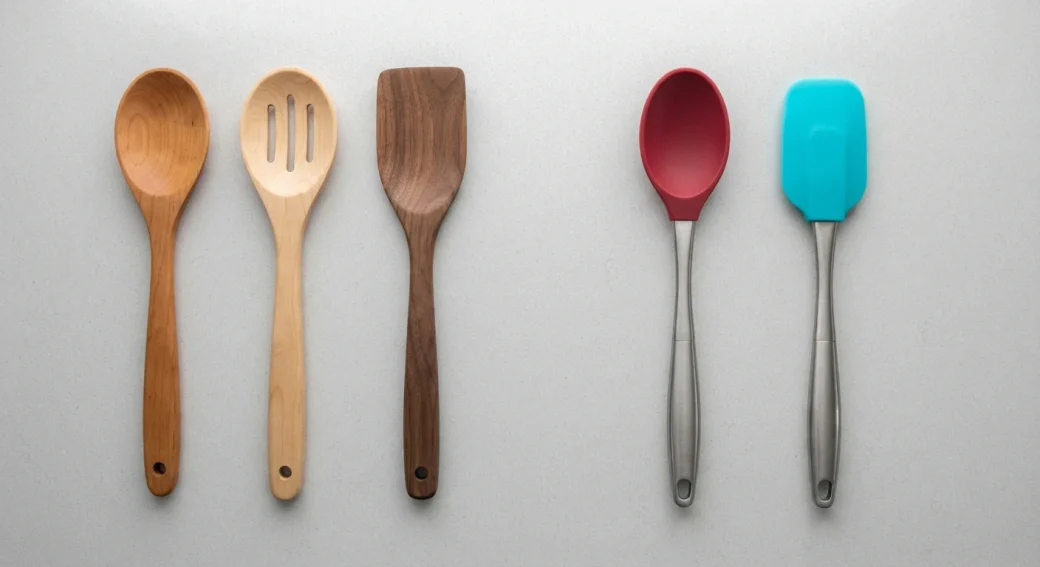
Wooden spoons vs silicone spoons is a debate most home cooks run into the first time they stock a kitchen, and the honest answer is that each one wins in different situations. Wood is sturdy, gentle on pans and nice to hold. Silicone bends, scrapes clean and can usually go in the dishwasher. If you want the short version, reach for wood for everyday stirring and silicone when you need a flexible edge.
This guide compares the two on the things that actually decide the purchase: nonstick pans, heat, safety, cleaning, durability and the job in front of you. Where research or manufacturer guidance exists, we point to it. Where it’s plain kitchen experience, we say so, so you can weigh it yourself.
Wooden Spoons vs Silicone Spoons for Cooking
Neither material wins every round. A wooden spoon is the better all-rounder for stirring pots, sauces and stews, while a silicone spoon is the better pick when you want flexibility, a soft edge for scraping or something you can load straight into the dishwasher. If you’re only buying one, think about what you cook most often.
Here’s the side-by-side view, which works as a quick utensil material comparison:
| What matters | Wooden spoon | Silicone spoon |
| Nonstick pans | Gentle when smooth and crack-free | Gentle, with a soft flexible edge |
| Heat | Won’t melt, but can scorch if left on a hot pan rim | Rating varies by product and is often quoted around 400 to 500°F, so check the label |
| Cleaning | Hand wash and dry well | Usually dishwasher safe, but check the label |
| Wear | Can crack, split or darken over time | Can stain, hold smells or tear if cut or overheated |
| Feel | Rigid, natural grip | Flexible, uniform |
For a wider look at wood tools beyond spoons, our wooden cooking utensils guide covers the whole set.
Are Wooden Spoons Better Than Silicone Spoons? Pros and Cons
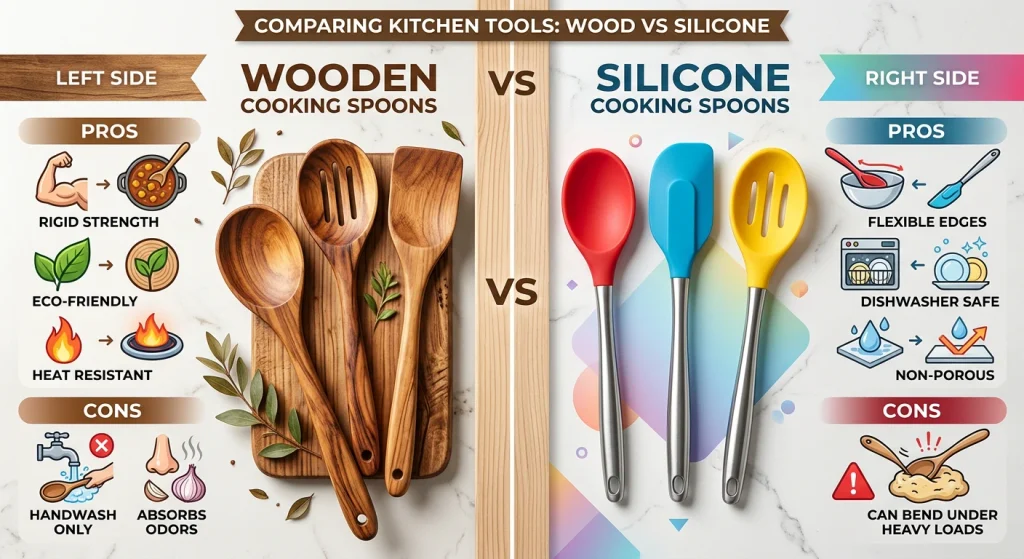
“Better” depends on what you’re doing at the stove. The useful way to answer it is to look at what each material does well and where it lets you down, starting with wood. Once you’ve seen the wooden vs silicone spoons pros and cons side by side, the right choice for your cooking usually becomes obvious.
Benefits of Wooden Spoons Over Silicone Spoons
Wooden spoons are stiff, so they push through thick stews, dal, risotto and dense batters without bending. They don’t melt, they won’t scratch a nonstick surface when they’re smooth, and because wood conducts heat poorly, the handle tends to stay comfortable over a hot pot. Plenty of cooks also simply like natural wooden kitchen tools for the way they look and feel.
If you want the full case for wood, we’ve covered the benefits of wooden kitchen utensils in detail. Keep the downsides in mind too, and our breakdown of wooden kitchenware advantages and disadvantages is a fair place to check them.
Disadvantages of Silicone Spoons Compared to Wooden Spoons
Silicone’s biggest weakness is that it can be too soft for heavy work. A floppy spoon struggles with stiff dough or a thick, sticky mixture, and a thin blade can fold under pressure. Silicone can also hold onto greasy films and strong smells, and quality varies a lot between brands, so a spoon with no clear food-grade label is harder to trust.
Are Silicone Spoons Better Than Wooden Spoons?
For certain jobs, yes. Silicone is the stronger choice for scraping a bowl clean, folding batter, working around the curved edge of a saucepan and anything you’d rather wash in the dishwasher. It’s also a good fit if you don’t want to think about drying or oiling wood.
Silicone Utensil Flexibility Is the Real Selling Point
The bendy blade is what makes silicone useful. It follows the curve of a pan, gets into the corner of a jar and clears the last bit of sauce or batter that a rigid spoon would leave behind. That silicone utensil flexibility is hard to copy with wood, which is why so many kitchens end up with both.
Wooden Spoons vs Silicone Spoons for Nonstick Pans
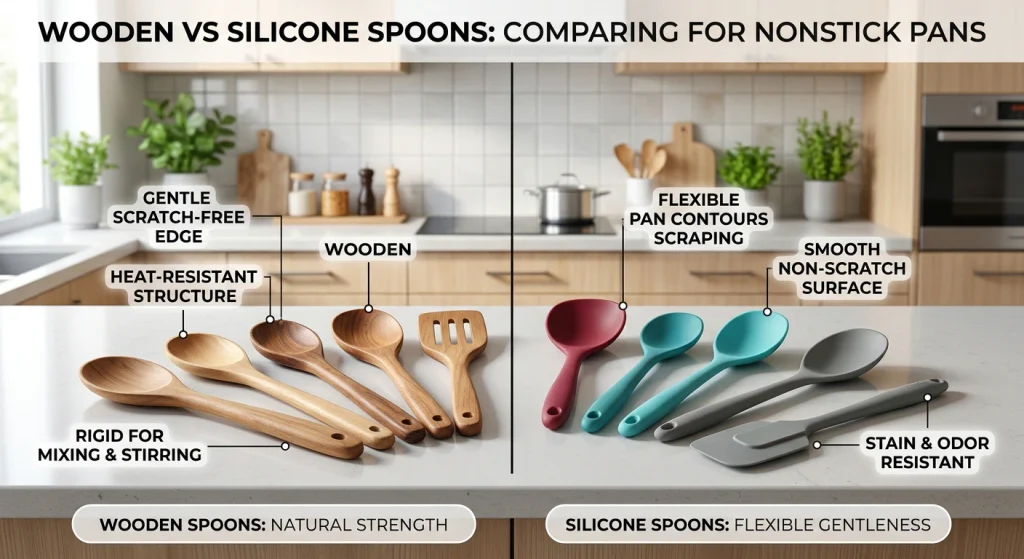
Nonstick coatings are easy to damage, so the spoon you choose matters. The American Heart Association’s care advice for nonstick skillets says to skip metal utensils and use wood, plastic or silicone instead, and it notes that most nonstick cookware is made for low and medium heat. On this point, wood and silicone are on the same side.
Best Cooking Spoons for Nonstick Cookware
Either material works, so choose by shape and condition. A smooth, well-sanded wooden spoon with a rounded edge is a great all-purpose option, and a silicone spoon with a soft edge is ideal for scraping the sides of the pan. These are the nonstick cookware safe utensils that cookware makers such as Misen and Meyer point to, though you should always check your own pan’s care guide.
Non-Scratch Cooking Utensils: What to Check Before You Buy
On wood, look for a smooth, rounded edge with no cracks, rough patches or splinters. On silicone, look for a clean edge without nicks or tears. Worn or damaged tools can scratch a pan, so retire them before they cause trouble. Good non-scratch cooking utensils protect your cookware as much as they help you cook.
Wooden Spoons vs Silicone Spoons Heat Resistance
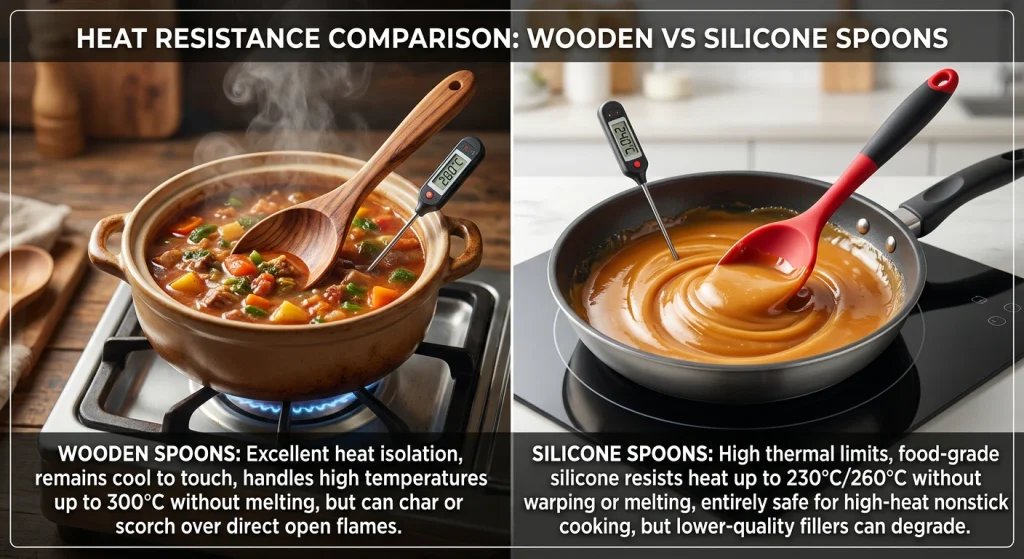
Both materials cope with ordinary stovetop cooking, but they handle heat differently, and “heat resistant” is not a guarantee with either one. Wood can’t melt, while silicone has a temperature limit that depends on the product. That difference matters most when you’re cooking something really hot.
Wooden Spoons or Silicone Spoons for Hot Food
For everyday simmering, frying and boiling, either one works fine. Wood has no melting point to worry about, but a spoon left resting across a hot pan or against a burner can scorch or char, so don’t park it there. Silicone spoons are usually fine in hot food, though they shouldn’t touch a flame or a red-hot pan base.
Heat Resistant Cooking Spoons: Read the Label, Not the Color
Heat resistant kitchen utensils vary widely, and silicone cooking utensils carry ratings set by each maker. Retail guides often quote roughly 400 to 500°F, but treat that as a ballpark rather than a promise. If you’re cooking at very high heat, such as deep frying, look for a stated temperature limit on the spoon or its packaging before you trust it.
Which Is Safer: Wooden or Silicone Spoons?
Both are generally considered safe for normal home cooking when they’re in good shape and used the way they’re meant to be used. The real differences lie in what can go wrong with each one, which is what the next few sections cover. For the full deep dive on wood, see are wooden spoons safe for cooking.
Are Wooden Cooking Spoons Hygienic?
Wood is porous, so people worry about bacteria. The research is more reassuring than you might expect, with one catch: most of it looks at cutting boards, not spoons. A classic 1994 study by Ak, Cliver and Kaspar found fewer bacteria could be recovered from wood than from plastic after contamination, and a 2025 study in the Journal of Food Protection found higher detection rates on HDPE plastic boards than on sugar maple.
Treat that as a helpful clue rather than proof about spoons. In practice, kitchen utensil hygiene comes down to habits: wash the spoon after use, let it dry fully and retire it once it cracks or splinters.
Do Wooden Spoons Absorb Food Odors?
They can. Because wood is porous, a spoon used for garlic, onion or a strongly spiced curry may smell a little like it afterward, and tomato or turmeric can leave colour behind. Washing soon after use and letting the spoon dry completely usually keeps this under control. Some cooks keep one spoon for savoury dishes and another for sweet ones.
Are Silicone Cooking Spoons Food Safe?
Good ones are. Look for food grade silicone from a brand that says so clearly. In the US, the FDA rule for rubber articles intended for repeated food contact is 21 CFR 177.2600, which is what many silicone makers cite, and it calls for these articles to be thoroughly cleaned before their first use with food. In Germany, the BfR publishes its own silicone recommendation, though it is not legally binding.
One media report on research found that siloxanes were released from silicone bakeware during baking, with utensils less affected because they heat up less, and the researchers noted that health-risk evidence is still limited. The practical takeaway for food safe cooking materials is simple: buy from a reputable brand, wash a new spoon before using it and replace it when it’s damaged.
Do Silicone Cooking Spoons Stain Easily?
Light-coloured silicone can pick up tint from tomato sauce, turmeric and curry, especially after repeated use. The stain is usually cosmetic rather than a safety problem, but it’s annoying. Darker colours hide it better, and rinsing soon after cooking helps.
Durability: Which Cooking Spoon Lasts Longer, Wood or Silicone?
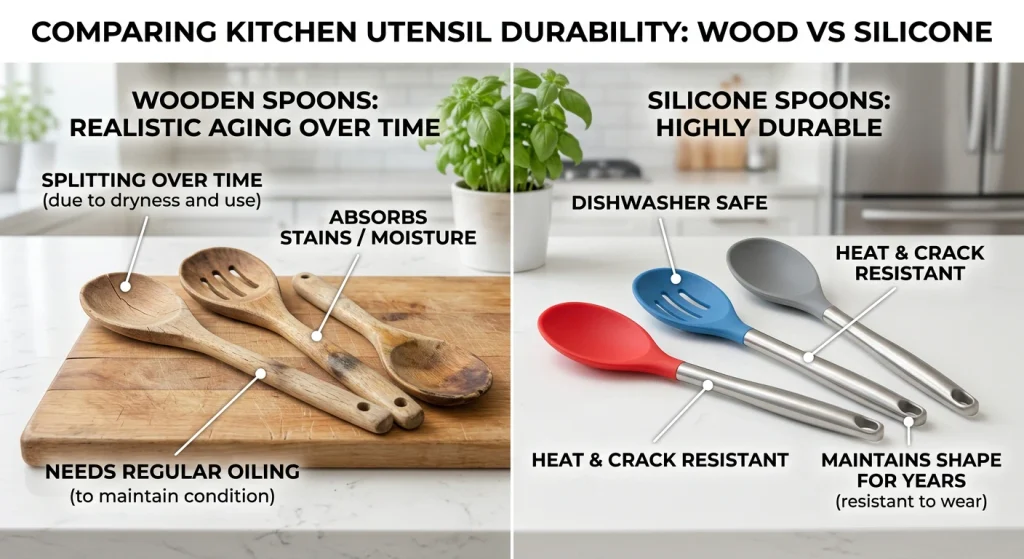
Both can last for years with sensible care, and both can wear out fast without it. What breaks each material is different, so durability comes down to how you treat the spoon more than what it’s made of.
Which Cooking Spoon Lasts Longer: Wood or Silicone?
There’s no clean winner. Wood suffers from moisture, so long soaks and dishwasher cycles can swell and crack it. Silicone suffers from cuts, heat and being left to sit in a hot pan. A dense hardwood usually holds up better than a soft, cheap one, which is why the wood matters; we compare options in best wood for kitchen utensils.
Wooden Spoons vs Silicone Spoons Durability in Daily Use
In a normal home kitchen, a well-made wooden spoon that’s hand washed and dried can serve for years, though the surface may roughen and darken. A silicone spoon usually needs less fuss day to day, but one burnt edge or a deep cut can end its life quickly. So cooking spoon durability is mostly a care question.
Signs It’s Time to Replace Either Spoon
Replace wood when it cracks, splinters, feels fuzzy or keeps a smell after washing. Replace silicone when it tears, warps, turns tacky or holds a strong odour after a good wash. Damaged spoons are harder to keep clean and can scratch your pans.
Easy Clean Kitchen Utensils: Wooden vs Silicone Maintenance
Cleaning is where many people make their final call. Silicone is the lower-effort option, but wood isn’t hard to look after once you’ve got a routine. Here’s how the two compare and what each needs to stay in good shape.
Which Cooking Spoon Is Easier to Clean?
Silicone usually wins. Most silicone spoons can go in the dishwasher, though you should check the label, and their smooth surface rinses clean quickly. Wood needs a hand wash and a proper dry. When people compare easy to clean wooden vs silicone cooking spoons, silicone usually comes out ahead for busy households.
Wooden Spoon Maintenance Without the Fuss
Wash by hand with warm soapy water soon after use, skip long soaks and stand the spoon upright to dry. Some cooks rub on a little food-safe oil now and then; it’s optional and no substitute for good drying. For more on avoidable slip-ups, see our list of common wooden kitchenware mistakes.
Silicone is simpler: wash it before first use, keep sharp knives away from it and don’t leave it sitting in a hot pan. On wooden spoons vs silicone spoons maintenance, wood asks for a little attention and silicone asks for almost none.
Best Spoon for the Job: Stirring, Sauces, Soups and Baking
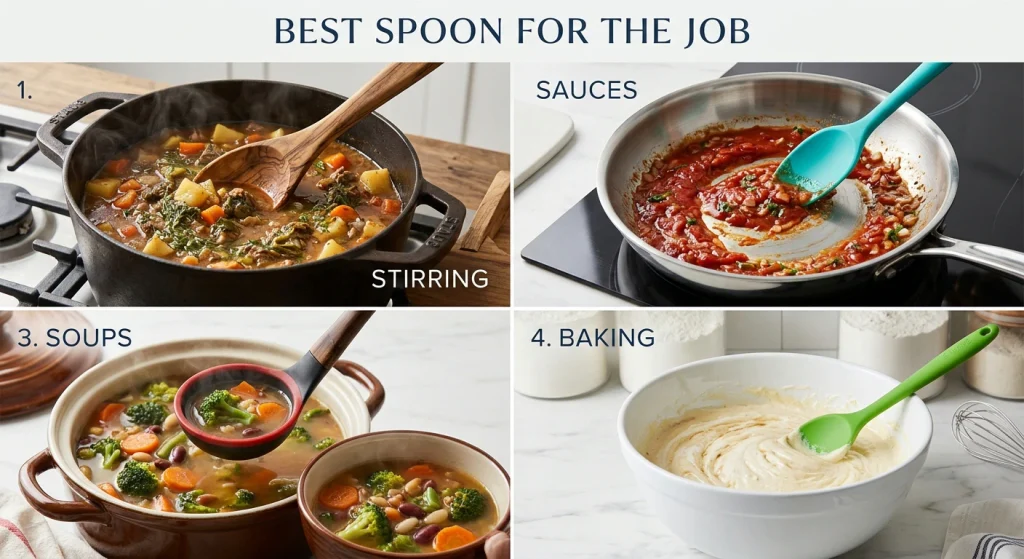
Instead of crowning one winner, match the spoon to the task. The right pick changes between a simmering curry, a cake batter and a pan of eggs, so here’s how it breaks down by common jobs.
Wooden Spoons vs Silicone Spoons for Stirring
For thick, heavy mixtures like stews, risotto or dal, wood has the advantage thanks to its stiffness. For stirring and scraping in one motion, silicone’s soft edge works better. If you cook a lot of one-pot meals, a wooden spoon is the sturdier default.
Best Spoon for Cooking Sauces and Soups
A wooden spoon is a solid default for soups and slow-simmered sauces, since it’s comfortable to hold over a hot pot. Silicone is better for sauces in nonstick pans, or when you want to scrape the bottom of the pan regularly so nothing catches and burns.
Wooden Spoons vs Silicone Spoons for Baking
For baking, silicone often takes the lead. It’s great for folding batter, scraping bowls and getting every bit of mixture out of the container. Wood still has a place for creaming butter and sugar or stirring stiff cookie dough, where its rigidity helps. Many bakers keep both within reach.
Best Spoon Material for Everyday Cooking: A Simple Buying Rule
If you want one rule, buy one wooden spoon for stirring and one silicone spoon for scraping, then add more only when you notice a gap. That pair covers most home cooking and keeps you from filling a drawer with tools you never use.
Wooden vs Silicone Kitchen Utensils for Beginners
New to cooking? Start with one of each and treat “best” as whichever you’ll actually use. Our guide to wooden kitchenware for beginners lists the basics, and how to choose wooden kitchenware shows what to check before you buy. Beginners also tend to overlook the pan itself: if it’s nonstick, either spoon is fine as long as it’s smooth.
Final Thoughts on Wooden Spoons vs Silicone Spoons for Everyday Cooking
Wood is sturdy and natural, silicone is flexible and easy to clean, and both are safe for most home cooking when they’re in good condition. Pick wood for stirring and heavy mixtures, pick silicone for scraping, baking and low-effort cleanup, and keep both if your budget allows.
If you’re shopping in Pakistan, our wooden kitchenware buying guide for Pakistan walks through what to look for, the price factors for wooden kitchenware in Pakistan explain why costs vary, and our roundup of top wooden kitchen accessories brands in Pakistan is a good place to start comparing options.

[…] is worth doing every time. Silicone is one alternative some cooks prefer for raw-meat jobs, and how silicone tools compare when hygiene is the priority is explained in a separate […]