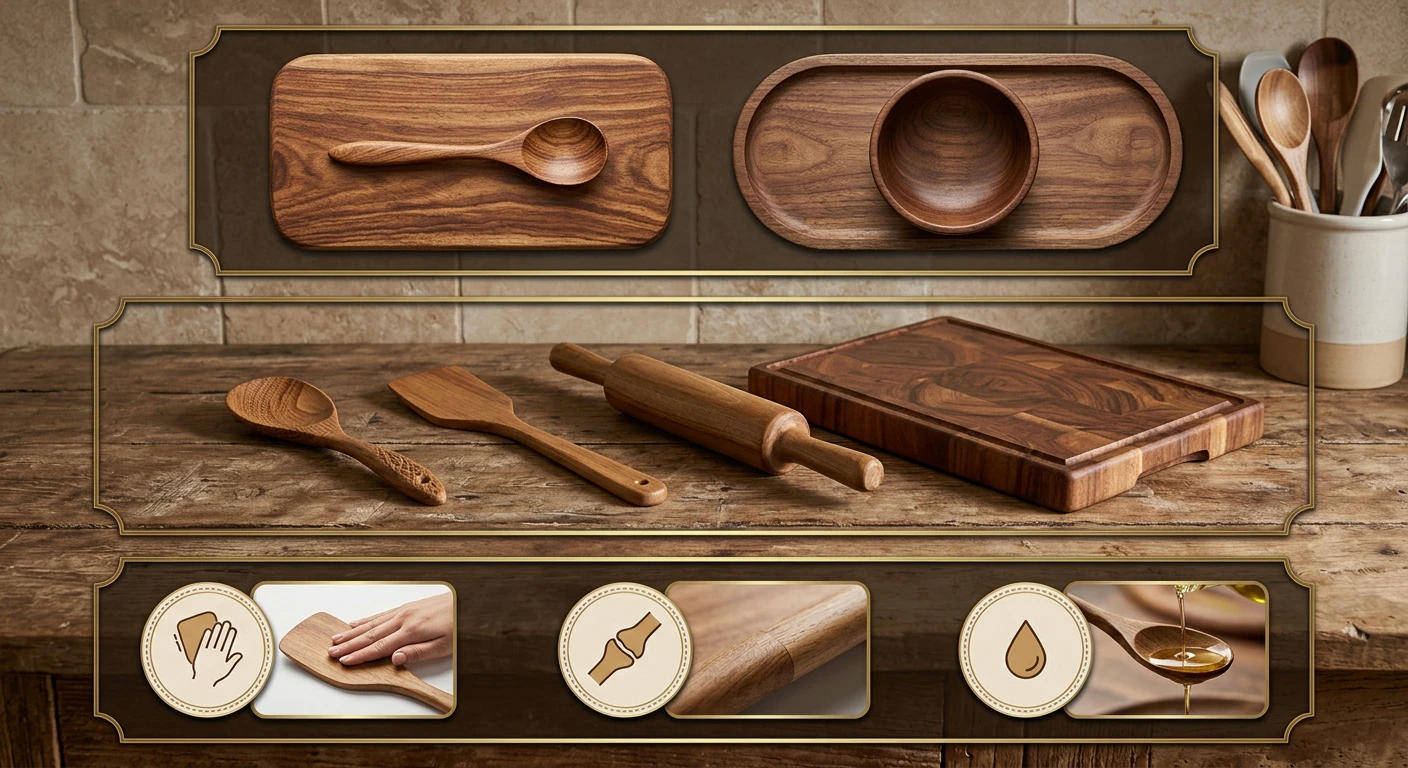
Walk through almost any bazaar in Pakistan and you’ll see wooden spoons, belan and chakla sets, cutting boards and spice boxes stacked in every size and price. Some are beautifully made. Some will split within a month. This wooden kitchenware buying guide Pakistan home cooks can use will help you tell them apart before you pay.
We’ll look at which wood to look for, what to check in the shop, which pieces to buy first and how to keep them safe once they’re home. There are no invented prices or lab results here, just practical checks and sources you can look up yourself.
Pick dense, close-grained hardwood with a smooth surface, no cracks and a finish the seller can name. Skip anything painted, splintery or strongly scented. Wash by hand, and replace a piece once it develops deep cracks or smells that won’t go away.
Start With Safety Before You Compare Prices
It’s tempting to open with price, but safety decides whether a cheap piece is really a bargain. Wood is a natural material, so how safe it is depends on the species, the finish and the condition it’s in when you use it, not on the word “wooden” printed on a tag.
What Food-Safety Guidance Actually Says About Wood
Food-safety guidance is calmer about wood than social media tends to be. Michigan State University Extension names solid wood among the materials people can choose for cutting boards, and points out that every one of them can hide germs if it’s cleaned badly.
Its advice is simple: pick a smooth, hard surface made for food contact, wash after each use, and replace anything with cracks, chips or grooves. Kitchen experts apply the same thinking to wooden spoons, because cracks trap moisture and food.
Wooden Kitchenware Buying Guide Pakistan Safety Checklist in 30 Seconds
Run through this list before you buy anything. It takes less time than the shopkeeper needs to wrap the piece.
- No cracks, splits or rough patches you can feel with your thumb.
- No paint, glossy lacquer or sticky coating on parts that touch food, since coated pieces can chip over time.
- No strong chemical or perfume smell.
- Smooth edges on spoons and spatulas, with no splinters along the handle.
- A seller who can tell you what wood it is and what finish was used.
Which Material Is Best for Kitchenware? Wood, Silicone and Steel Compared
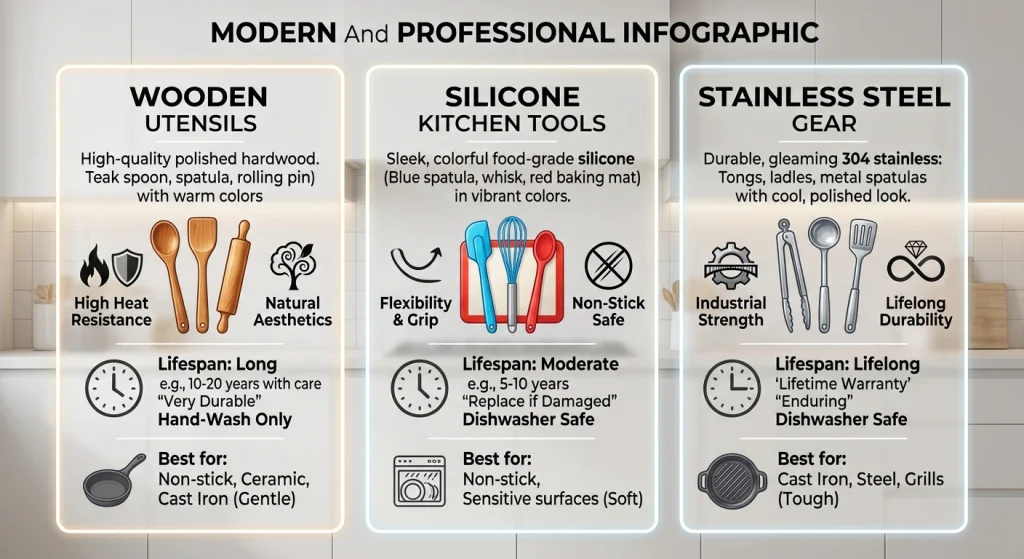
There isn’t one best material, because each wins at a different job and most kitchens end up using a mix. Our piece on the benefits of wooden kitchen utensils explains why wood stays popular, while the advantages and disadvantages of wooden kitchenware covers the trade-offs in more depth.
Wood vs Silicone vs Stainless Steel for Everyday Cooking
Here’s the short version of how the three compare for stirring, serving and everyday cooking.
| Material | Good at | Watch out for |
| Wood | Gentle on pans, doesn’t conduct heat, nice for stirring and serving | Needs hand-washing, can crack, can hold odours |
| Silicone | Handles heat well, usually dishwasher-friendly, won’t scratch | Quality varies, and joins between head and handle can trap moisture |
| Stainless steel | Tough, copes with high heat | Scratches nonstick and ceramic surfaces |
In practice, wood suits gentle stirring and serving, silicone suits hot, messy jobs that go through the dishwasher, and steel suits hard work in stainless or cast iron pans. Quality varies inside every category, so a well-made piece of any material beats a flimsy one.
Choosing Wooden Utensils for Nonstick Cookware
Metal tools are the usual cause of scratched nonstick and ceramic pans, which is why wood and silicone are both commonly recommended instead. Ceramic nonstick does best on low to medium heat, so stir gently and don’t scrape hard. Rough, frayed edges are another good reason to retire a worn spoon.
What to Look for When Buying Wood Utensils: Choosing the Right Wood
Most disappointments come down to the wood itself. Before you worry about shape or style, it helps to know which kinds of wood handle heat, moisture and daily scrubbing, and which ones will crack, stain or leave a taste in your food.
Hardwoods That Are Worth Looking For
Dense, close-grained hardwoods are the traditional choice. A North Carolina State University food-safety researcher has said fine-grained woods like maple are a safer bet than softer ones such as cypress, and woodworkers generally name maple and beech as dependable picks. Olive wood is another favourite for spoons. Our guide to the best wood for kitchen utensils compares these woods one by one.
Sheesham and the Other Woods You’ll See in Pakistan
Sheesham (Dalbergia sissoo, also called shisham or tali) is probably the wood you’ll meet most often here. It’s a respected timber across South Asia and has been planted widely in Pakistan since the mid-1800s, mostly for furniture and building. That’s useful background, but being a good timber isn’t the same as being proven for food contact, so ask how a piece was finished and whether it was made for the kitchen.
A Quick Warning About Wood Names
Shop labels can be loose. Even reference sources disagree on exactly which species the trade name “sheesham” covers, and you can’t confirm a species by eye. Treat the name as the seller’s claim, and put your trust in what you can check yourself: weight, grain, smoothness and finish.
Woods and Finishes to Be Careful With
Softwoods such as pine can add a resin taste and dent easily, and open-pored woods like ash and red oak are harder to keep clean, according to experienced woodworkers. For finishes, food-grade mineral oil is commonly recommended, so check that the label says food-grade. Be wary of paint, glossy lacquer or scented coatings you can’t identify.
Wooden Kitchenware Buying Guide Pakistan Checklist: How to Inspect a Piece in the Shop
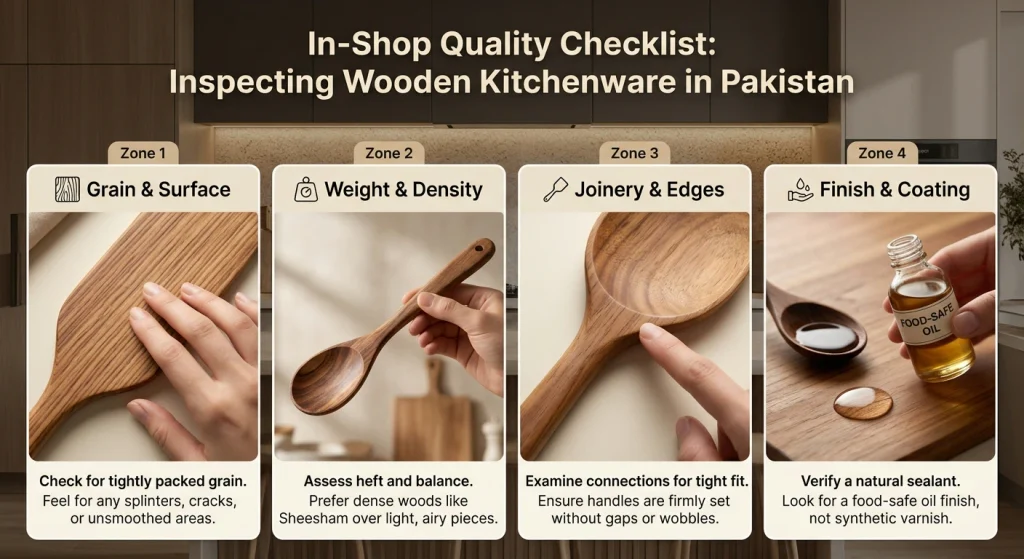
You don’t need special tools to judge a piece of wooden kitchenware. Your hands, your eyes and a few direct questions will catch most problems, and they cost nothing. Use the steps below on every spoon, board and rolling pin before you pay.
Check the Surface, Grain and Edges
Run your thumb along the whole piece, including the handle and the inside of a spoon bowl. It should feel smooth, with no splinters or rough patches. Look closely for hairline cracks, especially where a spoon’s handle meets its bowl. Lay a board flat on a counter to check for warping, and give the piece a sniff, since a strong chemical or perfume smell is a bad sign.
Check the Finish and Ask Better Questions
A good finish looks natural and feels dry to the touch, not sticky or plasticky. If the surface is glossy or coloured, ask what was used. If you want a deeper breakdown by piece type, our guide on how to choose wooden kitchenware goes through spoons, spatulas and boards one at a time.
Wooden Kitchenware Buying Guide Pakistan: Three Questions for the Seller
These three questions are short, polite and revealing. Ask them before you pay.
- What wood is this?
- What finish was used, and is it food-grade?
- How do you recommend I wash and care for it?
You don’t need perfect answers. A seller who knows the product will usually reply easily, while a vague or irritated response tells you something too.
What Kitchenware Should I Buy First? A Starter Set for Pakistani Kitchens
If you’re building from scratch, resist the urge to buy a huge matching set. A handful of well-chosen pieces will do more work than twenty mediocre ones. Our wooden kitchenware for beginners guide goes deeper on starter choices, so here’s the short version.
The Core Wooden Pieces Most Kitchens Use Daily
Most home kitchens get the most use from five wooden pieces:
- A sturdy cooking spoon for stirring salans, daals and sauces.
- A flat-edged spatula for scraping and turning.
- A belan and chakla for rotis and parathas.
- A cutting board for vegetables, fruit and bread.
- A couple of serving spoons for the table.
Pakistani cooking often involves strong flames, so keep wooden tools off the edge of a hot pan and away from the burner. Very high heat can crack, warp or scorch wood.
Wooden Cutting Board Pakistan Buyers Should Choose Carefully
Shops offer everything from thin slabs to thick blocks. Look for a single solid piece rather than lots of glued strips, and avoid deep grooves. Food-safety guidance allows wood for raw meat, but many cooks keep one board for raw meat and another for fruit, vegetables and bread. You can see our wooden cutting boards once you know what size and thickness suit your kitchen.
Wooden Accessories for Kitchen: Nice-to-Have Extras
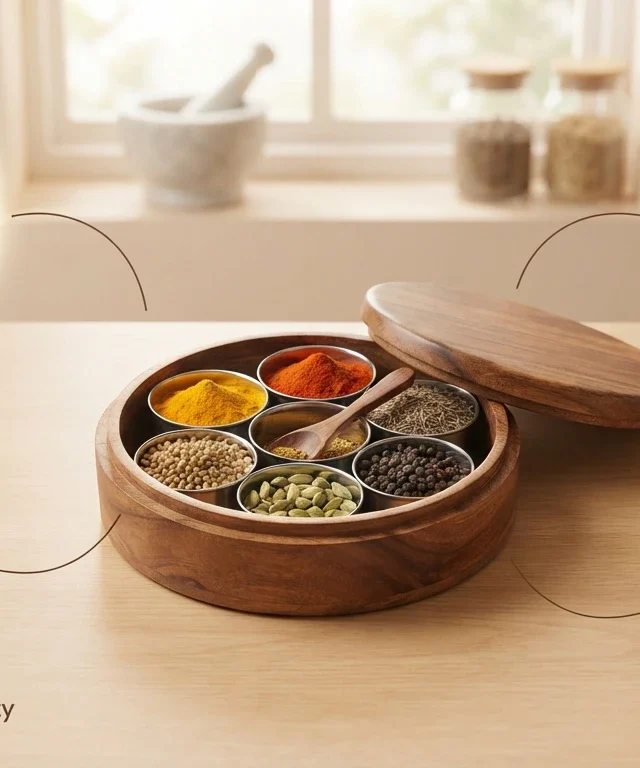
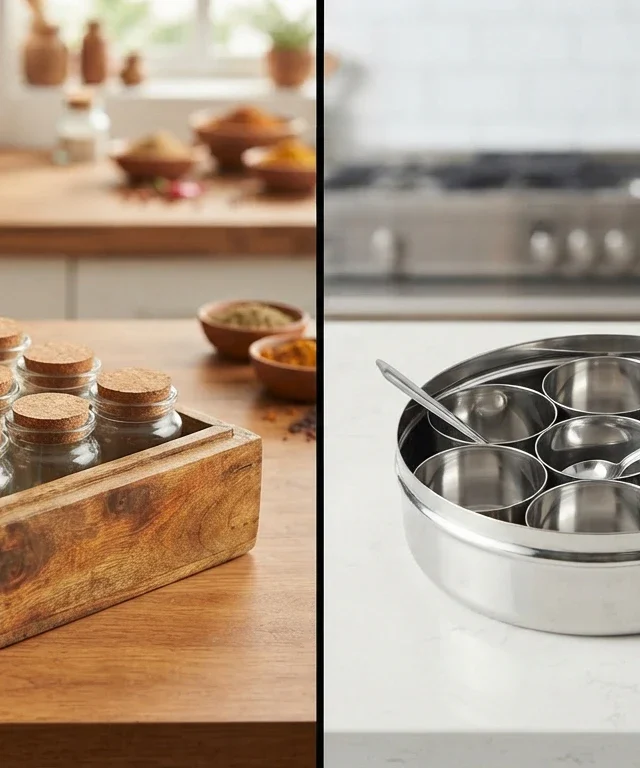
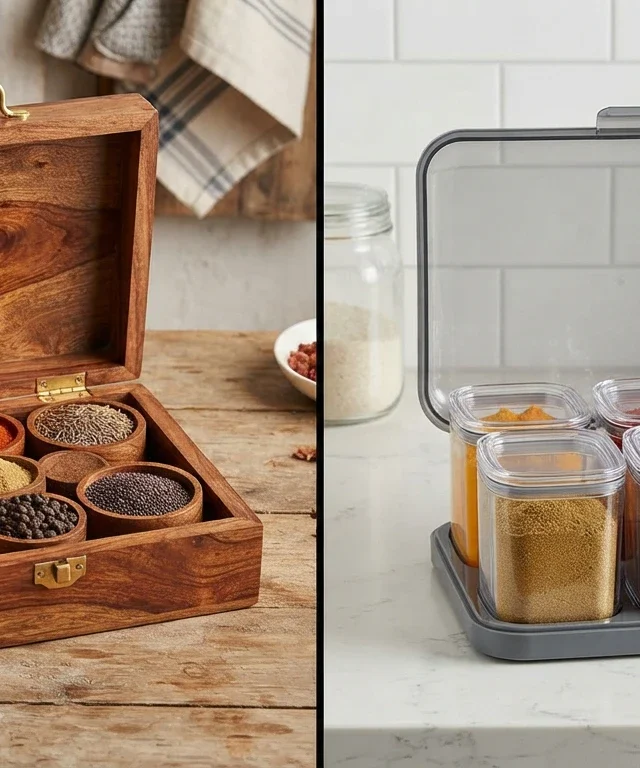
Spice boxes, trays, salad bowls and serving sets are lovely, but buy them after the basics. Not every decorative piece is finished for food contact, so ask before you put hot or wet food on it. Our range of wooden kitchen accessories is a good place to see what’s available.
What About the 15 Essential Kitchen Tools?
Lists of essential kitchen tools differ from site to site, but most include knives, a peeler, a grater, measuring tools and a colander alongside spoons and boards. Wood covers the stirring, serving and rolling jobs. For everything else, choose by how the tool will be used rather than by material alone.
Budget, Brands and Value Without the Guesswork
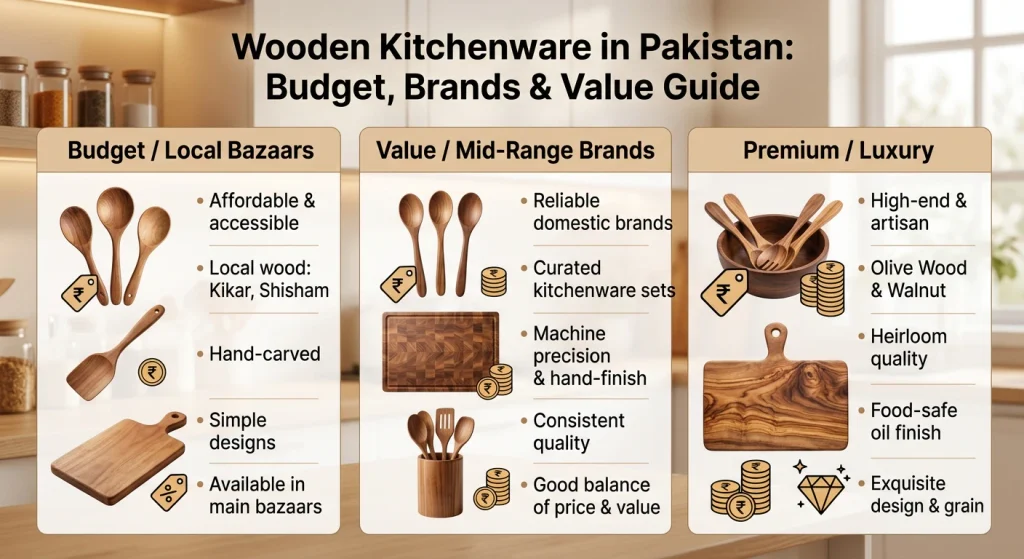
People often ask for the best brand or the best price, and that’s fair. The honest answer is that a few quick checks tell you more than a logo does, and the cheapest option is rarely the one that costs least over time.
Is There a Best Brand for Wooden Cooking Utensils?
There’s no single best brand for everyone. Be wary of any “best brand” list that doesn’t explain how the pieces were tested, and don’t assume a famous name guarantees good wood or a safe finish. Judge the individual piece by its wood, finish, build quality and the seller’s answers.
How to Judge Value at Any Price
A cheap spoon that cracks within weeks costs more than a solid one that serves you for years, and well-kept wooden spoons can last a long time. Spend a little more on the pieces you use every day, like your main cooking spoon and board, and save on occasional extras.
Wooden Kitchenware Buying Guide Pakistan: Red Flags That Cost You Later
Walk away, or at least ask more questions, if you notice any of these:
- A strong smell that doesn’t fade.
- A sticky, glossy or painted finish on food-contact surfaces.
- Rough end grain or splinters you can feel.
- A handle that flexes under light pressure.
- A seller who can’t name the wood or the finish.
Our article on common wooden kitchenware mistakes shows what these problems turn into after a few months at home.
Care Basics to Check Before You Buy
Wooden kitchenware things asks a little more of you than steel or silicone does. That’s fine if you know it up front. If you’d rather not hand-wash anything, silicone might suit you better, and there’s no shame in mixing materials.
Daily Care in Plain Words
Wash wooden pieces by hand with mild soap soon after use, wipe them dry and let them air out. Avoid long soaks and the dishwasher, because heat and moisture can make wood warp and split. Store them somewhere dry and well ventilated, which matters in humid weather. Every so often, rub in a little food-grade mineral oil. Follow the maker’s instructions, but most kitchen experts advise against the dishwasher for wooden tools.
When to Replace a Wooden Piece
Retire a piece when it develops deep cracks, splinters or a persistent smell, or when a cutting board gets grooves that are hard to clean. Consumer-testing experts at Which? give similar signs. Cracks are the main concern because they hold moisture and food where you can’t wash them out.
Frequently Asked Questions
These are the questions people ask most often when they’re about to buy wooden kitchenware. Each answer is short on purpose, so you can scan, then get back to shopping.
What should I look for when buying wood utensils?
Look for dense, close-grained hardwood, a smooth surface with no cracks or splinters, and a finish the seller can name. Skip painted, glossy or strongly scented pieces. Check that the shape feels comfortable in your hand and that the handle doesn’t flex easily.
Which material is best for kitchenware?
No single material wins. Wood is gentle on pans and works well for stirring and serving, silicone handles heat and usually goes in the dishwasher, and stainless steel is tough for high-heat work. Many cooks use a mix, matching each tool to the job and the cookware.
What is the best brand for wooden cooking utensils?
There isn’t one best brand. Quality varies between pieces, even from the same maker, so judge each item by its wood, finish and condition. Ask the seller how it was made and how to care for it before you decide.
What kitchenware should I buy first?
Start with a sturdy cooking spoon, a flat spatula, a cutting board, and a belan and chakla if you make rotis at home. Add serving pieces and extras later, once you know what you actually reach for every day.
Can I use wooden utensils on nonstick pans?
Yes. Wooden and silicone tools are commonly recommended for nonstick and ceramic cookware because they’re gentler than metal. Keep the heat low to medium, stir gently, and replace spoons whose edges have become rough or cracked.
Final Thoughts on Buying Wooden Kitchenware in Pakistan
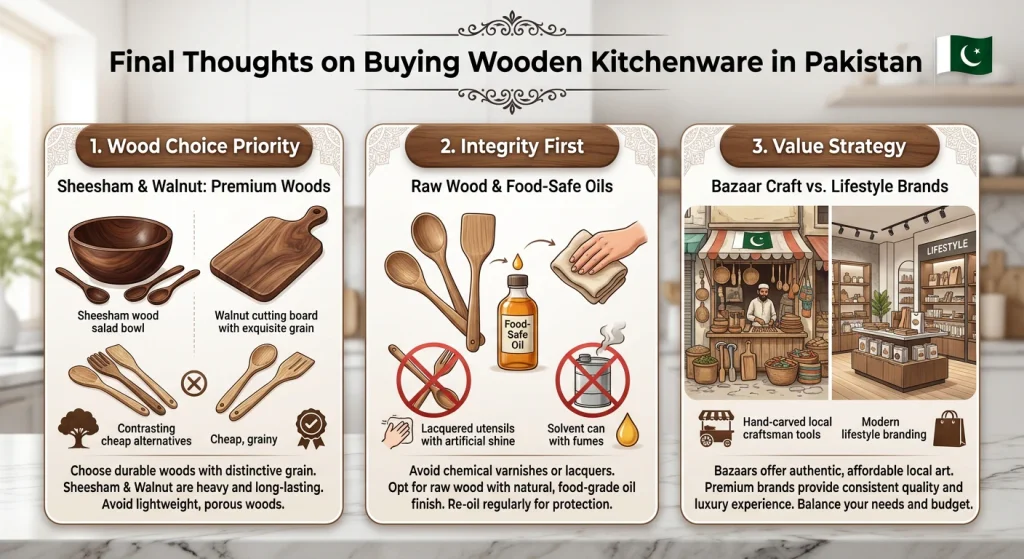
Good wooden kitchenware doesn’t need to be expensive or fancy. It needs sound wood, a smooth surface, an honest finish and a bit of care once it’s home. Use the checklist above, ask the seller three simple questions, and start with a few pieces you’ll use every day.

[…] not verify. Prices appear only when we found them in a dated source. If wood is new to you, the wooden kitchenware buying guide for Pakistan covers the basics […]
[…] thumb, but that is one expert’s preference, not a standard. If you are buying new ones, our wooden kitchenware buying guide for Pakistan and our look at the top wooden kitchen accessories brands in Pakistan can help you […]
[…] you are buying in Pakistan, this Pakistan-focused guide to buying wooden kitchenware will help you check quality before you […]