If you are weighing wooden kitchenware advantages and disadvantages, the short version is this: wood is gentle on cookware, does not melt, and avoids the microplastic concerns that surround some plastic tools. The trade-off is upkeep. Wooden spoons, boards and bowls need hand washing, careful drying and occasional oiling, and they can crack, stain, hold odors or grow mold if neglected. This guide sets out both sides using food-safety guidance and published research, so you can decide whether wood suits the way you cook.
wooden kitchenware guide is a good fit if you cook on nonstick or enameled cookware, want tools that will not melt, and are willing to hand-wash and dry them. It is a weaker fit if you want dishwasher-safe tools, cook over very high heat or open flame, or are unlikely to replace items once they split or show mold.
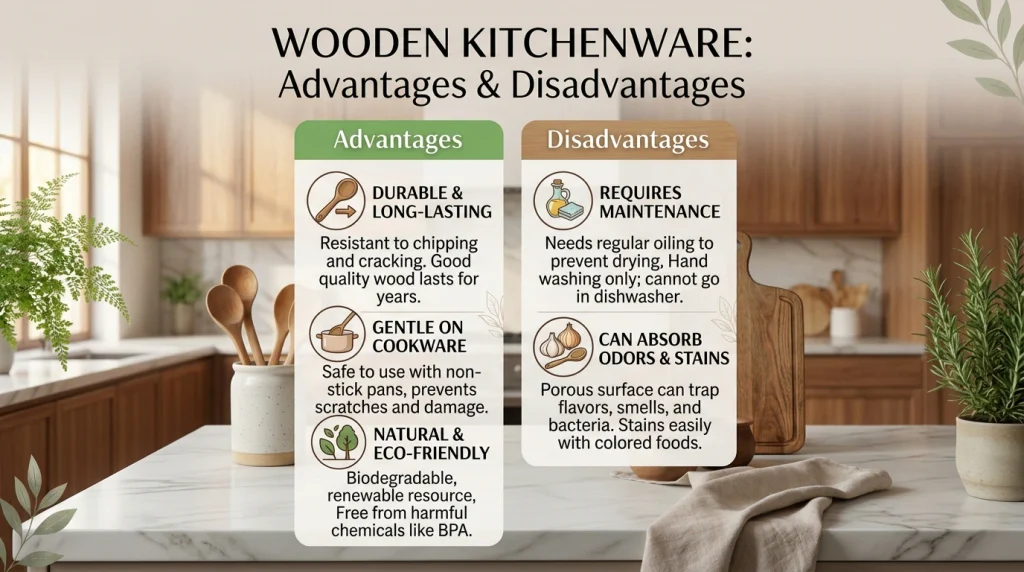
Wooden Kitchenware Pros and Cons at a Glance
| Advantages | Disadvantages |
| Does not scratch nonstick or enamel | Usually needs hand washing; dishwasher advice varies |
| Does not melt; poor heat conductor | Can crack, warp or splinter with moisture and heat |
| Not plastic, so no plastic shedding | Can stain and absorb odors |
| Lab research on boards found bacteria less recoverable from wood than from plastic | Porous: damp storage can lead to mold; deep grooves are hard to clean |
| Can last years with care and can be sanded and re-oiled | Finish, wood species and quality vary between makers |
| Renewable material when responsibly sourced | Can char if left on a burner; not for very high heat |
Advantages of Wooden Kitchenware
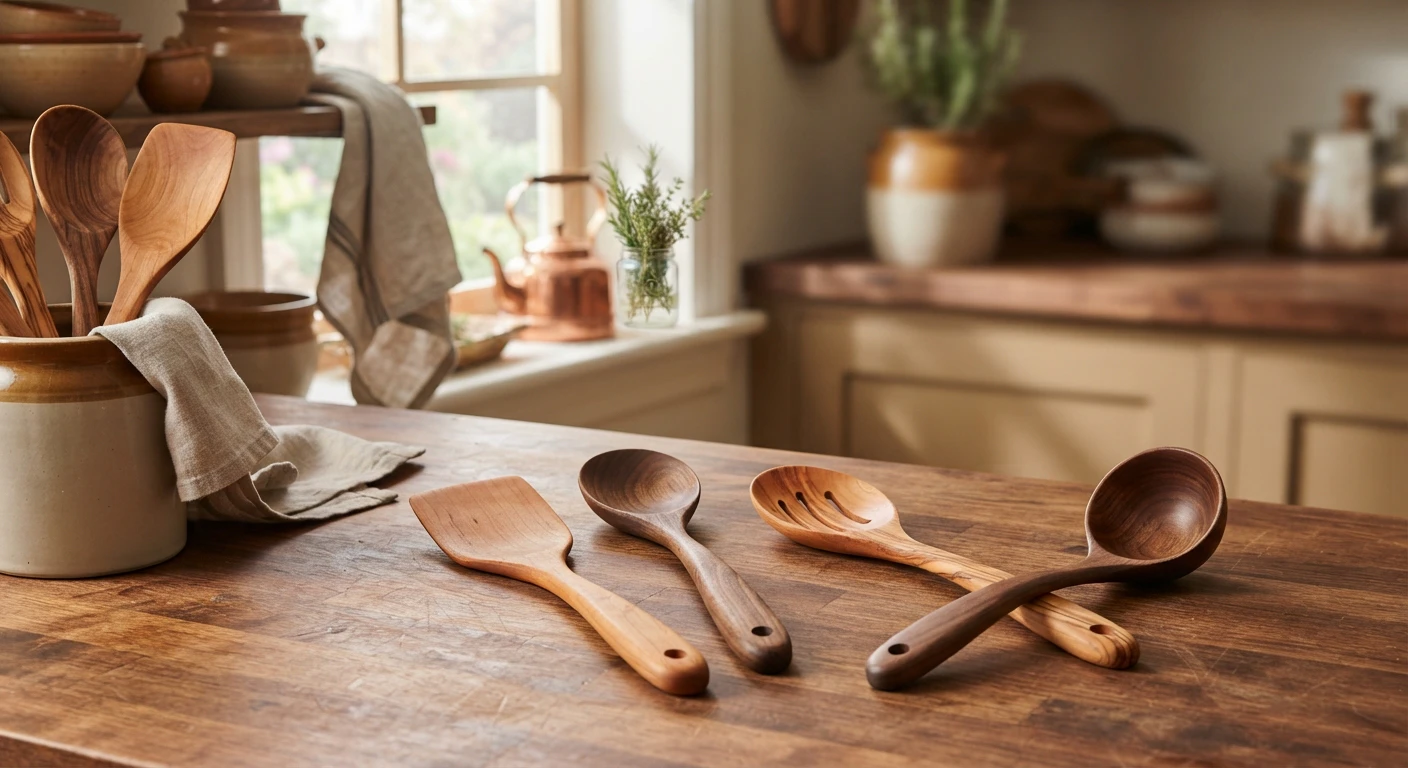
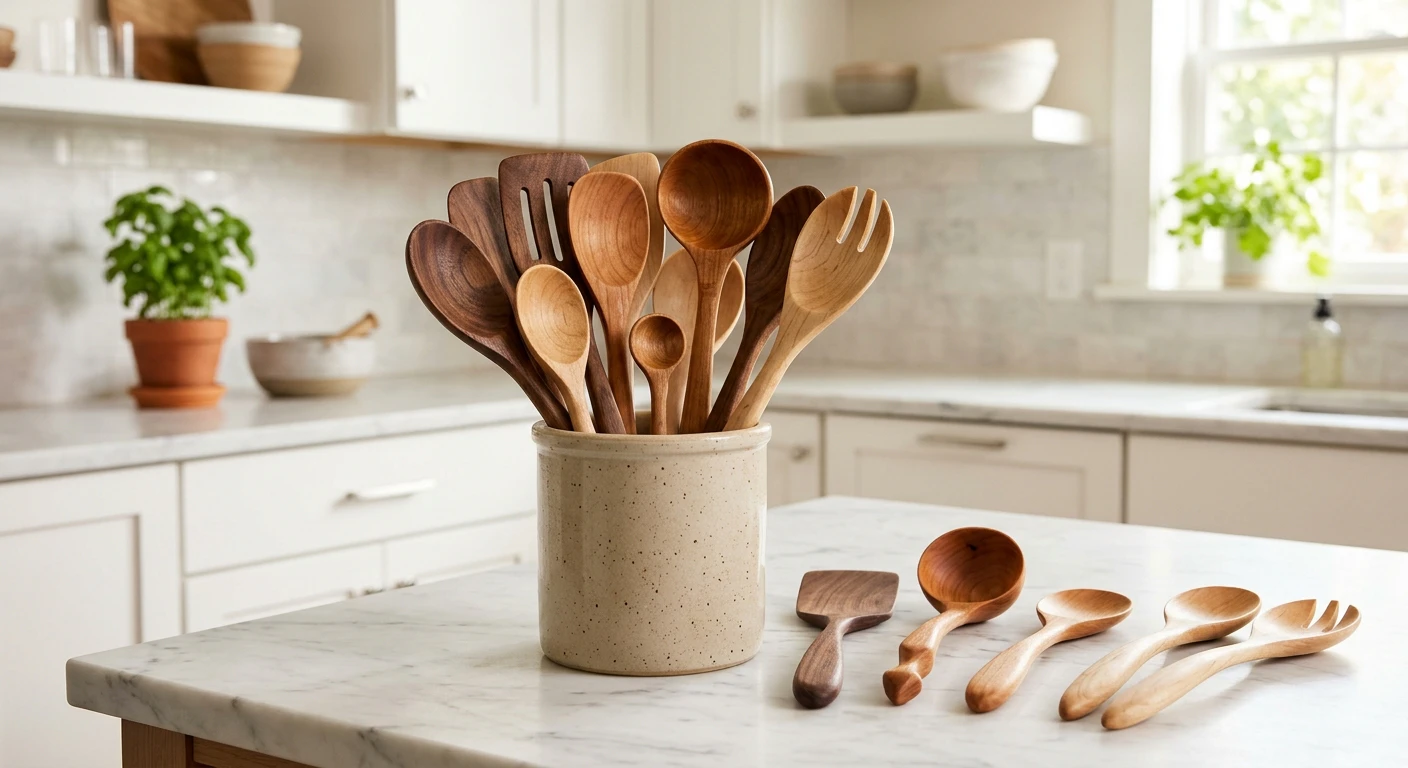
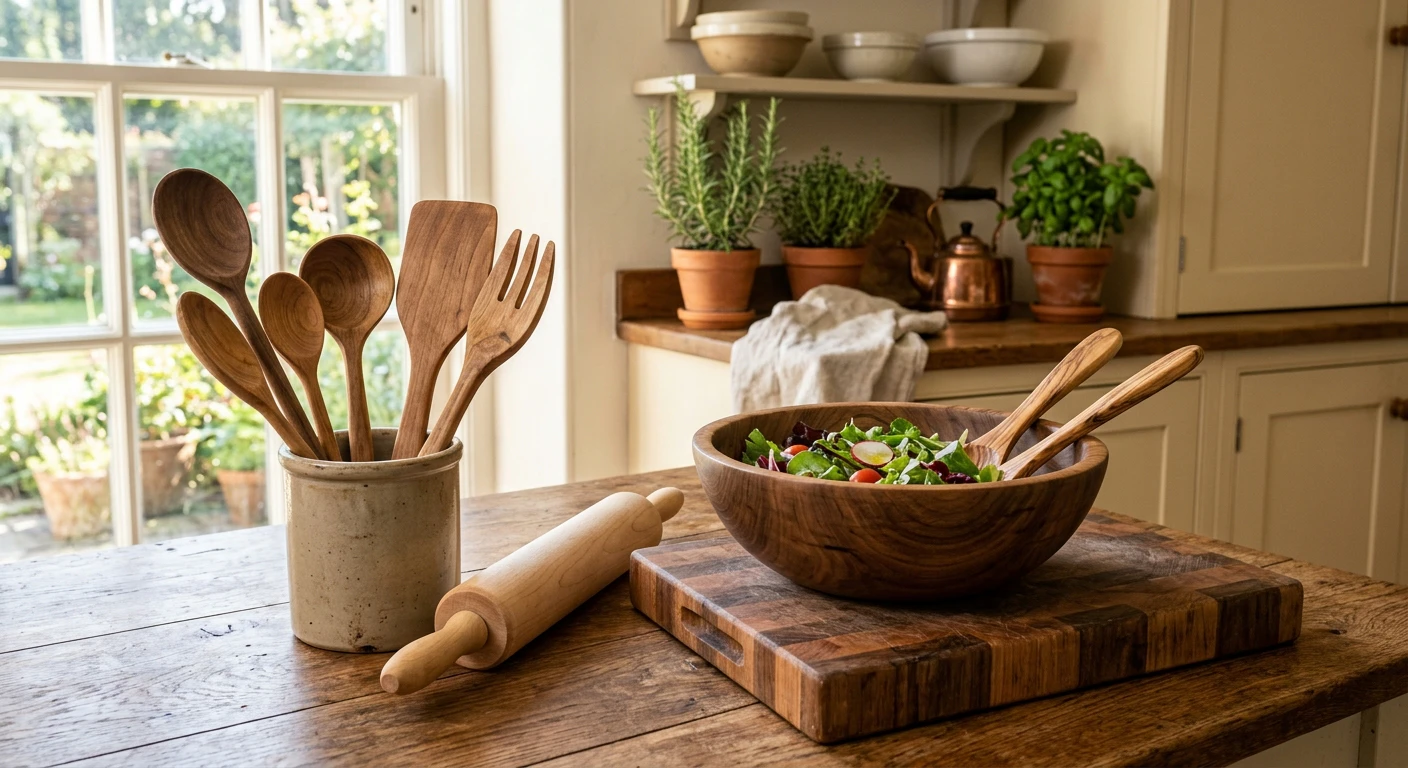
There are many types of wooden kitchen utensils you show below:
It is gentle on cookware
Wooden spoons and spatulas are softer than metal, so they do not scratch nonstick or enameled surfaces. Cooking publications routinely point to wood and silicone as the two safest choices for protecting these coatings, which matters because a scratched pan is expensive to replace.
It does not melt and stays comfortable to hold
Wood does not soften against a hot pan wall the way cheap plastic or nylon can, and it conducts heat poorly, so the handle stays comfortable in your hand. Wooden spoons are also non-reactive, which makes them a sensible choice for acidic foods such as tomato sauce. One limit: wood does not melt, but it can still scorch if you rest it on a burner.
It does not shed plastic
A 2024 study from Plymouth Marine Laboratory and partner institutes found that plastic and nonstick cookware can release microplastics into food during preparation. The plastic items studied included chopping boards, utensils, containers, silicone-coated utensils and PTFE-coated pans. The stainless steel and glass items tested did not introduce microplastics.
Wood was not among the materials the researchers described, so the study does not prove anything about wood itself. What it does mean is that this particular pathway, plastic wearing into food, does not apply to an uncoated wooden tool. The health effects of microplastics from home cooking are still being studied, so treat this as a reasonable precaution rather than a proven health gain.
Are wooden utensils hygienic? The evidence is better than the reputation
Wood is porous, so people assume it must harbor bacteria. Food microbiologists Nese Ak and Dean Cliver at the University of Wisconsin tested this on cutting boards in the early 1990s. They contaminated boards on purpose and found that bacteria were much harder to recover from wood than from plastic, while knife-scarred plastic was difficult to clean by hand. They also reported little difference between the wood species they tested.
Two cautions keep this in perspective:
- The research is about cutting boards in lab conditions, not spoons in a busy kitchen.
- Official guidance still favors nonporous surfaces for ease of cleaning. USDA’s Food Safety and Inspection Service says either wood or a nonporous board is acceptable for raw meat and poultry, but notes that nonporous surfaces are easier to clean. A University of Arizona extension bulletin adds that microorganisms can become trapped in wood and are hard to dislodge by rinsing alone.
The practical takeaway: wooden tools are not inherently unsafe, but they do not clean themselves. Wash them after each use and keep them dry.
It can last for years and be refreshed
A well-kept wooden spoon can serve for years. Rough patches can often be sanded smooth and re-oiled rather than thrown away. There is no standard lifespan: it depends on the wood, the finish, and how you wash, dry and store it. Some publications suggest replacing wooden spoons roughly every five years, which is best read as a rule of thumb, not a safety standard.
It is renewable, if you check the source
Wood is renewable, but it is not unlimited. If sustainability matters to you, look for a label such as FSC (Forest Stewardship Council). FSC certification is carried out by independent bodies, and chain-of-custody certification tracks certified material from forest to finished product. Only certified companies may use the label. Durability matters too: a tool you use for years is more sustainable than one you replace often. Note that glues and coatings can affect how a finished item breaks down at the end of its life.
Disadvantages of Wooden Kitchenware
It needs hand washing and thorough drying
Most care guides say not to run wooden spoons through the dishwasher or leave them soaking, because heat and prolonged moisture can make wood crack or warp. Guidance is not unanimous: USDA says solid wood cutting boards can be dishwasher-washed but laminated boards may crack and split, and at least one maker reports running test pieces through repeated dishwasher cycles without visible damage. The cautious habit is to hand wash, dry promptly, and follow each manufacturer’s instructions.
It can crack, warp and splinter
Wood swells when wet and shrinks as it dries. Repeated cycles, plus heat, eventually cause cracks, rough patches and splinters. A cracked or splintering tool should be retired, because splinters can break off into food and cracks are hard to clean.
It can stain and hold odors
Tomato sauce and berries can stain wooden spoons. Staining is mostly cosmetic and does not by itself mean a spoon is unsafe. Odors are a different matter: wood absorbs strong smells such as garlic or onion. Rinse soon after use, and use baking soda or lemon to freshen a spoon.
Can wooden kitchenware get moldy?
Yes, if it stays damp. Mold can develop on spoons left soaking in water or put away before they are fully dry. If you see black spots or soft areas, replace the item. For wooden boards, health-information sources advise discarding boards with mold, chips or deep grooves, since mold grows easily in damaged wood. Prevention is simple: dry thoroughly and store with airflow.
It is porous, so hygiene habits matter
USDA advises washing boards with hot soapy water after each food item, using separate boards for raw meat, poultry and seafood and for ready-to-eat foods, and replacing boards once grooves become hard to clean. Apply the same habit to wooden utensils: do not use a spoon that has touched raw meat on a finished dish without washing it first.
USDA says wooden and plastic boards can both be sanitized with a solution of 1 tablespoon unscented liquid chlorine bleach per gallon of water, left on the surface for several minutes, then rinsed.
Rules, finishes and quality vary
In professional kitchens, the FDA Food Code (a model code for restaurants and shops, not a law for home cooks) restricts wood as a food-contact surface. It allows hard maple or an equivalently hard, close-grained wood for items such as cutting boards, rolling pins, salad bowls and chopsticks.
Texas health officials note the Food Code’s concern about wood being hard to clean and about preservative chemicals migrating into food. For home buyers, the lesson is to prefer makers who name the wood and say what finish was used.
Are Wooden Utensils Good for Health?
Wooden utensils are generally considered safe for food contact when they are made of suitable hard wood, finished with food-safe products, kept clean and dry, and replaced when damaged. That is different from saying they are healthier than other materials. The best-known bacteria research concerns cutting boards, and official guidance still says nonporous boards are easier to clean.
The clearer health argument for wood is that it removes plastic-shedding from the picture. Even that is based on studies of plastic cookware rather than of wood, and the long-term health effects are still under study.
Wooden Kitchenware vs Silicone, Plastic and Stainless Steel
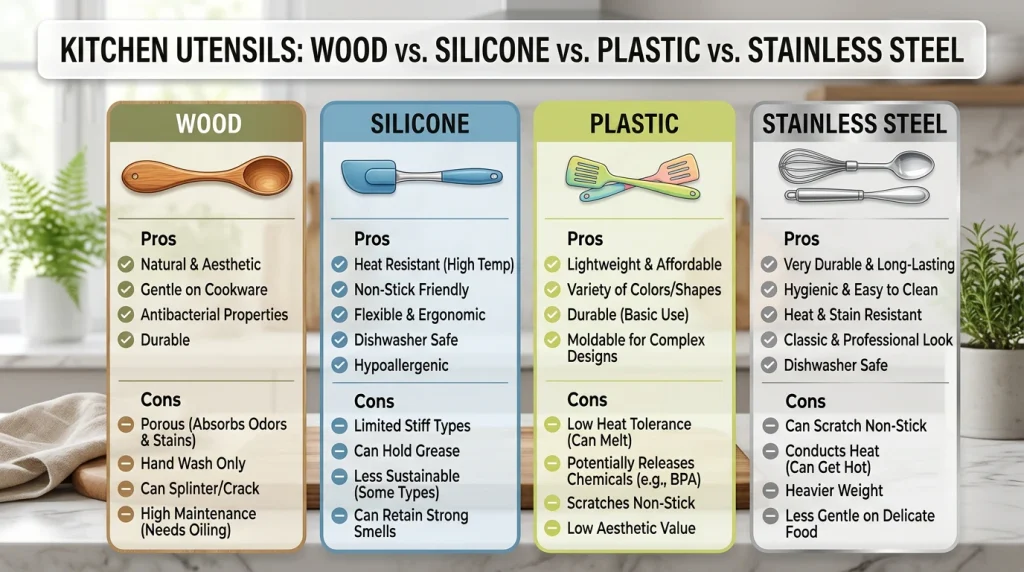
| Wood | Food-grade silicone | Plastic / nylon | Stainless steel | |
| Nonstick-safe | Yes | Yes | Yes, if heat-rated | Can scratch coatings |
| Heat | Does not melt; can scorch on a burner | Often rated to roughly 425-450 °F; quality varies | Can soften or warp near hot pans | Very heat-tolerant |
| Dishwasher | Usually hand wash | Generally dishwasher-friendly | Check label; heat can damage | Typically yes; check label |
| Plastic-shedding concern | None from the wood itself | Silicone-coated utensils were counted among plastics in the Plymouth study; not assessed separately in the sources I reviewed | Studies show release rises with heat and wear | Stainless items in that study did not release microplastics |
| Main weakness | Upkeep, cracking, mold if damp | Cheap sets may have plastic cores or joints that trap moisture | Melting and wear | Scratches nonstick; rigid |
Silicone is easier to wash and tolerates more heat. Wood is simpler in material terms and suits gentle stirring. For nonstick cookware, either works; for searing in stainless steel, stainless or heat-rated silicone is the safer choice. If you are comparing wooden kitchenware against plastic kitchenware specifically, the main difference is heat tolerance and wear: plastic can warp or shed with heat and age, while wood changes with moisture.
Which Wood Is Best for Kitchen Utensils?
The FDA Food Code points to hard maple or an equivalently hard, close-grained wood for professional food-contact items. Consumer guides commonly recommend maple, beech, cherry, walnut and olive wood. Softer, open-grained woods are more likely to dent and wear into grooves, which is general reasoning rather than a tested finding.
Be cautious about “antimicrobial wood” marketing. The Ak and Cliver work found similar behavior across the species tested, so choose wood for hardness, grain and finish, not for a claim you cannot verify. Bamboo is technically a grass; USDA notes that bamboo cutting boards are harder and less porous than hardwoods, though bamboo items are usually made with adhesives, so check the maker’s food-safety information. For finishes, food-grade mineral oil or beeswax is the usual advice.
How to Care for Wooden Kitchenware
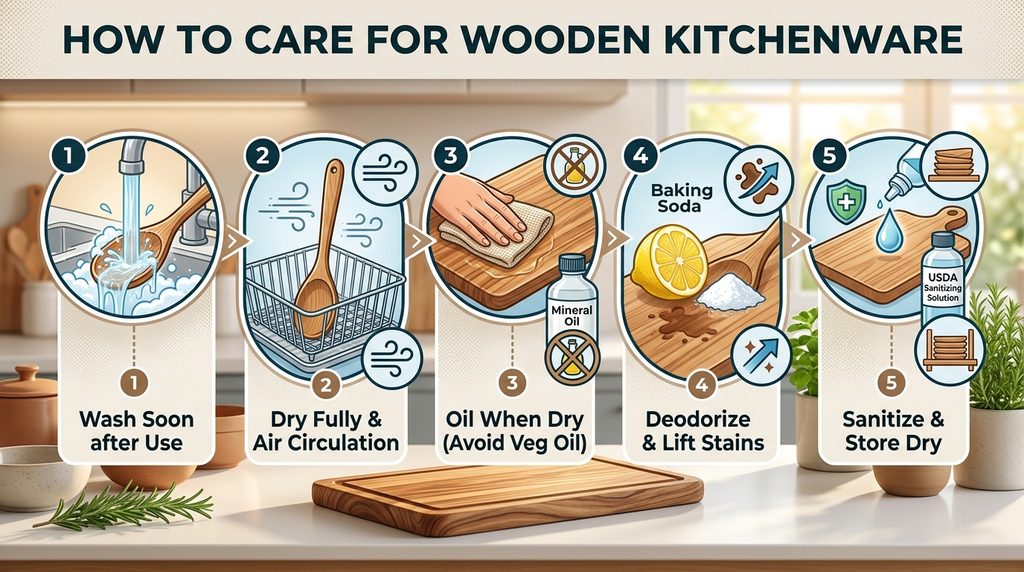
- Wash soon after use. Use hot water and mild dish soap. Do not leave wood soaking.
- Dry fully. Wipe off water, then stand the item upright or on a rack so air reaches all sides.
- Oil when it looks dry or dull. Care guides suggest roughly monthly or every few weeks, using food-grade mineral oil. Avoid olive or vegetable oil, which can turn rancid.
- Deodorize and lift stains gently. Baking soda or lemon work for odors. For a deep clean, some guides suggest a short hydrogen peroxide soak, followed by re-oiling because peroxide can dry the wood.
- Sanitize boards when needed. Use USDA’s bleach solution (1 tablespoon unscented liquid chlorine bleach per gallon of water), rinse, and air-dry.
- Store dry and ventilated, not in a closed, damp drawer.
When to Replace Wooden Utensils
Replace a wooden utensil if it shows any of the following:
- Deep cracks or splinters
- Black spots, fuzzy patches or soft areas
- A musty smell that returns after cleaning
- Grooves or rough areas you cannot clean
- A finish that is flaking or unknown
Is Wooden Kitchenware Right for You?
Wood is likely a good fit if you:
- cook mostly on nonstick, enameled or ceramic cookware
- like natural materials and tools that last
- are happy to hand-wash and dry promptly
Consider other materials if you:
- want everything dishwasher-safe
- sear at high heat or cook near open flames often
- store tools damp or rarely inspect them
- run a professional kitchen subject to Food Code rules
FAQs
What are the pros and cons of wooden cooking utensils?
The main pros are that they are gentle on nonstick and enameled cookware, do not melt, and are not plastic. The main cons are that they need hand washing and drying, can crack, stain, absorb odors or grow mold, and should be replaced once they are damaged.
What are the advantages and disadvantages of wood as a kitchen material?
Wood is a renewable material that is gentle on cookware and can last for years with care. It is also porous, so it reacts to moisture and heat, and it needs more upkeep than silicone or stainless steel.
Are wooden utensils good for health?
Wooden utensils are generally considered safe for food contact when they are made from suitable hard wood, finished with food-safe products, kept clean and dry, and replaced when damaged. They are not automatically healthier than other materials: the lab research on wood and bacteria concerns cutting boards, and USDA still notes that nonporous surfaces are easier to clean.
What are the disadvantages of wooden cutlery?
Wooden cutlery shares the same weak points as other wooden kitchenware: it can crack or splinter, absorb stains and odors, and needs to be dried thoroughly to avoid mold. Single-use wooden cutlery avoids the upkeep but is thrown away after use.
Are wooden utensils dishwasher safe?
Usually not. Most care guides say heat and prolonged moisture can crack or warp wood, so hand washing is the safer habit. USDA notes that solid wood cutting boards can go in a dishwasher while laminated boards may split, so check the maker’s instructions for each item.
Are wooden utensils better than silicone?
It depends on the job. Wood does not melt and suits gentle stirring, while food-grade silicone tolerates more heat, is more flexible and is easier to put in the dishwasher. Both are commonly recommended for nonstick cookware.
The Bottom Line
Wooden kitchenware earns its place for people who cook on coated cookware and are willing to give it a little care. Its weaknesses, cracking, stains, odors and mold, come mostly from moisture, so washing promptly and drying fully handles most of them. If you want tools you can put straight in the dishwasher or use at very high heat, silicone or stainless steel will suit you better. Whichever you choose, replace anything that is cracked, splintered, moldy or hard to clean.

[…] Wooden Kitchenware Advantages and Disadvantages: What to Know Before You Buy […]
[…] less often on sugar maple boards than on plastic ones. If you want the balanced picture, see our full list of advantages and disadvantages of wooden […]
[…] whether wood is right for you at all, read the [benefits of wooden kitchen utensils] and the [wooden kitchenware advantages and disadvantages] side by […]
[…] Cheap pieces may also hide an unknown finish or a poorly dried core. For the full list, see our article on the advantages and disadvantages of wooden kitchenware. […]
[…] mix. Our piece on the benefits of wooden kitchen utensils explains why wood stays popular, while the advantages and disadvantages of wooden kitchenware covers the trade-offs in more […]
[…] to clean and can end up in your food. We cover the trade-offs in more detail in our article on the advantages and disadvantages of wooden kitchenware, but these three cause most of the […]
[…] benefits of wooden kitchen utensils in detail. Keep the downsides in mind too, and our breakdown of wooden kitchenware advantages and disadvantages is a fair place to check […]