Most common wooden kitchenware mistakes come down to water, heat and habit rather than the wood itself. Soaking a spoon overnight, running it through the dishwasher, or carrying on with a cracked ladle are the usual culprits, and each one is easy to fix once you know why it matters.
Wooden spoons, spatulas and boards earn their place in the kitchen, and our guide to the benefits of wooden kitchen utensils explains why. But wood is a natural material that reacts to moisture, heat and age. If you’re only getting started, the wooden kitchenware for beginners guide covers the basics first.
the biggest mistakes are soaking, using the dishwasher, putting utensils away damp, keeping cracked or fraying tools, buying poorly finished pieces, and leaving spoons sitting in hot pots. Fix those and most problems disappear.
Common Wooden Kitchenware Mistakes at a Glance
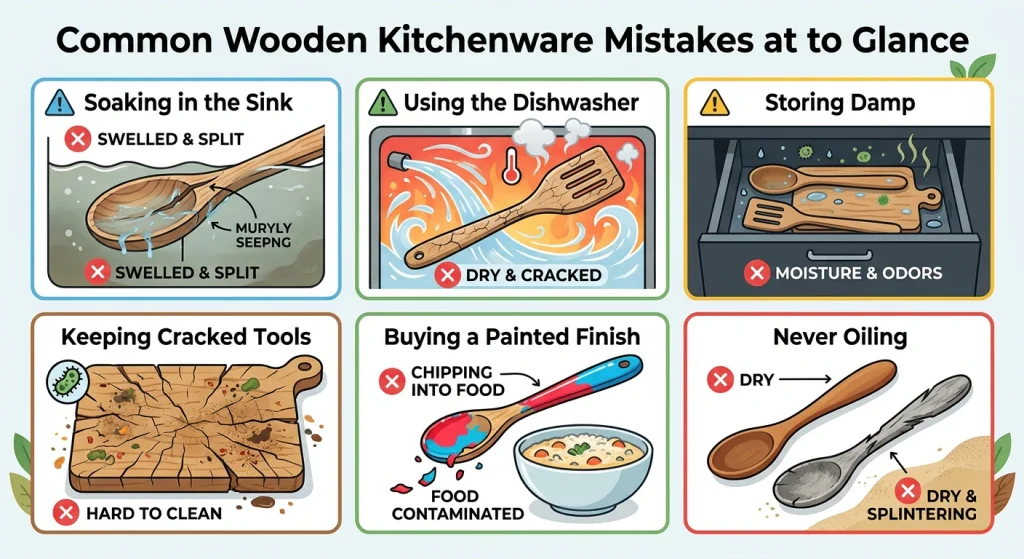
Before we go into detail, here’s the short version. Nearly every complaint about wooden spoons, spatulas and boards traces back to one of the habits below. Scan the table, then jump to the section you need.
| Mistake | Why it hurts | What to do instead |
| Soaking in the sink | Wood swells, then shrinks and splits | Wash promptly, rinse, dry |
| Using the dishwasher | Heat and long water contact dry and crack wood | Hand wash with mild soap |
| Storing damp | Moisture and odours linger | Pat dry, air dry fully |
| Keeping cracked tools | Cracks are hard to clean | Replace when cracks or fraying appear |
| Buying a glossy or painted finish | Coatings can chip | Look for food-safe finishes |
| Never oiling | Dry wood roughens and cracks | Condition with food-safe oil |
Common Wooden Kitchenware Mistakes in Washing and Drying
Cleaning is where most wooden tools get damaged, usually because we treat them like stainless steel. Wood soaks up water, swells, then shrinks as it dries, and that cycle is what eventually opens cracks. A few small changes to how you wash and dry will do more than any product you can buy.
Common Wooden Kitchenware Mistakes: Soaking Utensils and Using the Dishwasher
Leaving a spoon in the sink overnight feels harmless, but a long soak lets the wood take on water, and the swelling and shrinking afterwards is what causes splits. The dishwasher does the same thing faster, with heat and strong detergent added. Most care guides say to wash wooden utensils by hand in hot, soapy water soon after use.
Common Wooden Kitchenware Mistakes: Why USDA Dishwasher Advice Doesn’t Cover Spoons
You may have read that USDA guidance on cutting boards says solid wood boards can go in the dishwasher. That advice is about boards, and even there the agency warns that laminated boards may crack and split. Spoons and spatulas are thinner and take more punishment, so hand washing is the safer habit.
Common Wooden Kitchenware Mistakes: Putting Utensils Away Damp or Drying Them Too Fast
After washing, pat the utensil with a clean towel and let it air dry fully before it goes into a drawer or crock. Damp wood holds onto smells and stays wet where cracks form. Don’t try to speed things up in a warm oven or in direct sun, because sudden heat can crack the wood.
Common Wooden Kitchenware Mistakes About Bacteria and Hygiene
Hygiene is where people swing between two extremes: either wood is dirty and should be thrown out, or wood is somehow magically antibacterial and needs no care. Neither is right. The evidence is more nuanced, and the practical advice is simpler than the arguments around it.
Common Wooden Kitchenware Mistakes: Assuming Wood Is Automatically Unhygienic
Plenty of people swapped wood for plastic years ago because wood is porous. Research has complicated that story, and a 2025 study in the Journal of Food Protection found bacteria were detected less often on sugar maple boards than on plastic ones. If you want the balanced picture, see our full list of advantages and disadvantages of wooden kitchenware.
Common Wooden Kitchenware Mistakes: What the Bacteria Research Does and Doesn’t Prove
Be careful with big claims in either direction. The studies I found tested cutting boards, not cooking spoons, so they can’t promise that every spoon is safe. University of Arizona Extension also notes that nonporous surfaces can be easier to clean. USDA says wood or a nonporous board is fine for raw meat, as long as you clean it properly.
Common Wooden Kitchenware Mistakes: Ignoring Cracks, Fraying and Deep Stains
A crack is the clearest sign a wooden tool has reached the end of its life. Cracks and frayed edges can hold food and moisture, and they’re hard to clean properly. NC State food safety specialist Dr. Benjamin Chapman suggests replacing a spoon once you see visible cracks or fraying. He also avoids fixed “replace every year” rules, since wear depends on how much you use the tool.
Common Wooden Kitchenware Mistakes While You Cook
Cooking habits matter as much as cleaning habits. Wood is gentle on pans and doesn’t get dangerously hot, which is why people love it. But it still has limits, and a few everyday shortcuts will wear a spoon out faster than you’d expect.
Common Wooden Kitchenware Mistakes: Leaving Spoons in Hot Pots and Scraping Pans
Resting a spoon in a simmering pot soaks it in steam and heat for a long stretch, which dries and weakens the surface over time. Using the spoon edge to scrape burnt food off a pan chews up the edge and starts fraying. Lift the spoon out between stirs, and use a proper scraper for stuck-on bits.
Common Wooden Kitchenware Mistakes: Using One Spoon for Raw and Cooked Food
It’s easy to taste with the same spoon you used to stir raw chicken or lift raw meat. That moves bacteria from raw food to food that won’t be cooked again. Keep one spoon for raw prep and another for finished dishes, or wash the spoon thoroughly in between.
Common Wooden Kitchenware Mistakes: What to Do When a Spoon Touches Raw Meat
Wash the spoon straight away in hot, soapy water before it touches anything cooked or ready to eat. If you handle raw meat often, consider keeping a stainless steel or plastic tool for that job, because those materials are simpler to sanitize. Keep wood for stirring, mixing and serving, where it works best.
Common Wooden Kitchenware Mistakes When Buying
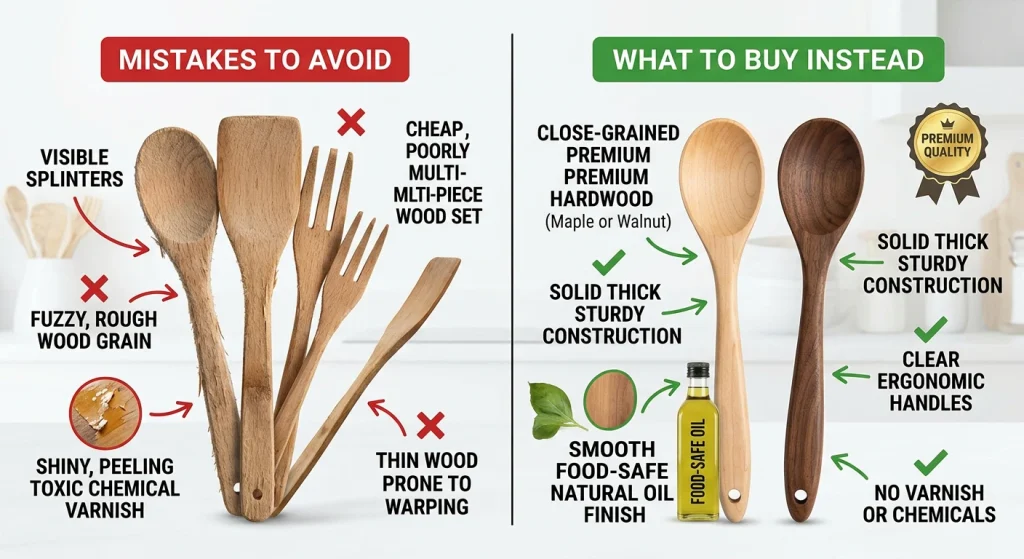
Plenty of problems start in the shop, before you’ve cooked a thing. A set that looks lovely on a shelf can turn out to be thin, rough or coated in something you wouldn’t want near food. Our guide on how to choose wooden kitchenware goes deeper, but these are the buying slips I’d watch for first.
Common Wooden Kitchenware Mistakes: Choosing a Pretty Finish Over a Food-Safe One
A glossy shine or a bright painted handle looks appealing, but the finish matters more than the colour. Utensils that touch food or go in your mouth need a finish that is safe for food contact. Plain, oiled wood is usually the lowest-risk choice if you’re unsure.
Common Wooden Kitchenware Mistakes: How to Spot a Finish You Shouldn’t Eat From
Check the label or product listing for wording such as “food-safe” or “food grade”, and ask the seller if it’s missing. The USDA Forest Products Laboratory advises that any finish on utensils used with food should be food safe. Film coatings like varnish or lacquer can chip over time, so be wary of anything thick, shiny or painted.
Common Wooden Kitchenware Mistakes: Picking Any Wood Without Checking the Species
Not every wood suits the kitchen, and sellers don’t always say what they’ve used. Dense, tight-grained hardwoods are generally the usual choice for spoons and boards because they hold up better to daily use. Our guide to the best wood for kitchen utensils compares the common options so you can pick with confidence.
Common Wooden Kitchenware Mistakes With Oiling and Storage
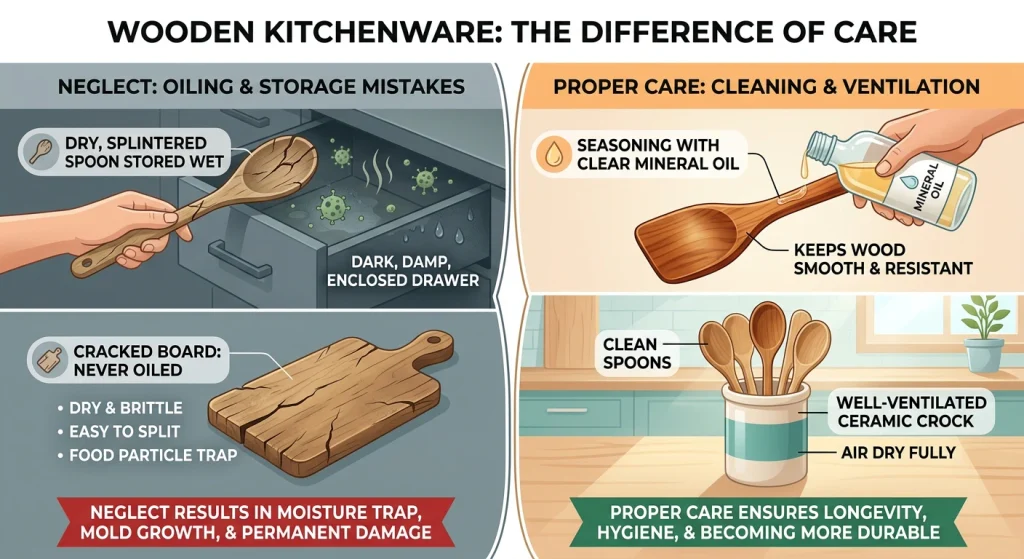
Even well-chosen utensils will crack if they’re left bone-dry or stored badly. Care guides agree that a light coat of oil and a dry spot to live in are what keep wood in good shape for years. Both are easy habits once you’ve done them a couple of times.
Common Wooden Kitchenware Mistakes: Oiling Too Rarely, Too Heavily or With the Wrong Oil
Wood that looks pale, feels rough or has started to fuzz is asking for oil. Many care guides suggest food-grade mineral oil or a beeswax blend, applied when the wood is clean and fully dry, then the excess wiped off. Cooking oils can turn rancid, and a heavy, greasy coat just sits on the surface. Aim for a thin, even layer rather than a soaking.
Common Wooden Kitchenware Mistakes: Storing Utensils Where Heat and Moisture Collect
A crock beside the hob is handy, but constant heat and steam are hard on wood. The same goes for a spot under the sink or a closed container where damp utensils can sweat. Store them somewhere dry with some airflow, and keep them away from direct heat sources.
Common Wooden Kitchenware Mistakes: Your Questions Answered
These are the questions that come up most often alongside common wooden kitchenware mistakes. The answers are short on purpose, so you can find what you need quickly and get back to cooking with your wooden tools.
Common Wooden Kitchenware Mistakes FAQ: Do Bacteria Get Trapped in Wooden Spoons?
Wood is porous, so liquid and food particles can get into the surface, especially where the wood is cracked or worn. Research on boards suggests bacteria are often less recoverable from wood than from plastic, but that isn’t a licence to skip washing. Clean after each use, dry fully, and retire any spoon with cracks.
Common Wooden Kitchenware Mistakes FAQ: Are Wooden Kitchen Utensils Safe and Hygienic?
They can be, when they’re well made, well finished and well cared for. Food-safety agencies focus more on how you clean and replace tools than on whether they’re wooden. Wash by hand, dry properly, keep raw and cooked food separate, and replace tools that crack or fray.
Common Wooden Kitchenware Mistakes FAQ: Why Are Cooking Utensil Handles Made of Wood, and Why Not Everything?
Wood doesn’t conduct heat well, so a wooden handle stays much cooler than a metal one while a pan is on the heat. That same material can’t take dishwashers, long soaks or constant scraping. It’s why many kitchens mix wood for stirring with steel or other materials for tougher jobs.
Common Wooden Kitchenware Mistakes FAQ: What Is the Difference Between Walnut and Olive Wood Utensils?
Both are hardwoods that people use for spoons and boards, and the differences are mostly in look, price and availability. Olive wood is known for swirling, high-contrast grain, while walnut is generally darker and more even. I couldn’t find a reliable side-by-side durability test, so compare the species in the guide linked earlier before you choose.
Common Wooden Kitchenware Mistakes FAQ: Which Material Is Best for Kitchenware?
There isn’t one winner, because each material suits different jobs. Wood is gentle on nonstick and coated pans, and it stays comfortable to hold. Stainless steel and some plastics are easier to sanitize and tougher to wear out. Many cooks keep wood for stirring and use other materials for raw meat and heavy scraping.
Common Wooden Kitchenware Mistakes: A Simple Routine to Keep
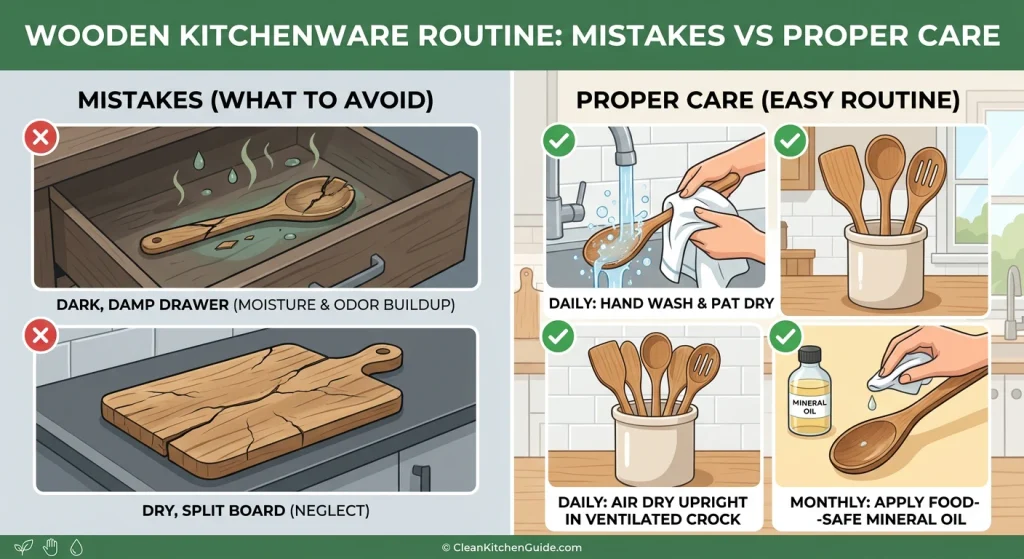
If all of this feels like a lot, it boils down to a short routine you can do without thinking. Do it for a few weeks and it becomes automatic. You’ll also notice your wooden tools lasting noticeably longer than they used to.
- Wash by hand soon after use, with hot, soapy water.
- Pat dry, then air dry completely before storing.
- Check for cracks, fraying and stubborn odours, and replace damaged tools.
- Oil lightly when the wood looks dry or rough.
- Keep raw and cooked food tools separate.
Buying something new? Run through what to check before you buy so you start with tools that are made to last.

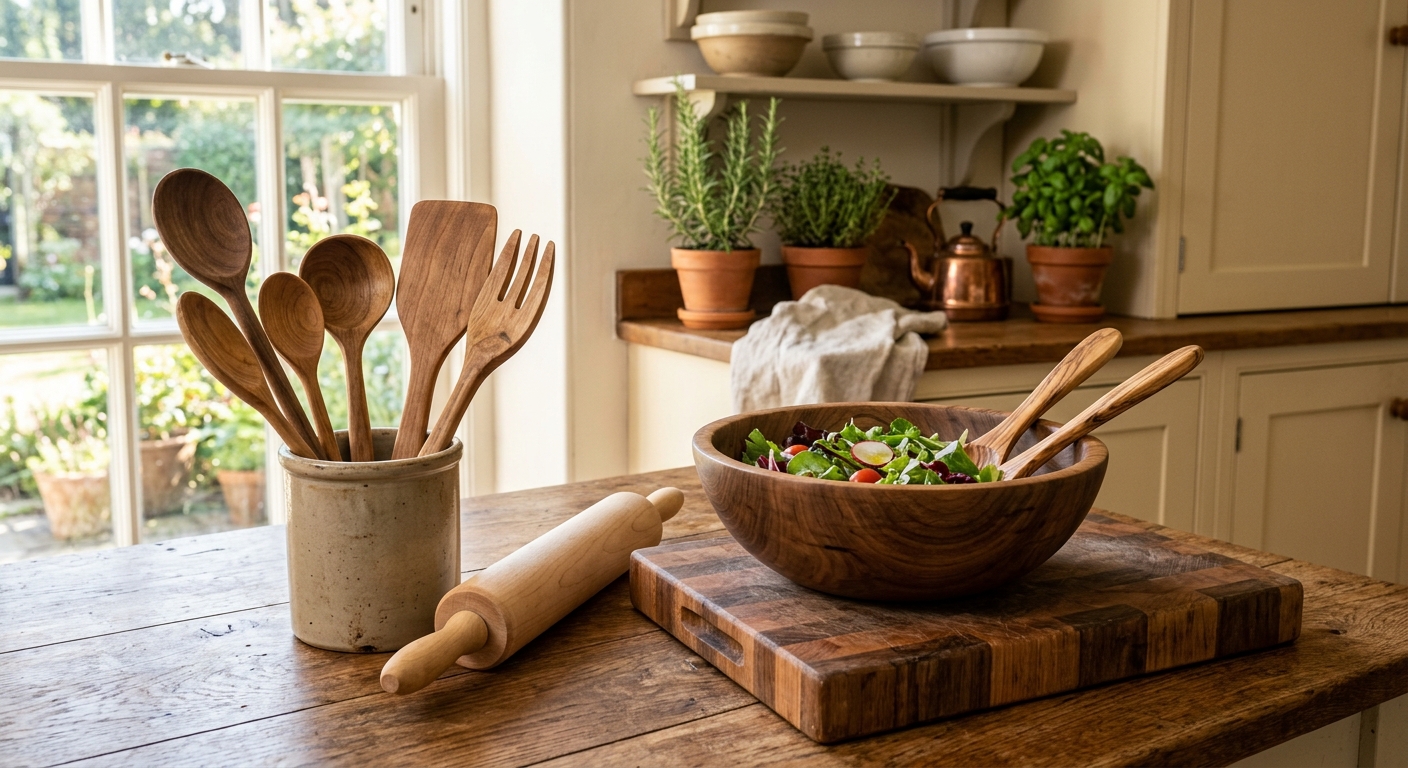
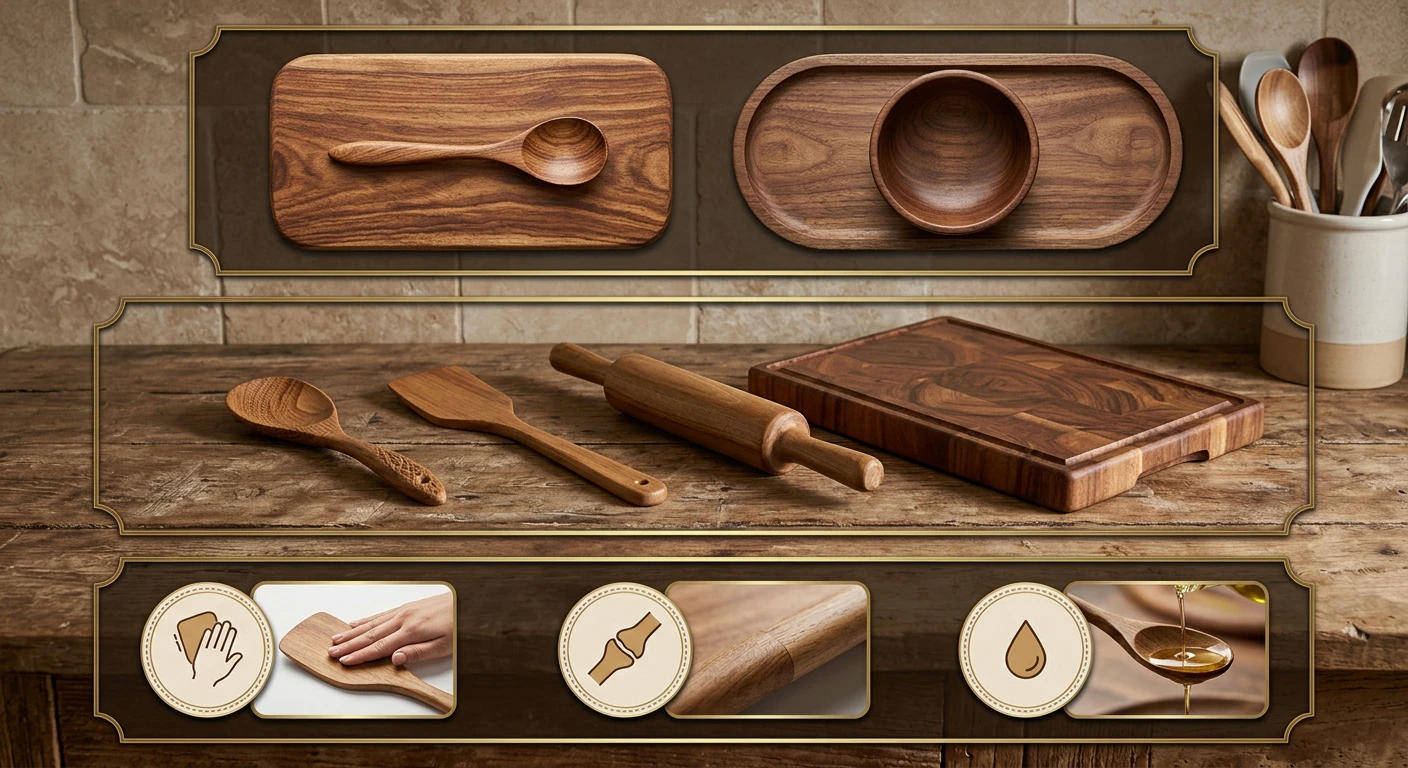
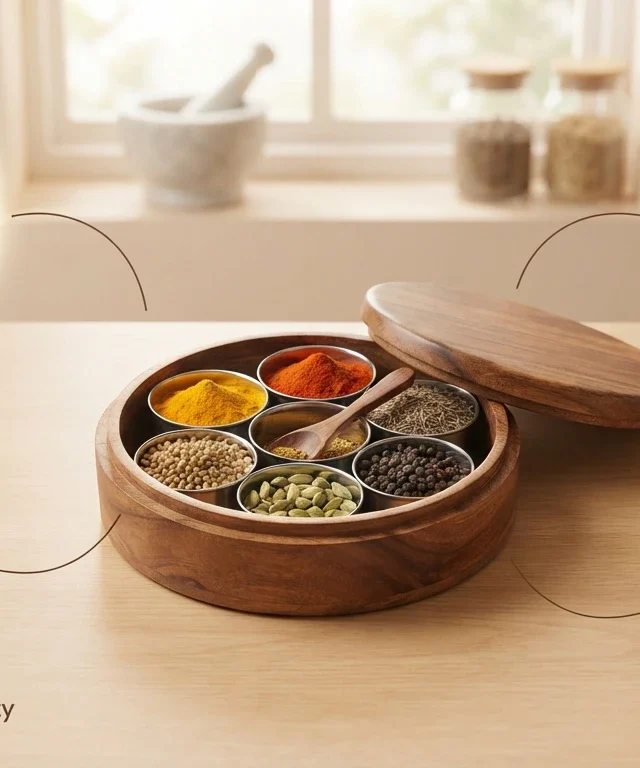
[…] the colouring is made of. If nobody can answer, choose a plain oiled piece instead. Our guide to common wooden kitchenware mistakes covers other things people […]
[…] Care sounds like a lot, but it’s mostly a few habits. This is where the wooden cooking utensils maintenance tips for beginners start, and the same habits apply to every piece you own. If you want a printable-style summary, think of it as a complete wooden kitchen utensils care guide for home cooks: wash, dry, oil, store. Slipping up on these is behind most of the problems in our article on common wooden kitchenware mistakes. […]
[…] Wash by hand with warm soapy water soon after use, skip long soaks and stand the spoon upright to dry. Some cooks rub on a little food-safe oil now and then; it’s optional and no substitute for good drying. For more on avoidable slip-ups, see our list of common wooden kitchenware mistakes. […]
[…] Wash by hand with warm soapy water and dry the piece straight away. A Tufts nutrition expert notes that dishwashers may crack and split wood over time, so follow the maker’s instructions. Retire anything cracked or splintering. For the mistakes people make most often, see common wooden kitchenware mistakes. […]