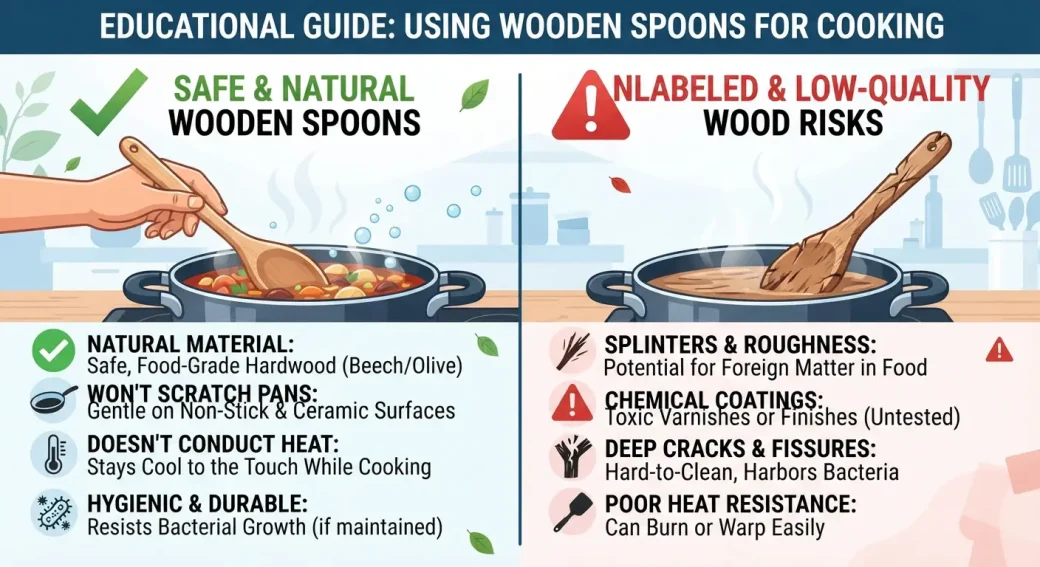
If you have ever looked at an old, stained wooden spoon and wondered, “are wooden spoons safe for cooking?”, you are not being fussy. It is a fair question. The short answer is yes. A clean, dry, undamaged spoon made from food-safe hardwood is a safe tool for most home cooking. The longer answer depends on how you wash it, how you dry it, and when you decide it has done enough service. This guide covers what food-safety research says, where the real risks hide, and the habits that keep a wooden spoon safe for years.
Yes, with care. Wash it after every use, dry it fully, keep a separate spoon for raw meat, and retire any spoon that cracks, smells off, or warps.
Are Wooden Spoons Safe for Cooking?
For everyday kitchens, wooden spoons have a good track record. Ben Chapman, a food safety researcher at North Carolina State University, has said he knows of no documented cases of foodborne illness traced back to wooden utensils or cutting boards. That does not make wood magical. It means the risks are manageable, and they come mostly from habits rather than from the material itself.
Think of a wooden spoon the way you think of a good knife or a cast-iron pan. It works beautifully when you look after it, and it lets you down when you don’t.
What “food safe” actually means for a spoon
A spoon is food safe when it adds nothing harmful to your meal. That covers three things: no harmful chemicals from finishes or glues, no splinters or flaking bits, and a surface you can get properly clean. Solid hardwood with no questionable coating passes the first two, and it passes the third when you wash and dry it the right way.
That last point is where most of the advice in this article comes from, so keep it in mind as you read.
Are wooden spoons safe for everyday cooking?
Yes. Stirring sauces, mixing batter, scraping a pan, and serving dinner are all normal jobs for a wooden spoon. So are wooden spoons safe for cooking food of almost any kind? Generally, yes. If you are new to wooden tools, our guide to wooden kitchenware for beginners explains the basics, and the safety rules are the same whether you are new or experienced: clean it, dry it, and check it now and then.
What the Research Says About the Safety of Wooden Cooking Spoons
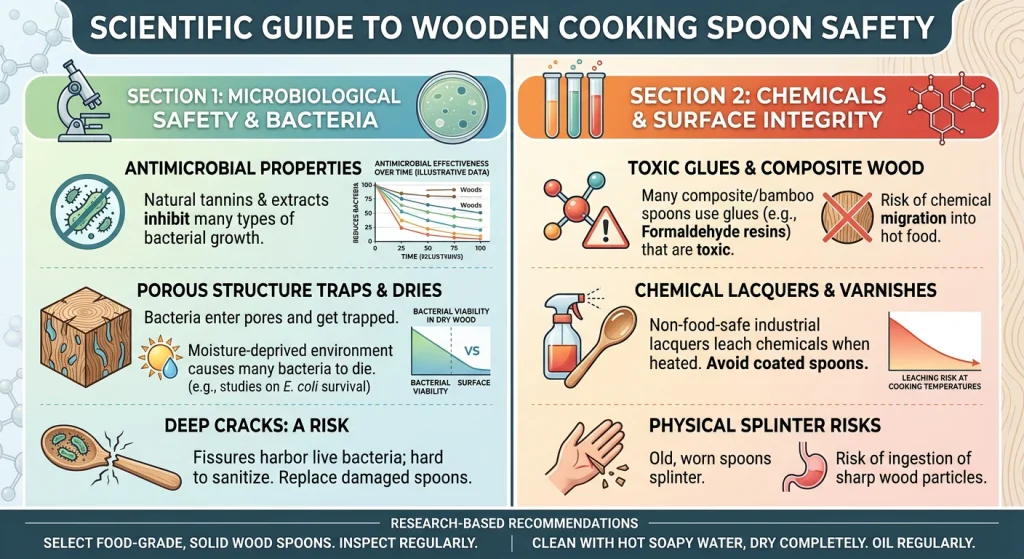
Most of the lab work on wood and bacteria was done on cutting boards, not spoons. That matters, and it is worth saying plainly. Still, a spoon and a board are both wooden food-contact surfaces, so those studies are the best evidence we have to work with. Here is what the studies and food-safety experts say, along with the limits.
Can wooden spoons harbor bacteria?
They can, the same way any kitchen tool can. Wood is porous, so liquid and food particles soak in. But two well-known 1994 studies from the University of Wisconsin, published in the Journal of Food Protection, found that fewer bacteria were generally recovered from wooden blocks than from plastic ones. Washing with hot water and detergent removed the bacteria from wood in those tests, whatever the wood type and whether the wood was new or used.
The same researchers found that when a very large dose of bacteria was applied, some could still be recovered from the wood after 12 hours in warm, humid conditions, although the numbers dropped by at least 98 percent. So wood is not a bacteria trap, and it is not a sterile surface either. Washing still matters. In practical terms, are wooden spoons hygienic for cooking? They can be, as long as the wash-and-dry routine later in this guide becomes a habit.
Are wooden spoons antibacterial naturally?
To a degree. Chapman explains that wood draws moisture and surface bacteria inward, which leaves a poor place for them to grow, and that trees evolved natural defenses against microbes. The catch is that this only works while the wood can dry out. A spoon left damp in a drawer or a drainer does not get the same benefit, so “naturally antibacterial” is a bonus, not a replacement for washing.
Can wooden spoons cause food contamination?
Yes, mainly through cross-contamination. The USDA’s Food Safety and Inspection Service describes cross-contamination as bacteria moving to food from other foods, cutting boards, and utensils that were not handled properly. A wooden spoon that stirs raw chicken and then serves the finished dish is the classic example. The spoon was not the problem; the habit was.
Wooden spoon food safety concerns and wooden cooking utensils health risks
Three risks come up again and again. The first is cross-contamination from raw meat, poultry, or seafood. The second is moisture that stays trapped in a spoon that never dried properly. The third is damage: cracks, deep scratches, and splinters hold residue that is hard to clean and can end up in your food. We cover the trade-offs in more detail in our article on the advantages and disadvantages of wooden kitchenware, but these three cause most of the trouble.
Are Wooden Spoons Safe for Cooking Meat, Rice, Vegetables and Soup?
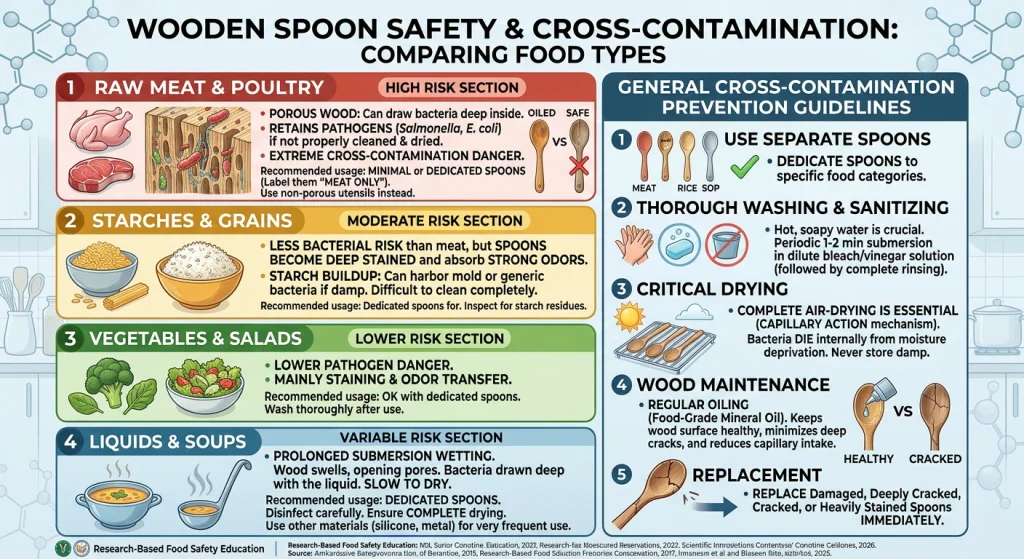
The material does not change much from dish to dish. What changes is the contamination risk and how the spoon behaves in the pot. Here is how it works for the most common jobs.
Are wooden spoons safe for cooking meat?
They are, with one rule: a spoon that has touched raw meat should not touch anything ready to eat. One food-safety write-up that cites USDA advice suggests keeping two sets of utensils, one for stirring raw meat in the pan and a clean one for moving the cooked meat to a serving dish. Wash the first spoon in hot, soapy water straight away, and don’t put it back in the utensil jar.
If you cook meat often, many cooks keep one spoon just for raw proteins. That is a habit, not a regulation, but it takes the guesswork out of a busy dinner.
Are wooden spoons safe for cooking rice and vegetables?
Yes. For rice, a wooden spoon or paddle is fine for fluffing and serving once it is clean and dry. Are wooden spoons safe for cooking vegetable dishes too? Yes, and the same wash-and-dry routine applies. The one thing to watch is switching: if you stir raw meat and then the vegetables with the same spoon, you have created a cross-contamination problem that has nothing to do with the vegetables.
Are wooden spoons safe for stirring soup?
Yes, and soup is where many people use their spoon most. A long wooden handle stays comfortable near a simmering pot because wood does not conduct heat the way metal does. After a soup or stew, wash the spoon promptly, since broth and fat soak in more than you would expect, and let it dry upright where air can reach it.
Are wooden spoons safe for frying food?
Yes for stirring, turning, and scraping. What to avoid is leaving the spoon resting on the edge of a hot pan, where it can scorch or char. A burnt patch is no longer a smooth surface, and it can leave a taste in your food. For hard, high-heat jobs like searing or aggressive deglazing, one cooking writer calls a wooden spoon simply the wrong tool, and that is fair advice.
The Benefits of Using Wooden Spoons in Cooking
Safety is only part of why cooks keep reaching for wood. A wooden spoon is gentle on cookware, comfortable to hold, and does not get hot in your hand. It is sturdy enough to scrape the bottom of a pot and soft enough not to damage the surface. If you want the full picture, we list them in our article on the benefits of wooden kitchen utensils.
Heat, Acid and Cookware: Where Wooden Spoons Fit
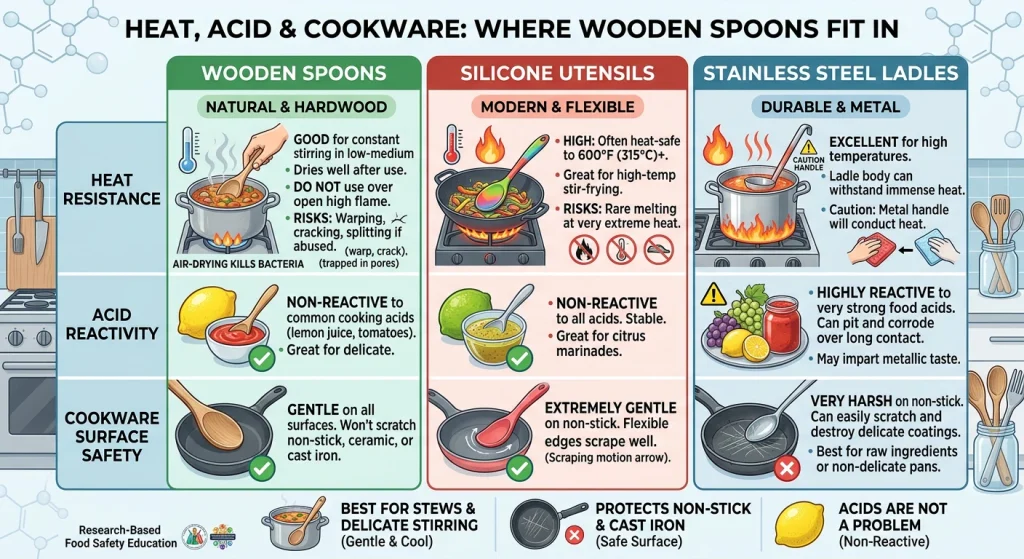
Heat, acidic ingredients, and different pan surfaces are the three situations people ask about most. Wood handles all of them well, with a few small caveats that are easy to work around.
Are wooden spoons safe for hot food?
Yes. Wood does not melt, and it does not turn painfully hot in your hand the way a metal spoon can. The risks with heat are about the spoon, not the food: scorching when it touches a hot surface, and slow drying-out and cracking after many cycles of heat and moisture.
Are wooden spoons safe to use in boiling water?
Stirring a pot of boiling pasta or blanching vegetables is fine. What hurts wood is long soaking, because repeated wet-and-dry cycles can swell and crack it. Give the spoon a quick wash afterward and dry it, rather than leaving it sitting in water.
Are wooden spoons toxic when heated?
We could not find an authoritative source showing that plain, unfinished food-safe hardwood releases harmful substances during normal cooking. The realistic concern is a coating, dye, or glue that was never meant for food contact, which is why the finish matters more than the heat. If a spoon smells strange when it warms up, stop using it.
Wooden spoons and your cookware
Wood is one of the friendliest materials for most pots and pans. It is firm enough to do real work and soft enough to leave surfaces alone. Two questions come up most often, and both have simple answers.
Are wooden spoons safe for cooking acidic foods?
Yes. Tomato sauce, lemon-based dishes, and vinegar-heavy recipes are fine with wood. One cookware guide points out that metal utensils with acidic foods can leave a metallic aftertaste, and wood avoids that. The downside is cosmetic: acidic and strongly colored foods can stain the spoon or leave an aroma behind.
Are wooden spoons safe for nonstick pans and stainless steel cookware?
Yes to both. Wooden utensils safety for nonstick cookware is one of their biggest selling points. Cookware maker Made In notes that wood is firm enough to scrape up browned bits yet soft enough not to scratch a delicate coating, though it needs more upkeep than silicone or nylon. Are wooden spoons safe for stainless steel cookware? Yes. A wooden spoon will not scratch or react with the pan, so it works well for stirring and scraping the base.
Chemicals, Finishes and the Best Food-Safe Wood
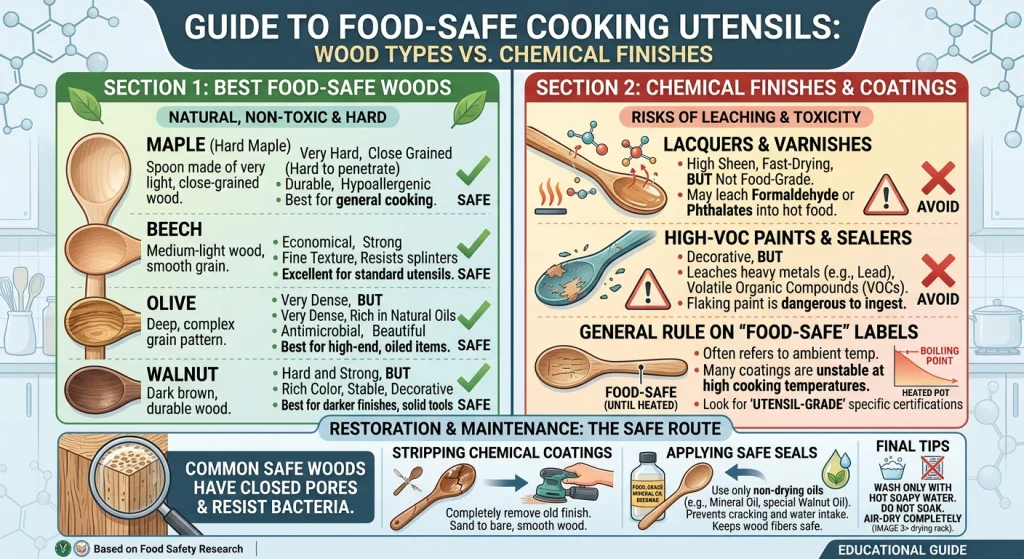
Most of the real “chemical” questions about wooden spoons are really questions about what has been added to the wood. The wood itself is the simple part. Finishes, glues, and dyes are where it is worth slowing down.
Can wooden spoons release chemicals into food?
Plain hardwood is not a known source of harmful chemicals in cooking. Coatings are a different story. A wood-products manufacturer’s regulatory overview states that any coating on a food-contact wooden item must comply with food-contact material rules, and says European food-safety authorities support suitable hardwoods finished with food-safe coatings.
That is a company’s summary rather than the regulation itself, so treat it as a pointer, not the final word. In practice, skip painted, lacquered, or varnished spoons unless the seller states they are made for food contact. Price often reflects wood quality and finishing, which we break down in our guide to wooden kitchenware price factors in Pakistan, and a very cheap, glossy spoon with no information about its finish is worth a second look. If you are weighing options, our guide on how to choose wooden kitchenware walks through what to check.
Are unfinished wooden spoons safe for cooking?
Yes. Raw, unfinished hardwood is the most common form of wooden spoon, and it has no coating to worry about. Many people rub a little food-grade mineral oil into a spoon that looks dry or feels rough, mainly to slow cracking. Interestingly, a 2023 study on cutting boards reported that boards treated with linseed or mineral oil absorbed bacteria less readily over the first 24 hours, and its authors suggested skipping those oils.
That finding was about boards, not spoons, so the evidence is not settled. A sensible middle path is to oil only when the wood looks dry, use a light coat of food-grade oil, and let it dry fully.
What type of wood is safest for cooking spoons?
There is no official ranking. The Wisconsin cutting-board research tested nine hardwoods and reported broadly similar results across them, and the manufacturer overview above points to suitable hardwoods in general rather than a single winner. Maple is a commonly recommended choice. The best food-safe wood for kitchen utensils is a dense, tight-grained hardwood that is sold for kitchen use and has no unknown finish. We compare teak, beech, olive, acacia, and more in our guide to the best wood for kitchen utensils.
Wooden vs Plastic, Silicone and Metal Spoons
It helps to be honest here: we did not find a head-to-head safety study of cooking spoons made from different materials. The best evidence comes from cutting boards, so treat the comparisons below as practical guidance, not a scoreboard.
Wooden versus plastic cooking spoons safety
Are wooden spoons safer than plastic spoons for cooking? The cutting-board research does not show plastic to be safer. In the Wisconsin studies, plastic with heavy knife scarring was hard to clean by hand, and fewer bacteria were recovered from wood overall. For spoons, the practical differences are simpler. Some plastic spoons are not built for high heat, so check the maker’s temperature rating. Wood will not melt, but it needs drying and care.
Are wooden spoons safer than silicone utensils?
Neither is clearly “safer,” and we found no study that compares them directly. Silicone is smoother and generally easier to wipe clean, and many products are heat-rated, so check the label for the actual limit. Wood is porous but cleans up well when you dry it properly. If you hate the maintenance, silicone is easier. If you like the feel and the gentle touch on cookware, wood is a good fit. Using both is perfectly reasonable.
Are wooden spoons better than metal cooking utensils?
For nonstick cookware, yes, because metal can scratch the coating and shorten the life of the pan. Wood also stays cooler in your hand. Metal has its place for high-heat searing, flipping, and heavy-duty scraping. So think of it as the right tool for the right pan, not a contest.
How to Clean Wooden Spoons Safely
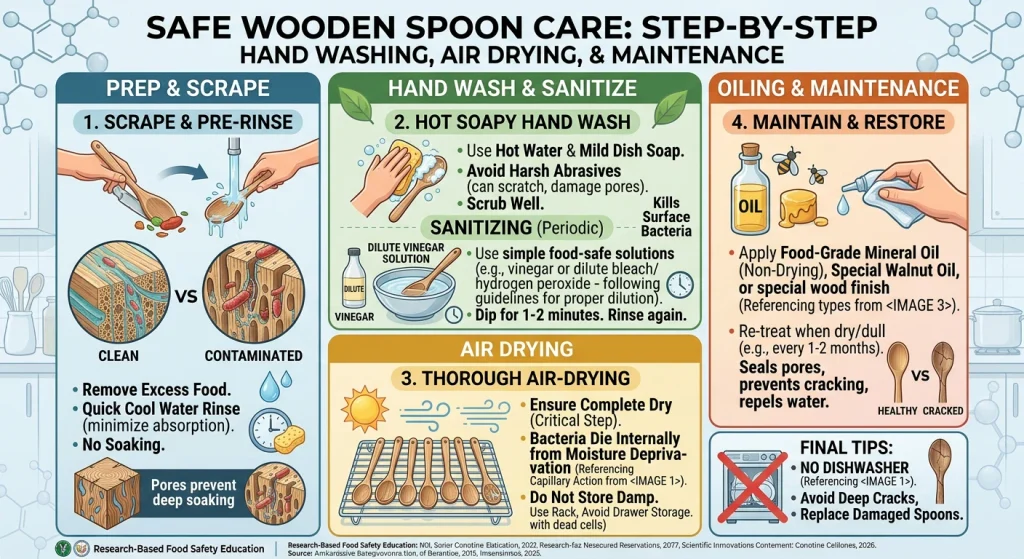
Cleaning is the single biggest factor in whether a wooden spoon stays safe. The routine is short, and it takes less effort than most people expect. You do not need special products, only hot water, a little soap, and the patience to let the wood dry properly before it goes back in the drawer.
Safe ways to clean wooden kitchen utensils
Hot water, a little dish soap, and a quick scrub are enough for everyday cleaning. Following the steps below also helps you avoid the mistakes we list in our article on common wooden kitchenware mistakes.
- Rinse the spoon soon after use so food does not dry onto it.
- Wash it by hand in hot, soapy water, using a soft brush for any grooves.
- Rinse with clean water and wipe off the excess.
- Stand it upright where air can reach it and let it dry completely before storing it. One microbiologist’s guidance says this normally takes at least 24 hours, depending on temperature and humidity.
- Keep it out of the dishwasher and don’t leave it soaking, since both can warp and crack the wood.
How to sanitize wooden spoons for cooking
Washing is usually enough. Sanitizing is a sensible extra step after raw meat, or if a spoon smells off. The USDA’s cutting board food-safety guidance sanitizes wooden boards with 1 tablespoon of unscented liquid chlorine bleach per gallon of water, left on for several minutes, then rinsed and air-dried.
That advice is written for cutting boards, so applying it to spoons is an extension, not an official spoon rule. One home-care guide also suggests hydrogen peroxide as an alternative. Rinse well, never mix bleach with other cleaners, and let the spoon dry fully afterward.
Wooden Spoon Hygiene and Maintenance
Good hygiene is mostly a matter of small, repeatable habits. None of them take long, and together they decide whether your spoon lasts two years or ten. Most of them cost nothing, and you can fit them into the washing-up you already do.
How to maintain wooden spoons for safe cooking
Store spoons upright in a dry, airy spot rather than in a closed drawer while they are still damp. Check them regularly for cracks, rough patches, or odors. Condition a dry-looking spoon with a light coat of food-grade mineral oil, and keep a dedicated spoon for raw meat. Our broader wooden cooking utensils guide covers the full care routine, including how to deal with stains and smells.
When to Replace a Wooden Spoon
Even a well-kept spoon eventually wears out. The USDA says the same about cutting boards: once they become excessively worn or develop hard-to-clean grooves, they should be replaced. Spoons follow the same logic.
How to tell if a wooden spoon is unsafe
Look for cracks, splinters, warping, discoloration, a rough surface that never feels smooth again, and a lingering odor that survives washing. Any of these suggest the spoon has absorbed more than it should and is harder to clean properly. If you see one, it is time to stop using it for food.
Are cracked wooden spoons safe to use?
Usually not. Cracks hold moisture and food particles in places a brush cannot reach, which is exactly where bacteria like to settle. A tiny hairline surface mark is different from a deep split. As a practical rule of thumb (ours, not an official standard), if you can catch a crack with your fingernail, replace the spoon.
How often should wooden cooking spoons be replaced?
There is no official lifespan that we could find, so condition matters more than age. One cookware brand’s co-founder suggests replacing wooden spoons about every five years as a cautious rule of thumb, but that is one expert’s preference, not a standard. If you are buying new ones, our wooden kitchenware buying guide for Pakistan and our look at the top wooden kitchen accessories brands in Pakistan can help you choose.
Wooden Spoon Safety FAQs
These are the quick answers to the questions people ask most often when they are deciding whether to keep, buy, or replace a wooden spoon, so you can skim straight to the one you need.
Are natural wood cooking utensils food safe?
Yes, when they are made from solid hardwood, have no unknown coating, and are kept clean and dry. Look for spoons that are sold for kitchen use and finished with nothing more than a little food-grade oil, and if you want to compare species side by side, see which woods work best for kitchen utensils.
Can I put wooden spoons in the dishwasher?
It is best not to. High heat and long wet cycles can warp and crack a wooden spoon, and cracks are exactly what you are trying to avoid. Hand washing takes a minute and protects the spoon.
Do I need to oil my wooden spoons?
Not on a fixed schedule. Oil a spoon only when it looks dry, dull, or feels rough, using a light coat of food-grade mineral oil. Wipe off any extra and let the spoon dry completely before you cook with it again.
The Bottom Line: Are Wooden Spoons Safe for Cooking?
Yes. Wooden spoons are safe for cooking when they are made from food-safe hardwood, washed by hand, dried fully, and replaced once they crack or smell. Keep raw-meat spoons separate, avoid unknown finishes, and don’t leave a spoon soaking or sitting on a hot pan edge. Do those few things and you can keep using the tool that has been in kitchens for centuries.

[…] sense after raw meat, or when a utensil has been sitting around. If you’ve ever wondered whether wood is hygienic enough for the stove, proper cleaning is a big part of the […]
[…] to skip cleaning. If you are curious whether wood is a good choice in the first place, there is a closer look at whether wood is a sensible material for cooking on the […]
[…] to do instead. If you are also unsure whether wood is a sensible choice for hot food, our notes on whether wood is a safe material for hot pots and pans cover that question in […]
[…] remove. If you ever wonder whether wood is still a good material for cooking, you can read up on whether wood is a safe cooking material before you […]