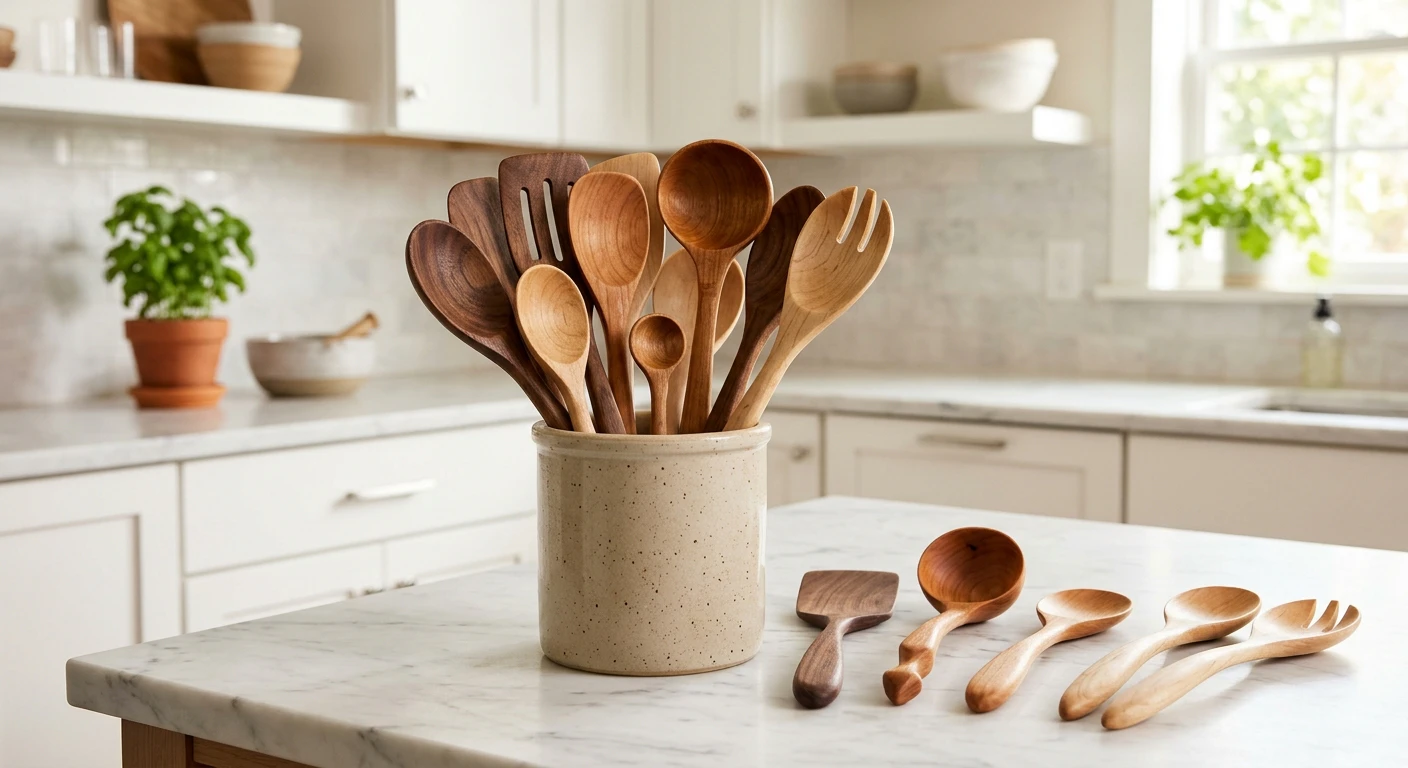
Yes, cooking with wooden kitchen utensils is generally safe, and they have real advantages. They are gentle on nonstick pans, they do not get hot in your hand, and they are not made of plastic.
The catch is care: wood is porous, so cracked, split or neglected utensils should be replaced, and wood should be washed by hand rather than run through the dishwasher.
One honest note before we start. Most of the hygiene research on wood was done on cutting boards, not spoons. Cutting boards and spoons are both wooden food-contact items, so the findings are relevant, but they are not a direct test of your spatula. We say so wherever it matters.
What counts as a wooden kitchen utensil?
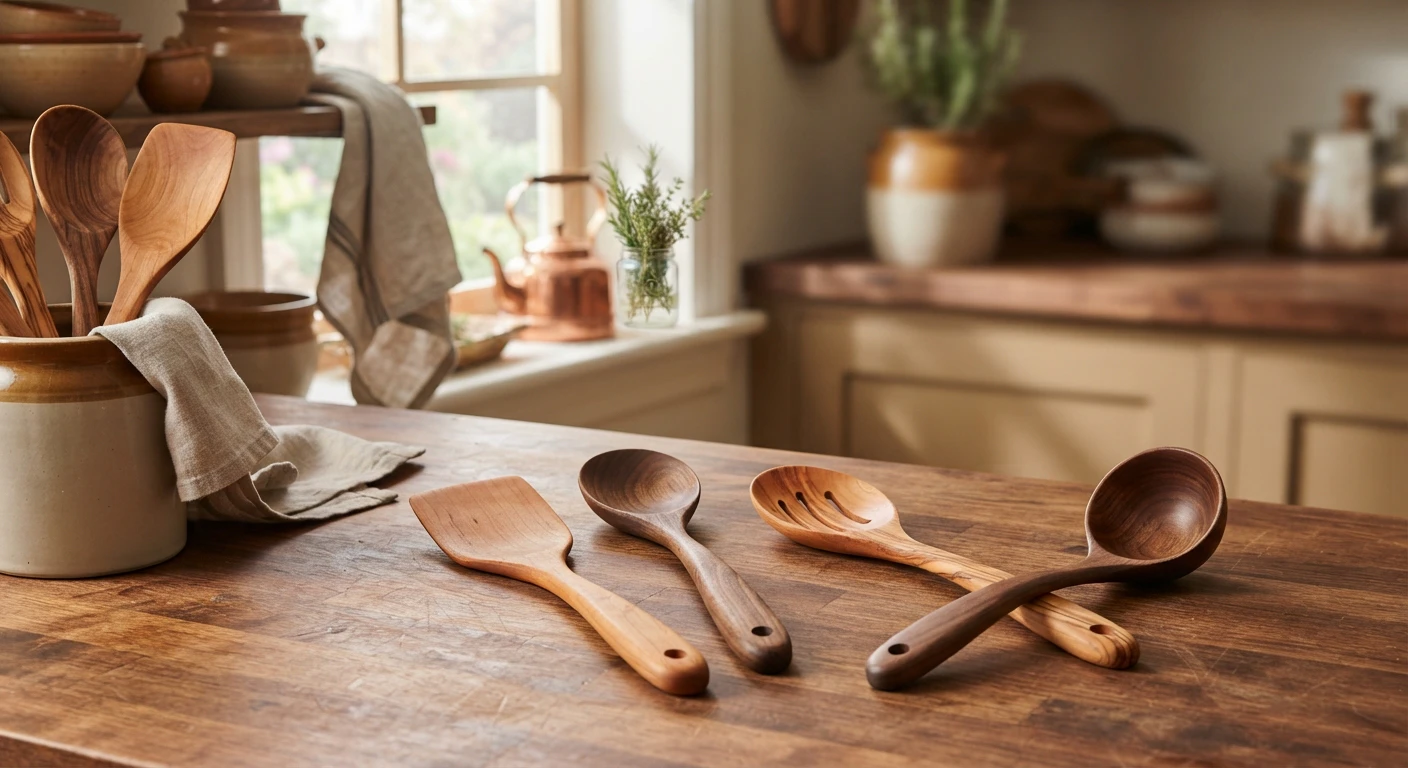
Wooden kitchen utensils are hand tools for stirring, turning, scraping, serving and mixing that are made from hardwood or, in some cases, bamboo. The common ones are:
- Spoons and slotted spoons
- Spatulas and turners
- Ladles
- Tongs
- Rolling pins
- Cooking chopsticks
They differ from wooden cutting boards, which are a related product with their own food-safety rules.
Benefits of wooden kitchen utensils
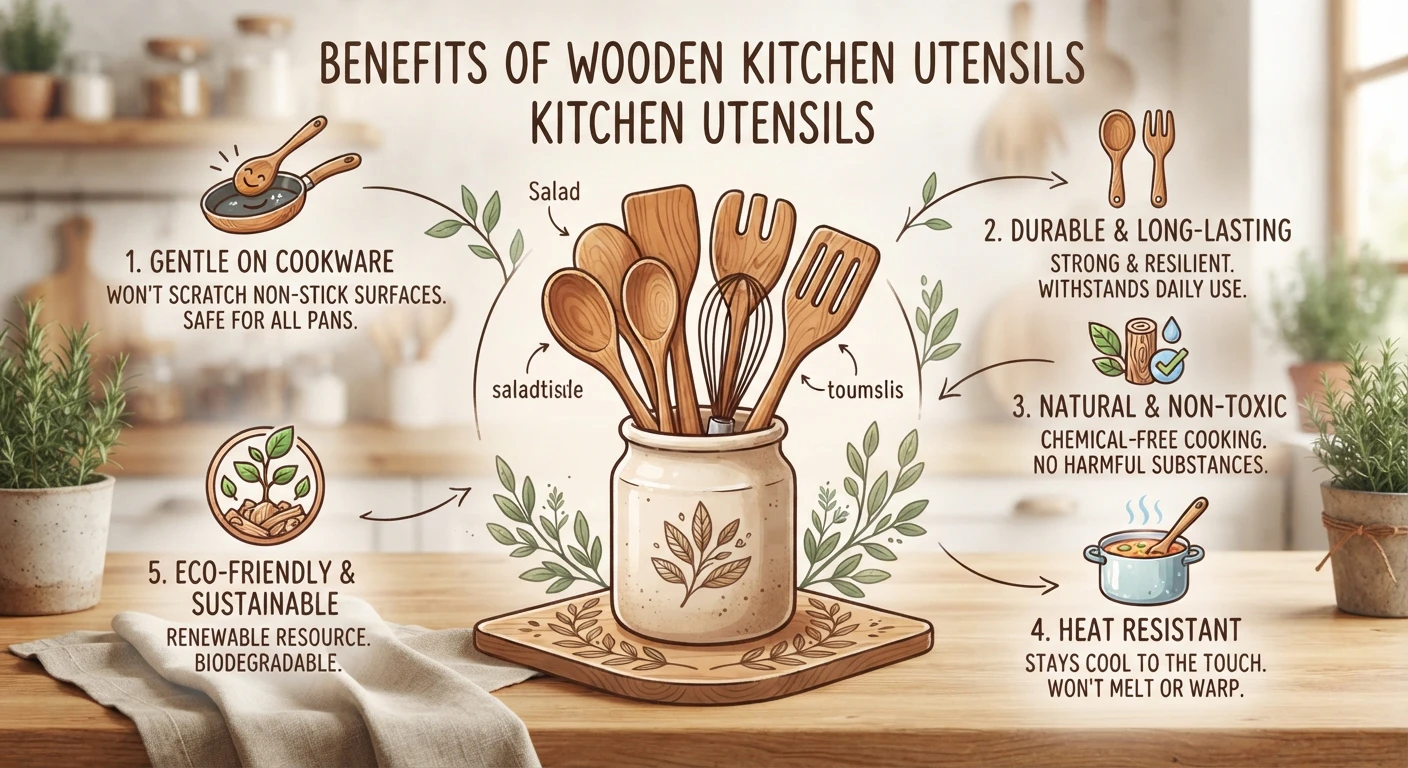
They are gentle on nonstick and coated cookware
This is the benefit most home cooks feel first. Consumer Reports advises against metal utensils on nonstick pans because metal can scrape the surface, and recommends silicone or wooden utensils instead. A cookware expert quoted by CNN Underscored likewise lists wooden tools alongside silicone and heat-resistant plastic for nonstick pans.
Two cautions apply. Even a wooden spoon can damage a nonstick pan if you use it too aggressively, so stir rather than scrape hard. And if a nonstick pan already has chips or scratches, Consumer Reports’ cookware tester says to throw it away, because the coating could flake into food. A wooden spoon cannot fix that.
They stay comfortable to hold in hot pots
Wood is a poor conductor of heat, so a wooden handle does not warm up the way a stainless-steel one does in a simmering pot. That makes wood a practical choice for long stirring jobs such as stews, sauces and roux.
Wood can still scorch if it sits on a hot burner or rests against a hot pan edge, so do not leave it there. America’s Test Kitchen also recommends spoons at least 12 inches long to keep your hand away from hot surfaces.
They are not plastic
A 2024 study from Plymouth Marine Laboratory and partner institutes found that new and old plastic cookware, including utensils, released microplastics into food during preparation, while the non-plastic cookware tested did not.
The researchers estimated that daily use of plastic items could add roughly 2,400 to 5,000 microplastic particles to home-cooked food per year, and noted that the health implications are still unclear.
To be precise: the non-plastic group in that study was stainless steel and glass, not wood. So the fair reading is that choosing a wooden utensil avoids the plastic-shedding issue by material, not that wood was individually tested and cleared.
Wood has a better hygiene record than its reputation suggests
For years, the US Department of Agriculture recommended plastic over wood for home cutting boards. UC Davis food-safety researcher Dean Cliver began his work after the USDA told him it had no scientific evidence for that advice.
In his lab work, bacteria applied to wood became hard to recover from the surface, were found inside the wood where they did not multiply and gradually died, and more bacteria were recovered from used plastic than from used wood after manual cleaning. He found essentially no differences among the wood species tested.
Current guidance is more moderate. The USDA says you can choose either wood or a nonporous board, while noting that nonporous surfaces are easier to clean and that wood is considered porous.
The UK’s Food Standards Agency research page stresses washing boards thoroughly and keeping raw and cooked food apart. The takeaway: wood is not the hygiene hazard it was once painted as, but it is not magic either. Cleaning habits matter more than the material.
Note that this evidence concerns cutting boards, and much of the foundational work dates from the 1990s.
They can last for years with basic care
Which? says wooden utensils can last for years with regular gentle cleaning and oiling. America’s Test Kitchen found that a spoon run through the dishwasher repeatedly looked bleached and dry, which is why hand washing is the usual advice.
Are wooden cooking utensils safe?
Wooden spoons and spatulas are safe for cooking when three things are true: the wood is intact, it is clean, and any finish on it is food-safe.
Intact. Cracks and splits are a problem. Which? notes that cracks from dishwasher heat can become breeding grounds for bacteria. Cutting-board guidance from the NSW Food Authority and the University of Wisconsin Extension says the same about deep grooves, and tells people to replace badly worn boards. Treat a split spoon the same way.
Clean. Wash with hot, soapy water after use. After handling raw meat, fish or poultry, wash the utensil before it touches ready-to-eat food. The FSA and NSW Food Authority both stress keeping raw and cooked food separate.
Food-safe finish. If you oil your utensils, use food-grade mineral oil, and optionally food-grade beeswax on top. Which? and America’s Test Kitchen both recommend mineral oil, and Which?
Advises against cooking oils such as olive oil because they can leave utensils sticky. When buying, prefer unfinished wood or wood finished with products sold for food contact. If a seller cannot tell you what the finish is, choose a different product.
Disadvantages of wooden utensils
Wooden cutlery and utensils do have drawbacks:
- Stains and odors. America’s Test Kitchen found many wooden spoons, especially lighter-colored or rougher ones, stayed yellowed and fragrant after soaking in turmeric curry, even after hand washing.
- No dishwasher. Heat and prolonged water exposure can warp, split or dry the wood.
- No long soaking. Leaving wood to soak lets it swell and crack, according to Which?
- More upkeep than plastic or silicone. Which? found wooden boards harder to maintain and clean than plastic ones. Utensils need the same attention: dry them promptly and oil them now and then.
- Replacement is inevitable. Cracked or heavily worn pieces should go.
Wooden vs plastic, silicone and metal utensils
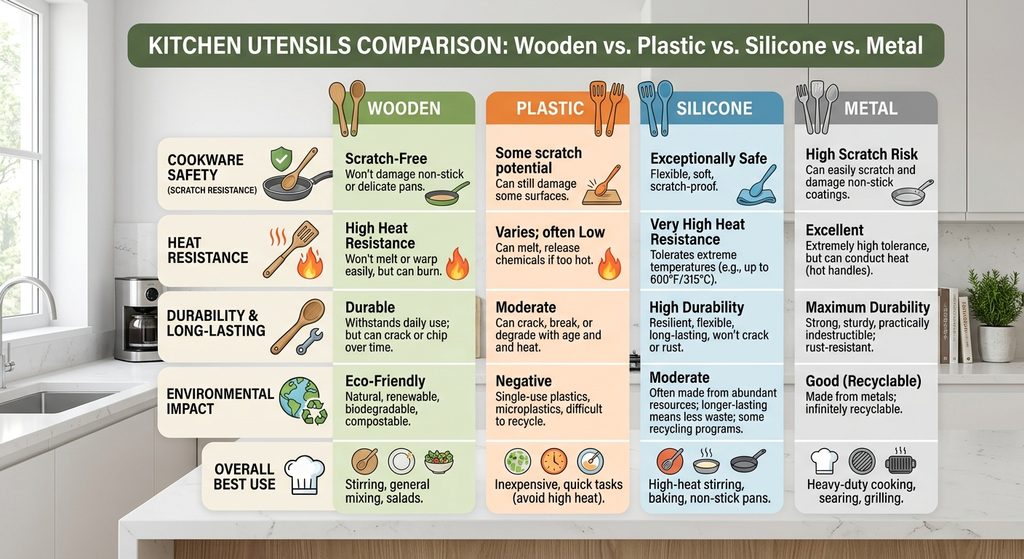
| Wood | Plastic / nylon | Silicone | Metal | |
| Gentle on nonstick | Yes, if used without force | Generally yes | Yes | No: can scrape coatings |
| Hand stays cool | Yes | Usually | Usually | Not always: conducts heat |
| Melts in a hot pan | No, but can scorch | Can melt or warp | Typically heat-tolerant | No |
| Microplastic concern | None from the material itself | Documented in the 2024 study above | Silicone-coated utensils were grouped with plastics in that study | None |
| Dishwasher-safe | Generally no | Depends on product | Depends on product | Yes |
| Main drawback | Stains, odors, upkeep | Melting, wear, microplastics | Quality varies; check what is in it | Scratches coated pans |
The “melts / heat-tolerant” and “dishwasher” cells reflect general product behavior and manufacturer guidance, which varies by product. Check the label. A full comparison is covered in a separate guide.
What is the healthiest material for kitchen utensils?
There is no single healthiest material for every kitchen. The best choice depends on your cookware and the task:
- For nonstick or coated pans: wood or food-grade silicone, per Consumer Reports’ advice to avoid metal.
- For stainless-steel or cast-iron cookware: wood works well too, and metal is also an option because scratching is less of a concern.
- To avoid plastic shedding: choose non-plastic materials, as the 2024 study found stainless steel and glass cookware did not add microplastics to food.
Whatever you pick, a damaged or worn utensil is a worse choice than a well-kept one of any material.
How to choose good wooden utensils
- Pick smooth, fine-grained hardwood. Cooks and makers commonly recommend maple, beech, cherry, walnut, teak or olive wood. Softwoods such as pine are generally advised against. (This species guidance comes from practitioner sources, not controlled research. See the dedicated wood-types guide.)
- Inspect it. No cracks, splinters or rough patches.
- Ask about the finish. Unfinished, or finished with food-grade oil or wax.
- Match the shape to the job. A flat edge for scraping a pan, a rounded bowl for stirring liquids.
- Check the length. About 12 inches or more keeps your hand clear of heat.
Five care rules that matter most
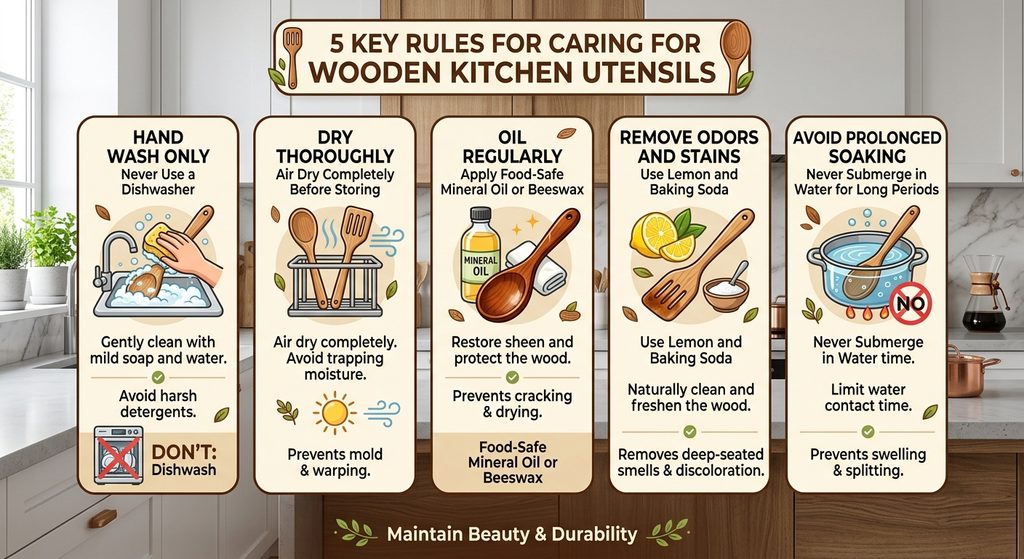
- Wash by hand with warm water and mild soap soon after use.
- Dry them promptly and store them where air can circulate.
- Do not soak them or put them in the dishwasher.
- Rub with food-grade mineral oil when the wood looks dry, and optionally food-grade beeswax afterward.
- Retire any utensil that is cracked, split or deeply worn.
For stain, odor and oiling details, see our full care guide.
Buying wooden kitchenware guide in Pakistan
If you are buy wooden kitchenware guide in Pakistan, use the same checks as above: smooth hardwood, no cracks, and a clear answer on the finish. For current ranges, sets and prices, see our dedicated Pakistan buying guide, which lists up-to-date options.
FAQ
Is it healthy to cook with wooden utensils?
Generally yes. Wooden utensils are safe for cooking when they are intact, clean and finished with a food-safe oil or wax. Replace any that are cracked or split.
Are wooden kitchen utensils better?
They are better for some jobs: protecting nonstick pans and staying cool in hot pots. They are not better in every way, because they need hand washing and can stain or hold odors. Hygiene research on wood comes mainly from cutting boards, and it suggests wood is not inherently less hygienic than plastic.
What are the disadvantages of wooden cutlery?
The main ones are staining and odor absorption, no dishwasher use, no soaking, and more upkeep than plastic or silicone. Wooden utensils also wear out and should be replaced when they crack.
What is the healthiest material for kitchen utensils?
No single material wins everywhere. Wood and food-grade silicone suit nonstick cookware, wood or stainless steel suit uncoated pans, and non-plastic options avoid the plastic-shedding concern found in a 2024 study.
Do wooden spoons scratch nonstick pans?
Not when used gently. Consumer Reports recommends wood or silicone over metal, but even a wooden spoon can cause damage if you use it too aggressively.
Can wooden spoons go in the dishwasher?
It is not recommended. Which? and America’s Test Kitchen both advise hand washing because dishwasher heat and water can crack, split or dry out the wood.
Conclusion
Wooden kitchen utensils earn their place: they protect nonstick cookware, stay comfortable in the pot and avoid plastic. They ask for a little care in return. Wash them by hand, dry them, oil them occasionally, and replace them when they crack. Do that, and a good wooden spoon is a safe, long-lasting everyday tool.

[…] Benefits of Wooden Kitchen Utensils: Are They Safe and Better? […]
[…] Benefits of Wooden Kitchen Utensils: Are They Safe and Better? […]
[…] spoons, spatulas and boards earn their place in the kitchen, and our guide to the benefits of wooden kitchen utensils explains why. But wood is a natural material that reacts to moisture, heat and age. If you’re […]
[…] because each wins at a different job and most kitchens end up using a mix. Our piece on the benefits of wooden kitchen utensils explains why wood stays popular, while the advantages and disadvantages of wooden kitchenware […]
[…] If you are still deciding whether wood belongs in your kitchen at all, start with our guide to the benefits of wooden kitchen utensils and then come back […]
[…] The original researchers noted that their results may not apply to every wood or plastic surface, so treat the findings as supportive, not final. To see the wider picture, read the benefits of wooden kitchen utensils. […]
[…] carefully and look after the wood. If you are still weighing wood against other materials, the benefits of wooden kitchen utensils is a good next […]
[…] than silicone or stainless steel. If you want the longer case for owning them, our article on the benefits of wooden kitchen utensils walks through […]
[…] Safety is only part of why cooks keep reaching for wood. A wooden spoon is gentle on cookware, comfortable to hold, and does not get hot in your hand. It is sturdy enough to scrape the bottom of a pot and soft enough not to damage the surface. If you want the full picture, we list them in our article on the benefits of wooden kitchen utensils. […]
[…] you want the full case for wood, we’ve covered the benefits of wooden kitchen utensils in detail. Keep the downsides in mind too, and our breakdown of wooden kitchenware advantages and […]
[…] near heat. Many cooks also simply enjoy how it looks and feels. For the broader picture, here are reasons home cooks enjoy natural wood in the kitchen, and an honest look at the upsides and downsides of wooden […]